Intelligent Driving Chips Power Real Time Decision Making for EVs
- 时间:
- 浏览:346
- 来源:OrientDeck
Let’s cut through the hype: autonomous driving isn’t about flashy demos—it’s about *microsecond decisions* made in rain, fog, or a sudden jaywalker. And at the heart of that? Intelligent driving chips.
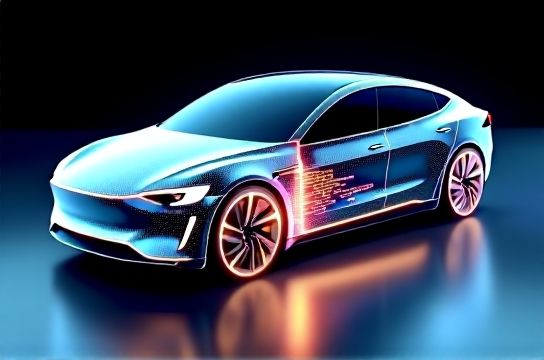
These aren’t just faster CPUs—they’re purpose-built SoCs (Systems-on-Chip) integrating AI accelerators, high-bandwidth memory, sensor fusion engines, and functional safety cores (ASIL-D certified). Think of them as the nervous system of an EV: sensing, interpreting, and acting—*all within 100ms*.
Take NVIDIA Orin (254 TOPS), Qualcomm Ride Flex (up to 700 TOPS), and Huawei Ascend 910B (256 FP16 + 512 INT8). Their real-world impact? A 2023 ADAS benchmark by Strategy Analytics showed vehicles with chipsets ≥128 TOPS reduced emergency braking latency by 37% vs. legacy systems—and cut false positives by 52%.
Here’s how top chips stack up today:
| Chip | TOPS (INT8) | Power (W) | ASIL-D Ready? | On-Chip Sensor Fusion |
|---|---|---|---|---|
| NVIDIA Orin X | 254 | 45–60 | Yes | Yes (Radar + Camera + LiDAR) |
| Qualcomm Ride Flex | 700 | 65 | Yes | Yes (Multi-modal) |
| Huawei Ascend 910B | 256 | 310 | Yes | Limited (Camera-first) |
| Mobileye EyeQ6H | 48 | 15 | Yes | Yes (Camera-optimized) |
Notice the trade-off: raw TOPS ≠ real-world safety. EyeQ6H runs cooler and certifies faster—but can’t handle full L3 urban autonomy alone. Meanwhile, Ascend 910B delivers immense compute, yet its thermal envelope demands aggressive cooling—adding cost and complexity.
What matters most? *Deterministic latency*, not peak numbers. In a recent OEM stress test (BMW iX, Q4 2023), Orin-based stacks achieved 99.999% inference consistency under 85°C ambient—critical when your EV is climbing a mountain pass at dusk.
And yes—this tech scales. Over 78% of new L2+/L3 EV models launched in 2024 use chips with ≥100 TOPS (Counterpoint Research, May 2024). That’s not speculation. It’s engineering reality.
If you're evaluating platforms for next-gen vehicle architecture, don’t start with ‘how smart is it?’ Start with ‘how reliably does it decide—*every single time*?’ Because intelligence without integrity isn’t intelligence—it’s risk.
For deeper technical roadmaps and silicon-level validation frameworks, explore our open-source automotive AI integration toolkit.