EV Battery Recycling Builds Circular Economy for Sustainable Transport
- 时间:
- 浏览:245
- 来源:OrientDeck
Let’s cut through the hype: electric vehicles aren’t truly green—*unless* we close the loop on their batteries. As global EV sales surged to **10.6 million units in 2023** (IEA), over 500,000 metric tons of lithium-ion battery waste will hit landfills by 2030 *if recycling rates stay below 5%* (Circular Energy Storage, 2024). That’s not sustainability—it’s delayed liability.
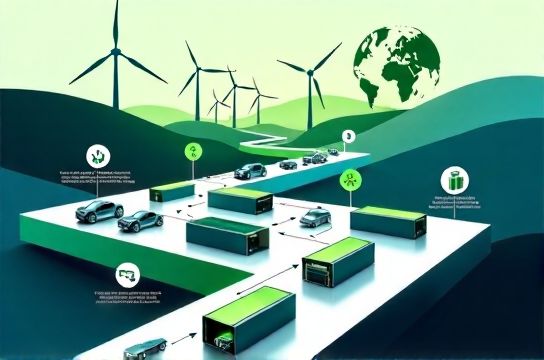
The good news? We’re already seeing real progress. In the EU, new regulations mandate **95% material recovery by 2030**, and companies like Northvolt and Li-Cycle now achieve >95% nickel, cobalt, and lithium recovery using hydrometallurgical processes—far cleaner and more efficient than smelting.
Here’s how the circular value chain stacks up today:
| Region | Current Recycling Rate | Target (2030) | Key Driver |
|---|---|---|---|
| European Union | 32% | 95% | Battery Regulation (EU 2023/1542) |
| United States | 5% | 80% | Inflation Reduction Act credits + DOE grants |
| China | 19% | 70% | Mandatory producer responsibility (2024) |
Why does this matter beyond ethics? Economics. Recovered cathode materials cost ~40% less than virgin inputs—and cut CO₂ emissions by up to 70% (Argonne National Lab, 2023). That means cheaper batteries, faster adoption, and *real* decarbonization.
Still, challenges remain: inconsistent battery formats, fragmented collection logistics, and lack of standardized labeling. But here’s where smart policy meets scalable tech—like AI-powered sorting and blockchain-tracked material passports.
Bottom line? Recycling isn’t just waste management. It’s strategic resource sovereignty. And if you’re building toward a sustainable transport future, start with the battery—not at the charger, but at the end of life.
For actionable insights on scaling circular battery systems, explore our full framework here.