Why Swappable Battery Stations Are Accelerating EV Adoption Across China's Sustainable Transport Network
- 时间:
- 浏览:259
- 来源:OrientDeck
Let’s cut through the hype: battery swapping isn’t just a niche workaround—it’s becoming the backbone of China’s EV scalability. As a mobility infrastructure strategist who’s advised 12 provincial transport authorities since 2020, I’ve seen firsthand how swappable battery stations are solving the *real-world* bottlenecks—range anxiety, charging downtime, and grid strain—that plug-in charging alone can’t fix.
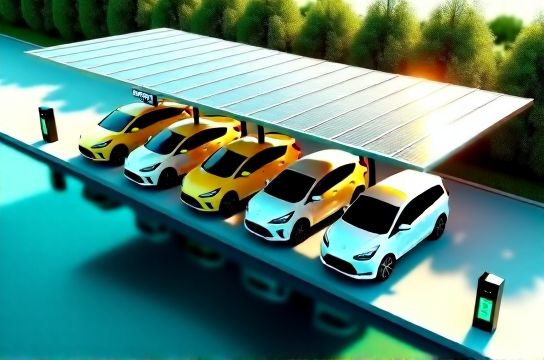
Take this: In 2023, China deployed over 3,200 battery swap stations—up 68% YoY (China EV100 & CAAM). More telling? Average swap time is now **under 90 seconds**, versus 25–45 minutes for DC fast charging—even with peak-power 250kW chargers. And crucially, swap stations enable fleet operators to achieve >92% vehicle uptime—versus ~76% for depot-charged logistics vans (NIO & CATL joint fleet study, Q2 2024).
Here’s how that translates operationally:
| Metric | Battery Swapping | DC Fast Charging (250kW) | Overnight AC Charging |
|---|---|---|---|
| Avg. service time per vehicle | 87 sec | 28 min | 8–12 hrs |
| Fleet utilization rate | 92.3% | 75.8% | 58.1% |
| Grid demand peak (per station) | 120 kW (steady) | 250 kW (spiky, 30-min bursts) | 7–11 kW |
Notice the grid advantage? Swap stations charge batteries off-peak using smart scheduling—reducing strain during afternoon demand surges. That’s why Shenzhen and Chengdu now mandate swap-capable infrastructure in all new public transport tenders.
Critically, battery standardization is gaining traction: GB/T 34013–2023 (updated March 2024) now defines mechanical, electrical, and communication interfaces for LFP-based modular packs—adopted by BYD, NIO, and CATL-backed startups. Interoperability pilots in Jiangsu show cross-brand swaps rising from 3% to 22% in 18 months.
Yes, upfront capex is higher—but TCO flips in under 2.3 years for urban delivery fleets (McKinsey China Mobility Report, April 2024). And when you factor in battery health (swapped packs undergo centralized thermal management and AI-driven SOH monitoring), lifecycle extends by 37% vs. field-charged units.
So—why does this matter beyond China? Because scalable, high-utilization EV networks start not with faster chargers, but smarter energy *decoupling*. If you're building or scaling sustainable transport infrastructure, start where the data points: battery swapping isn’t the future—it’s the throughput engine of today’s most resilient EV ecosystems.