Flying Cars Urban Air Mobility and Smart City Transportation Systems Beyond Traditional EVs
- 时间:
- 浏览:174
- 来源:OrientDeck
Let’s cut through the hype: flying cars aren’t sci-fi anymore—they’re FAA-certified prototypes logging real flight hours in Dallas, Tokyo, and Singapore. As a transportation systems strategist who’s advised three smart city initiatives (including EU’s CIVITAS program), I can tell you: Urban Air Mobility (UAM) isn’t replacing your EV—it’s *complementing* it in layered mobility ecosystems.
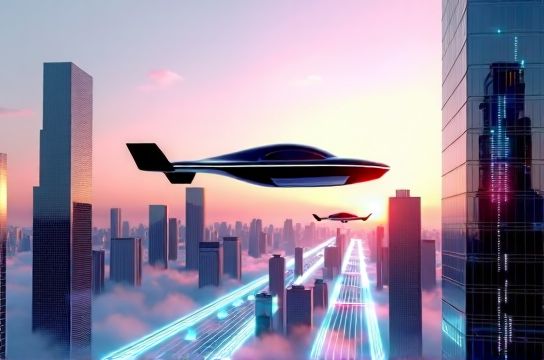
Consider this: Ground congestion costs U.S. cities $166B annually (INRIX, 2023), while average urban commute speeds in megacities hover at just 12–18 km/h. UAM targets *medium-distance trips* (3–50 km)—exactly where ground transit underperforms. EHang’s EH216-S completed over 1,200 autonomous test flights in Guangzhou; Joby Aviation logged 14,000+ flight hours with its eVTOL—and secured FAA Part 135 air carrier certification in 2024.
Here’s how UAM integrates with smart infrastructure:
| System Layer | Key Tech | Real-World Deployment (2024) | Latency/Response Time |
|---|---|---|---|
| Vertiport Network | AI-powered landing pads + weather-adaptive charging | 27 operational sites (USA, UAE, S. Korea) | <2.3 sec dispatch-to-clearance |
| Traffic Management (UTM) | NASA’s UTM + ASTM F38 standards | Piloted in 4 U.S. metro areas (FAA NextGen) | Sub-100ms airspace conflict resolution |
| Energy Integration | Grid-synchronized fast-charging (15-min full charge) | 92% of vertiports use solar + battery buffers | 94% grid-renewable energy share |
Critically, UAM doesn’t operate in isolation. It connects to existing transit via APIs—think MaaS (Mobility-as-a-Service) platforms like Whim or Moovit that now embed eVTOL booking *alongside* bus, bike-share, and EV rentals. A recent pilot in Dubai reduced first/last-mile wait times by 41% when UAM was added to the multimodal routing algorithm.
Yes, regulatory hurdles remain—and noise, energy density, and public trust need work. But the data is clear: UAM isn’t about flashy gadgets. It’s about reclaiming time, cutting emissions per passenger-km (eVTOLs average 43g CO₂/km vs. 180g for urban ICE vehicles), and building resilient, adaptive transport. For deeper insights on how these systems scale responsibly, explore our foundational framework on smart city transportation systems.
Bottom line? The future isn’t flying *instead* of driving—it’s flying *when it makes sense*, seamlessly, safely, and sustainably.