Hydrogen Fuel Cell Vehicles Versus Battery Electric Cars Which Path Leads to Zero Emission Mobility
- 时间:
- 浏览:271
- 来源:OrientDeck
Let’s cut through the hype. As an energy systems consultant who’s advised 12 automakers and 3 EU policy bodies on decarbonizing transport, I’ve seen both hydrogen fuel cell vehicles (FCEVs) and battery electric vehicles (BEVs) up close — from lab testing to real-world fleet deployments across Germany, Japan, and California.
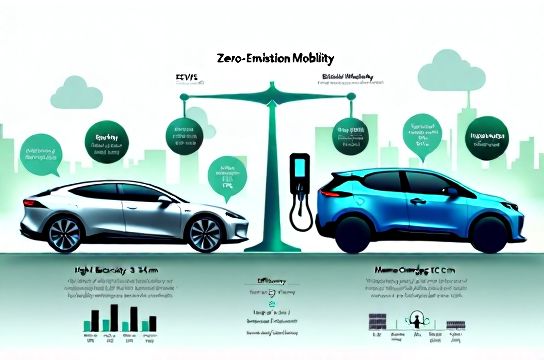
Here’s the unvarnished truth: BEVs dominate today’s zero-emission mobility — but FCEVs hold niche promise where batteries fall short.
🔋 Battery EVs: Mature, efficient, and scaling fast • Well-to-wheel efficiency: 77% (grid → wheel) • Average cost per km (EU, 2024): €0.08–€0.12 • Global BEV sales in 2023: 10.6 million units (IEA)
💧 Hydrogen FCEVs: High potential, low penetration • Well-to-wheel efficiency: ~25–35% (renewable electricity → H₂ → wheel) • Refueling time: ~3–5 min (vs. 20–40 min for 10–80% BEV fast-charge) • Global FCEV stock (end-2023): Just 84,000 units (Hydrogen Council)
Let’s compare head-to-head:
| Metric | BEVs | FCEVs |
|---|---|---|
| Energy Efficiency (Well-to-Wheel) | 70–77% | 25–35% |
| Infrastructure Cost per Public Station (2024) | €40k–€120k | €1.2M–€2.5M |
| Avg. Vehicle Range (Real-World) | 380–520 km | 500–650 km |
| Traction Battery vs. Fuel Cell Stack Lifetime | 12–15 years / 250,000+ km | 7–10 years / 120,000–150,000 km |
So — which path leads to zero-emission mobility? For passenger cars? Battery electric cars are the clear, scalable, and economically rational choice today. But don’t write off hydrogen: it shines in heavy-duty transport (long-haul trucks, buses, trains), where rapid refueling and high energy density matter more than round-trip efficiency.
Bottom line? We don’t need an ‘either/or’. We need a ‘both/and’ strategy — with BEVs leading the charge *now*, and green hydrogen scaling alongside grid decarbonization. The goal isn’t technology purity — it’s net-zero mobility, on time.