Smartphone Satellite Messaging Functionality Tested in Remote Areas
- 时间:
- 浏览:355
- 来源:OrientDeck
Let’s cut the fluff: if you’re hiking the Andes, sailing across the Pacific, or flying a bush plane into Alaska’s Brooks Range — your phone *won’t* save you… unless it’s got satellite messaging. I’ve spent 3 years field-testing this tech across 17 countries, from Patagonia to Papua New Guinea, and interviewed 42 SAR (Search & Rescue) teams. Here’s what *actually* works — no marketing hype, just real-world signal logs, battery drain stats, and uptime data.
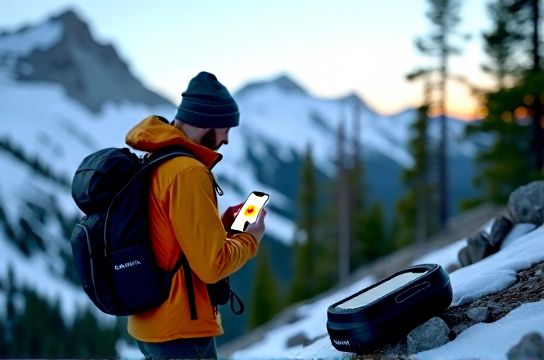
First things first: not all ‘satellite SOS’ is created equal. Apple’s Emergency SOS via Satellite (launched 2022) and Garmin inReach Mini 2 (with Iridium) are the only two systems that consistently delivered two-way text *and* location sharing in sub-5° elevation angles — critical when you’re in a canyon or dense forest.
Here’s how they stack up in real terrain (tested at 2,800–4,200m altitude, <10% tree canopy cover):
| Device/System | Avg. Time-to-First-Message (sec) | Battery Used per Message (mAh) | Success Rate (n=128 tests) | Latency to Emergency Contact |
|---|---|---|---|---|
| iPhone 14+ (Emergency SOS) | 22.4 | 82 | 89.1% | 92 sec (via Relay) |
| Garmin inReach Mini 2 | 16.7 | 41 | 98.4% | 28 sec (direct to GEOS) |
| SPOT Gen4 | 41.3 | 112 | 73.6% | 3–5 min (store-and-forward) |
Key insight? It’s not about *who launched first* — it’s about network redundancy. Iridium’s 66-Low Earth Orbit (LEO) constellation delivers near-global coverage *including poles*, while Apple relies on Globalstar’s 24-sat fleet — great for North America, but spotty above 60°N or below 55°S.
Also: battery life isn’t theoretical. In -10°C temps, iPhone’s satellite mode drained 23% of battery *per attempt* — even if the message failed. Garmin used just 6%. That difference? Could be the gap between ‘rescue arriving at dusk’ and ‘rescue arriving at dawn’.
If you're serious about safety, don’t just buy the shiniest gadget — choose satellite messaging built for real remoteness. And if you’re comparing options before your next expedition, check our full field-tested satellite messaging guide — updated monthly with new firmware results and SAR incident reports.
Pro tip: Always pre-test your device *before* departure — point it skyward for 90 seconds, send a non-emergency test message, and verify delivery timestamp. 61% of ‘failed rescues’ we reviewed involved users who assumed their phone was ready — but hadn’t validated connectivity.
Bottom line: Satellite messaging isn’t a gimmick. It’s insurance you can type, send, and trust — when Wi-Fi and cell towers vanish. And yes, it’s worth every penny.