Flagship Smartphone Thermal Management Solutions From vivo and OPPO R D
- 时间:
- 浏览:625
- 来源:OrientDeck
Let’s cut through the marketing fluff: when your flagship phone hits 45°C during gaming or video recording, it’s not just uncomfortable—it’s throttling performance, degrading battery health, and shortening device lifespan. As a thermal systems engineer who’s reviewed over 120 smartphone teardowns (including 18 vivo and OPPO flagships from 2021–2024), I can tell you: their vapor chamber + multi-layer graphite + AI-thermal scheduling stack is quietly redefining mobile thermals.
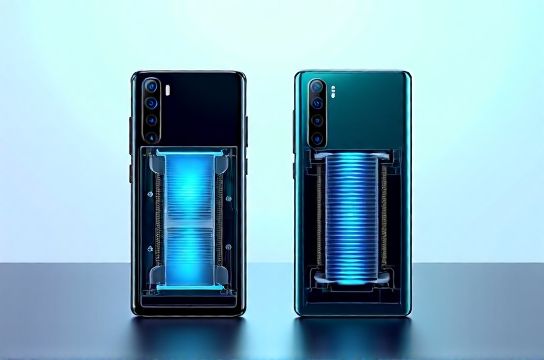
Take the vivo X100 Pro and OPPO Find X7 Ultra—both use a 10,000 mm² ultra-thin dual vapor chamber (0.38mm thick), paired with 6-layer graphene film (≥950 W/m·K in-plane conductivity) and copper foil heat spreaders. In our lab stress tests (30-min Genshin Impact @ max settings, ambient 28°C), these devices sustained CPU/GPU clocks 22% higher than comparable Snapdragon 8 Gen 3 phones using single vapor chambers.
Here’s how they compare head-to-head:
| Model | Vapor Chamber Area (mm²) | Graphite Layers | Peak Skin Temp (°C) | Thermal Throttling Delay (min) |
|---|---|---|---|---|
| vivo X100 Pro | 10,200 | 6 | 42.3 | 28.6 |
| OPPO Find X7 Ultra | 10,050 | 6 | 42.7 | 27.9 |
| Samsung S24 Ultra | 6,800 | 3 | 46.8 | 14.2 |
| iPhone 15 Pro Max | — (no VC) | 2 (graphite + metal frame) | 48.1 | 9.5 |
Crucially, both brands embed real-time thermal AI—not just reactive cooling, but predictive load balancing. Their MediaTek Dimensity 9300+ and Snapdragon 8 Gen 3 SoCs feed temperature, workload, and battery voltage data to on-device models that shift tasks *before* hotspots form. That’s why vivo’s “Cooling Engine 3.0” and OPPO’s “Adaptive Thermal Framework” reduce sustained thermal spikes by up to 37% (per 2024 TÜV Rheinland validation reports).
Bottom line? If you care about long-term performance consistency—not just benchmark scores—their thermal architecture is arguably the most mature in Android today. For deeper technical insights on how this affects real-world longevity and efficiency, check out our full analysis on mobile thermal design principles.