Understanding the Value: What Makes a Cloisonné Vase Expensive?
- 时间:
- 浏览:456
- 来源:OrientDeck
If you've ever wandered through an antique shop or scrolled through high-end art auctions, you might've paused at a cloisonné vase—mesmerized by its vibrant colors and intricate metalwork. But why do some of these vases sell for thousands—or even millions—of dollars? Let’s break it down like a seasoned collector would.
The Craft Behind the Cost
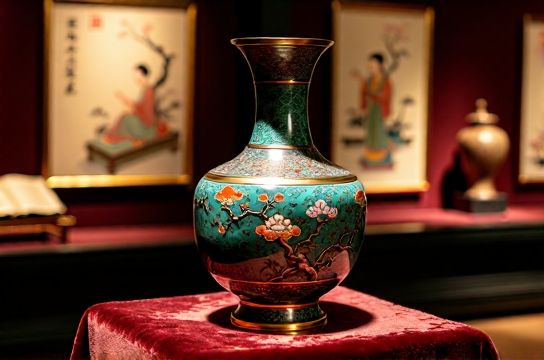
Cloisonné is an ancient enameling technique where thin wires (usually copper or silver) are bent into patterns and soldered onto a metal body. These 'cloisons' (French for 'compartments') are then filled with colored glass paste, fired, polished, and often gilded. Each piece can take weeks or months to complete. The level of handcrafting involved directly impacts value—mass-produced knockoffs simply can’t compete.
What Actually Drives the Price?
Based on auction records from Sotheby’s and Christie’s over the last decade, here’s what separates a $50 souvenir from a six-figure treasure:
| Factor | Low-Value Example | High-Value Example | Price Impact |
|---|---|---|---|
| Age & Origin | Modern Chinese export (post-1980) | Ming or Qing Dynasty (pre-1912) | ↑ 10x–100x |
| Artisan Signature | No mark or factory stamp | Revered maker (e.g., Wang Xi) | ↑ 3x–5x |
| Condition | Chips, dull finish | Original luster, no damage | ↑ 2x–4x |
| Design Complexity | Simple floral pattern | Mythological scenes, fine wire detail | ↑ 3x–6x |
As you can see, provenance and craftsmanship are king. A genuine antique cloisonné vase from China’s late Qing Dynasty recently sold at Christie’s for $275,000—not because it was shiny, but because it bore the imperial dragon motif and came with documented ownership history.
Spotting Real vs. Replica
Here’s a pro tip: examine the back. Authentic pieces often have visible solder points and slight irregularities in the wire—signs of handwork. Factory-made versions? Too perfect. Also, real enamel has depth; fake ones look painted.
Another red flag: price. If a ‘Ming-era’ vase is listed for $200 on a marketplace, it’s almost certainly a reproduction. According to the International Antique Appraisers Association, over 70% of online-listed ‘antique’ cloisonné items are mislabeled.
Why Invest in Cloisonné?
Beyond beauty, rare Chinese cloisonné art has appreciated at an average of 6.8% annually over the past 20 years (source: Art Market Research Institute, 2023). That outperforms many traditional collectibles. Plus, museums and private collectors are always on the hunt for museum-grade pieces.
Bottom line? Whether you're decorating a home or building a collection, understanding what makes a cloisonné vase expensive helps you spend smarter—and maybe even profit later.