Fake Jade: 7 Practical Tests You Can Do at Home
- 时间:
- 浏览:406
- 来源:OrientDeck
So you found a gorgeous piece of jade—maybe at a flea market, a family heirloom, or an online deal that seems too good to be true. Before you fall in love (and spend big), let’s talk real: fake jade is everywhere. As someone who’s spent over a decade evaluating gemstones and helping collectors avoid costly mistakes, I’ve seen it all—from dyed quartz to plastic imposters.
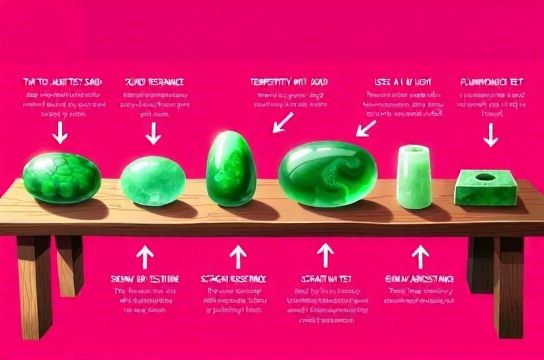
The good news? You don’t need a lab to spot fakes. Here are 7 practical home tests backed by gemological principles and field experience.
1. The Sound Test (Tap & Listen)
Genuine jadeite or nephrite produces a clear, ringing sound when lightly tapped with metal. Fake jade (like glass or plastic) gives a dull thud.
- How to do it: Suspend the jade on a string or hold it lightly, then tap with a small metal key.
- Real jade: High-pitched ring lasting 1–3 seconds.
- Fake: Muted clink or no resonance.
2. The Scratch Test (Hardness Check)
True jade ranks 6–7 on the Mohs hardness scale. Most fakes (e.g., glass = 5.5) scratch easier.
- Use a steel pin (Mohs ~6.5). Try scratching an inconspicuous area.
- If it scratches easily, it’s likely not real jade.
Caution: This test can damage the piece—only use on non-valuable items.
3. The Temperature Test
Jade retains cold longer than most materials.
- Hold the stone in your hand for 30 seconds.
- Real jade feels cool for several minutes.
- Plastic or glass warms up fast.
4. The Light Test (Translucency Check)
Shine a flashlight through the jade. Real jade diffuses light evenly, showing fibrous or granular patterns.
- Fake jade often has air bubbles, streaks, or unnaturally uniform color.
- Dyed stones show concentrated color along cracks.
5. Density Test (Water Displacement)
Jade is dense: nephrite (2.9–3.0 g/cm³), jadeite (3.3–3.5 g/cm³).
| Material | Avg. Density (g/cm³) |
|---|---|
| Real Jadeite | 3.3–3.5 |
| Nephrite | 2.9–3.0 |
| Quartz | 2.65 |
| Glass | 2.4–2.8 |
| Plastic | ~1.2 |
Weigh the piece, then submerge it in water to measure displaced volume. Calculate density = mass/volume.
6. The Magnification Test
Use a 10x loupe. Real jade shows interlocking fibrous structure. Fakes reveal mold lines, bubbles, or dye concentration.
7. UV Light Test
Some dyed jades fluoresce under UV light. Natural jade usually doesn’t react.
While no single test is foolproof, combining 3–4 increases accuracy. For high-value pieces, always consult a certified gemologist. But for everyday checks, these methods work like a charm.
Want to learn more about spotting fake jade? Or how to buy authentic pieces without getting ripped off? Check out our guide to buying real jade safely.