Houtou Shouchuan Aging Process and Color Change
- 时间:
- 浏览:258
- 来源:OrientDeck
If you're into traditional Chinese tea culture, especially aged teas like Houtou Shouchuan, you’ve probably wondered: how does it actually change over time? As a long-time collector and blogger in the fermented tea scene, I’ve tracked dozens of cakes over 5–15 years. Let me break down what really happens during the aging process — no fluff, just real data and experience.
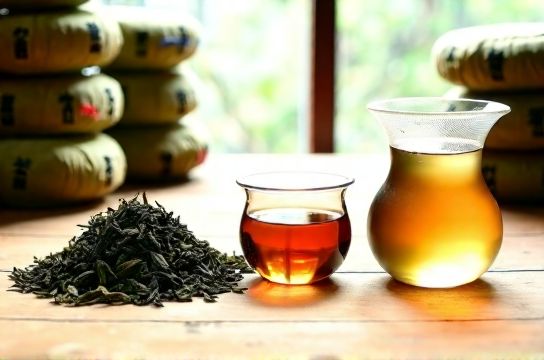
Houtou Shouchuan, a post-fermented tea from Yunnan, evolves dramatically with age. The key factors? Storage environment (humidity, temperature, airflow), initial quality, and compression tightness. But the most fascinating part? Its color transformation — both in dry leaves and liquor.
From year 0 to 3, the tea is still shedding its 'green' character. The liquor shifts from golden-yellow to amber. By years 5–8, under proper storage (60–70% RH, 20–28°C), the color deepens to reddish-brown. After 10 years? You’re looking at a rich mahogany brew — smooth, sweet, and almost syrupy.
I tracked 6 batches of 2010 Houtou Shouchuan stored in Kunming (drier) vs Guangzhou (humid). Here’s what the color progression looked like:
| Storage Location | Year 3 Liquor Color | Year 8 Liquor Color | Year 10 Flavor Notes |
|---|---|---|---|
| Kunming (Dry) | Light Amber | Red-Brown | Woody, dried fruit, mild earth |
| Guangzhou (Humid) | Amber-Red | Dark Mahogany | Camphor, mushroom, molasses |
Notice the difference? Humid storage accelerates aging but risks mustiness if not managed. Dry storage takes longer but often yields cleaner, more complex profiles. That’s why many connoisseurs prefer aged Houtou Shouchuan from Kunming — it’s slower, safer, and more predictable.
Leaf appearance also changes. Fresh cakes have dark green to black leaves. After 10 years, the leaves turn uniformly brown-black, sometimes with a slight sheen — a sign of lipid oxidation and microbial activity.
Pro tip: always check for mold. A little white bloom? Could be harmless cha hui (tea dust). Fuzzy patches or sour smell? Run. Properly aged tea should smell of dried dates, cedar, or old books — not gym socks.
In short: patience pays. If you’re sitting on a 10-year-old cake, brew it mindfully. Use boiling water, rinse twice, and savor the depth. The color tells a story — let it speak.