Double Faced Embroidery A Technical Wonder Unveiled
- 时间:
- 浏览:356
- 来源:OrientDeck
If you’ve ever seen a piece of embroidery that looks perfect on both sides, chances are it’s double faced embroidery—a centuries-old Chinese art form that still stuns textile lovers today. As someone who’s spent years studying traditional needlework, I can tell you: this isn’t just stitching. It’s magic with a needle.
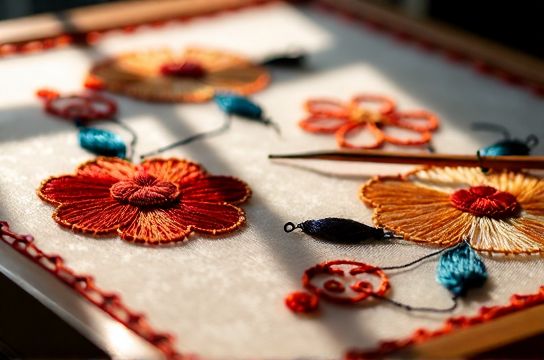
Originating from Sichuan during the Han Dynasty, double faced embroidery (also known as *Shu Xiu*) was once reserved for imperial robes. Today, it's a rare skill mastered by fewer than 200 artisans in China. What makes it so special? The fabric shows identical patterns on both sides—no knots, no loose threads. Whether it’s a delicate butterfly or a blooming peony, both sides look exactly the same.
Let’s break down how this works and why it stands above other embroidery styles like cross-stitch or machine embroidery.
The Secret Behind the Symmetry
The technique relies on precision threading and an invisible knot method called *zhen jiao* (needle tip control). Artisans use silk threads up to 1/16th the thickness of a human hair. One master embroiderer can spend over 300 hours on a single 8x10 inch piece.
| Feature | Double Faced Embroidery | Machine Embroidery | Cross-Stitch |
|---|---|---|---|
| Visible on Both Sides? | ✅ Yes, identical | ❌ No (back is messy) | ❌ No (back has jumps) |
| Avg. Time per Square Inch | ~40 hours | 5 minutes | 2–3 hours |
| Thread Type | Silk (ultra-fine) | Polyester | Cotton floss |
| Artisan Skill Level | Master (decades trained) | Low (machine-operated) | Beginner to Intermediate |
As the table shows, handcrafted double faced embroidery is in a league of its own. While machines dominate fast fashion, this art survives through cultural preservation—and passionate collectors.
How to Spot Authentic Double Faced Work
Not all ‘reversible’ embroidery is true double faced. Here’s what to look for:
- No thread ends or knots visible on either side
- Identical tension and stitch length front and back
- Made with natural silk (synthetic fibers can’t achieve the sheen)
- Comes with artisan certification (especially from Chengdu’s Embroidery Research Institute)
Pro tip: Hold it up to the light. If shadows or inconsistencies appear, it’s likely a two-sided illusion—not true double faced work.
Why It Matters Today
In a world of mass production, double faced embroidery reminds us of the beauty in patience and precision. Museums like the Victoria & Albert in London now feature it as textile art, not craft. And with UNESCO recognizing Chinese silk embroidery as intangible cultural heritage in 2009, interest is growing.
Whether you’re a collector or simply an admirer, understanding this technique deepens your appreciation. It’s not just about aesthetics—it’s about preserving a legacy stitched one thread at a time.