From Thread to Art The Making of a Suzhou Masterpiece
- 时间:
- 浏览:261
- 来源:OrientDeck
If you’ve ever held a piece of Suzhou embroidery in your hands, you know it’s not just fabric and thread — it’s storytelling woven with silk. As a cultural blogger who’s spent years diving into China’s traditional crafts, I’m here to pull back the curtain on one of the most exquisite art forms in human history: Suzhou embroidery, or Su Xiu.
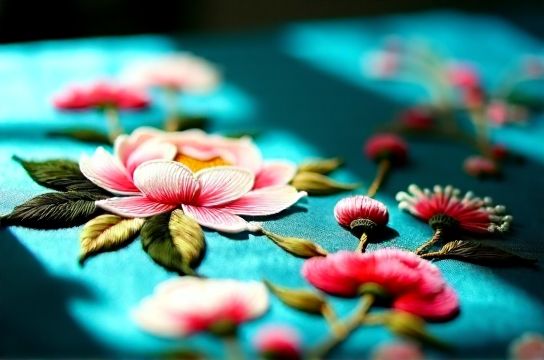
Originating over 2,000 years ago during the Zhou Dynasty, this delicate needlework from Jiangsu Province is recognized by UNESCO as part of humanity’s intangible cultural heritage. But what makes it so special? Let’s break it down — from technique to threads.
The Secret Sauce: Technique & Precision
Suzhou embroidery stands out for its fine threads, often split to 1/16th or even 1/64th of a single silk strand. That’s thinner than a human hair! Artisans use up to 12 color gradations within a single petal to mimic natural light. The result? Hyper-realistic textures that look painted, not stitched.
Unlike mass-produced prints, each piece takes weeks — sometimes years — to complete. A standard 8x10 inch floral motif can involve over 300,000 stitches and 50+ hues. Now that’s craftsmanship.
How It’s Made: From Sketch to Silk
Here’s a simplified breakdown of the process:
- Design Transfer: Artists sketch motifs (often nature-inspired) onto fine silk.
- Thread Selection: Dozens of silk shades are hand-matched for depth.
- Stitching: Using satin, seed, or feather stitches, artisans build layers.
- Finishing: Mounted like a painting, often framed in rosewood.
Real Data: Time vs. Complexity
To give you a real sense of scale, here’s how project length scales with detail level:
| Motif Type | Avg. Size (inches) | Threads Used | Estimated Hours |
|---|---|---|---|
| Simple Flower | 6x8 | 35 | 80 |
| Bird & Branch | 8x10 | 52 | 150 |
| Landscape Scene | 12x16 | 78 | 400+ |
As you can see, complexity isn’t linear — it’s exponential. That’s why authentic handmade Suzhou embroidery starts at around $300 and can go well into five figures for museum-grade pieces.
Spotting the Real Deal
With cheap machine-made copies flooding online markets, how do you tell the difference?
- Backside Cleanliness: Hand embroidery has neat, minimal knots.
- Color Flow: Real Su Xiu blends tones seamlessly; fakes have harsh transitions.
- Texture: Run your finger over it — genuine pieces have slight dimension.
Pro tip: Look for the artisan’s red seal stamp — it’s like a signature.
Why It Still Matters
In an age of fast fashion and digital art, Suzhou embroidery reminds us that beauty lives in patience. Each piece carries not just aesthetic value, but cultural memory — from ancient poetry to dynastic court life.
Supporting authentic makers isn’t just about buying art. It’s about preserving a legacy, stitch by precious stitch.