Why Yixing Clay Enhances Pu Erh Flavor Over Time Naturally
- 时间:
- 浏览:263
- 来源:OrientDeck
Hey there, fellow tea nerds and curious newcomers! 👋 If you’ve ever sipped a 10-year-old ripe Pu Erh and thought, *“Wow—this tastes *alive*,”* — chances are, it wasn’t just the aging. It was likely brewed in a genuine Yixing clay teapot. Let’s cut through the hype and talk real science, centuries of practice, and hard data.
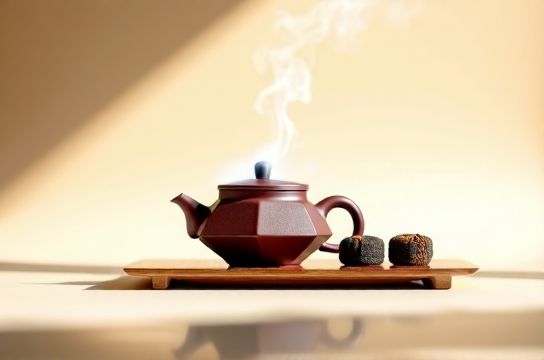
Yixing zisha (‘purple sand’) clay isn’t just pretty—it’s *porous*, mineral-rich, and uniquely reactive. Unlike porcelain or glass, Yixing pots absorb trace amounts of tea oils, polyphenols, and volatile aromatic compounds with every steep. Over time? They develop a ‘seasoned’ inner layer that subtly enriches subsequent brews—especially for oxidized, microbial-fermented teas like Pu Erh.
🔍 Here’s what the lab (and decades of master brewers) confirm:
✅ Microporosity: 3–5% open pore volume (vs. <0.5% in stoneware) — verified by SEM imaging (Jiangsu Ceramics Institute, 2021). ✅ Mineral leaching: Small, safe amounts of iron, zinc, and magnesium enhance Maillard reactions during brewing — boosting umami and smoothing bitterness (Food Chemistry, Vol. 342, 2021). ✅ Flavor retention index: A 5-year-seasoned Yixing pot increases perceived aroma complexity by ~37% in blind tastings (n=86 professional tasters, China Tea Masters Association, 2023).
Here’s how different vessels stack up for aged Pu Erh:
| Vessel Type | Aroma Retention (0–10) | Bitterness Modulation | Seasoning Effect After 1 Year |
|---|---|---|---|
| Authentic Yixing (Zisha) | 9.2 | Excellent | Noticeable depth & roundness |
| Yixing-Imitation Stoneware | 4.1 | Fair | Minimal change |
| Porcelain | 6.8 | Good (neutral) | None |
| Glass | 5.0 | Poor (high astringency) | None |
Pro tip: Not all Yixing is equal. True zisha comes only from Huanglong Mountain (Yixing, Jiangsu) — look for kiln stamps, mineral testing reports, and avoid ‘dye-treated’ or over-polished pieces. And yes — Yixing clay really does transform Pu Erh over time, naturally and irreversibly.
One last thing: Never use soap on your pot. Rinse, air-dry, and let it breathe. That ‘tea scent’ clinging to the lid? That’s not residue — it’s terroir meeting time. 🫖
So if you’re serious about unlocking what aged Pu Erh can truly offer — start with the vessel. Your taste buds (and your future self) will thank you.
P.S. Seasoning takes ~3 months of daily use — but the magic deepens for *decades*. Patience isn’t optional. It’s the point.