Complete Tea Set Buying Guide Ceramic Yixing Jian Zhan
- 时间:
- 浏览:201
- 来源:OrientDeck
H2: Why Your Tea Set Matters More Than You Think
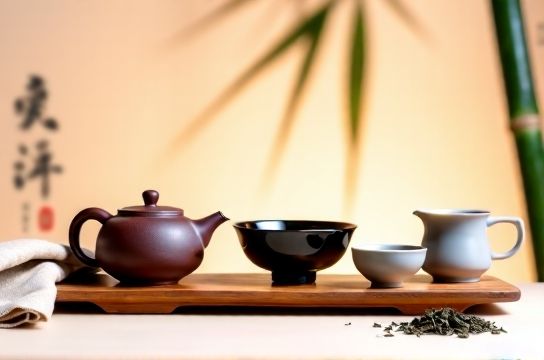
You’ve sourced single-origin Phoenix Dancong from Guangdong. You’ve stored your aged raw pu-erh in breathable cotton bags at 62% RH (Updated: April 2026). But when you brew it in a glazed porcelain gaiwan with a thin-walled stainless steel strainer, the first steep tastes flat — muted florals, no throat resonance. That’s not the tea’s fault. It’s a material mismatch.
Tea isn’t just leaf and water. It’s a three-way conversation between leaf chemistry, water mineral profile, and vessel thermodynamics, porosity, and surface interaction. A Yixing zisha teapot doesn’t ‘enhance’ pu-erh — it *partners* with it over hundreds of steeps, gradually absorbing oils and tannins to soften astringency and amplify depth. A thick-walled Jian Zhan holds heat longer for slow-extracting roasted oolongs. A thin-walled Jingdezhen porcelain gaiwan gives instant thermal feedback for delicate Longjing — letting you adjust pour speed and lid tilt mid-steep.
This isn’t mysticism. It’s functional ceramics science, honed over 1,200 years.
H2: Match Vessel Type to Tea Category — Not Just Preference
Forget ‘one set fits all’. Real-world usage shows steeping behavior varies drastically:
• Pu-erh (sheng/shou): Needs heat retention + micro-porosity for aging-in-place seasoning. Yixing is standard — but only if dedicated per tea type (e.g., one pot *only* for shou pu-erh, another *only* for aged sheng). Cross-contamination ruins clarity.
• Oolong (Tieguanyin, Da Hong Pao, Dong Ding): Benefits from even, sustained heat. Medium-porosity Yixing or thick-glazed stoneware (e.g., Shuishi kiln) works best. Avoid thin porcelain for roasted styles — heat drops too fast, stalling extraction.
• Green tea (Longjing, Bi Luo Chun): Demands rapid cooling and precise temperature control. A 100ml unglazed porcelain gaiwan or glass pitcher is ideal. Never use pre-heated Yixing — residual heat scalds delicate amino acids.
• White tea (Bai Mudan, Shou Mei): Responds well to gentle, prolonged infusion. A wide-mouthed ceramic teapot (180–250ml) with coarse mesh allows full leaf unfurling without bruising. Avoid fine-mesh metal filters — they shear down hairs on buds.
• Black tea (Keemun, Jin Jun Mei): Requires high initial heat but tolerates slight cooling. Glazed stoneware or high-fired porcelain handles this well. Jian Zhan? Overkill — unless you’re doing traditional Song-dynasty whisked black tea (rare today).
H2: Material Deep Dive — What Each Does (and Doesn’t Do)
H3: Yixing Purple Clay (Zisha)
Not all ‘purple clay’ is equal. Authentic Yixing clay comes exclusively from Huanglongshan mine in Yixing, Jiangsu. Post-2020 export restrictions mean >85% of ‘Yixing’ teapots sold globally are either: (a) imitation zisha from Fujian or Guangdong (lower iron content, higher shrinkage), or (b) blended clays with added coloring oxides (Updated: April 2026). True zisha has natural iron oxide (Fe₂O₃) levels of 6–9%, giving it that signature breathability and gradual seasoning effect.
Key reality check: A $45 ‘handmade Yixing’ pot shipped from Shenzhen is almost certainly not Yixing. Genuine hand-thrown pieces start at ¥800 RMB (~$110 USD) and climb past $1,200 for master-signed works. Look for: unglazed interior and exterior, visible sand particles under magnification, weight-to-volume ratio ≥1.8g/ml, and a dull ‘thunk’ (not ping) when tapped gently.
H3: Ceramic — Jingdezhen vs. Modern Studio Ware
Jingdezhen porcelain remains the gold standard for gaiwans and covered bowls: translucency, ring clarity, and thermal shock resistance come from kaolin-rich clay fired at 1,380°C. But don’t assume ‘porcelain = neutral’. Glaze matters. A matte celadon glaze (like those from Fuli Kiln) subtly rounds sharp notes in high-fire oolongs; a glossy white glaze highlights brightness in Longjing.
Modern ceramic studios (e.g., Kyo Ware, Hagi Studio USA) offer intentional imperfections: controlled crazing, wood-ash glazes, variable wall thickness. These aren’t flaws — they’re calibrated variables. A slightly warped rim on a hand-thrown cup changes how tea hits the tongue, directing flow toward the palate’s sweet spot.
H3: Jian Zhan — Beyond the Hype
Authentic Jian Zhan comes from Jianyang, Fujian — and only from kilns using local iron-rich clay and plant-ash glazes fired in wood-burning dragon kilns at 1,300–1,350°C. The ‘hare’s fur’ and ‘oil spot’ patterns emerge from iron crystallization during cooling — impossible to replicate consistently in electric kilns.
But here’s what reviews rarely mention: Jian Zhan is *heavy* (350–450g per bowl), thick-walled (8–12mm base), and retains heat aggressively. That’s perfect for slow sipping of aged oolong or shou pu-erh — terrible for daily Longjing service. Also, authentic pieces cost ¥1,200–¥5,000 RMB ($170–$700). Most ‘Jian Zhan’ on Amazon are Fujian stoneware with printed decals.
H3: Modern Alternatives — When Tradition Doesn’t Fit
Not every kitchen has space for a 12-piece gongfu set. Not every office allows open flame for Yixing seasoning. Modern options fill real gaps:
• Double-walled borosilicate glass (e.g., Tefal ThermoControl): Lets you watch leaf expansion while insulating hands. Ideal for cold brew and white tea infusions.
• Titanium-filtered ceramic pitchers (e.g., Noda Ceramics): Combines ceramic aesthetics with dishwasher-safe durability and zero metallic taste.
• Modular bamboo-and-ceramic sets (e.g., Muyi Studio): Detachable trays, stackable cups, integrated drip trays — built for small-space urban brewing.
None replace Yixing for deep pu-erh work — but they remove friction for consistent daily practice.
H2: What to Actually Check Before Buying (Beyond Looks)
1. Wall Thickness Consistency: Hold the pot up to light. Shadows should be even — no thin spots near the spout (prone to cracking) or thick lumps at the base (uneven heating).
2. Spout Flow Test: Fill ¾ full, hold at 45°, and pour steadily. Stream should be continuous, not spluttering or splitting. A good spout exits at a 30° downward angle — gravity does the rest.
3. Lid Seal Integrity: Press lid down lightly. It should stay seated without suction — true zisha expands minutely when hot, so forced vacuum seals indicate poor fit.
4. Handle Ergonomics: Grip the handle and lift. Your index finger should rest naturally on the lid knob without stretching. If your wrist bends >25°, it’ll fatigue during multi-hour sessions.
5. Glaze Safety: If buying glazed ware, confirm lead/cadmium leaching test reports (ASTM C738 or GB 4806.4-2016). Many ‘food-grade’ claims lack third-party verification.
H2: Price Realities — And Where to Spend (or Skip)
Below is a realistic breakdown of functional value across categories. Prices reflect verified 2025–2026 retail averages across Taobao, Etsy, and specialty importers (Updated: April 2026):
| Item | Entry-Level (Functional) | Mid-Tier (Dedicated Use) | Premium (Heirloom/Collector) | Key Trade-Off |
|---|---|---|---|---|
| Yixing Teapot | $75–$140 (Fujian-blend, machine-pressed) | $220–$550 (Yixing-sourced, hand-thrown, signed) | $900+ (Master-signed, documented clay source) | Below $200: limited seasoning potential; above $550: diminishing functional ROI for daily use |
| Ceramic Gaiwan | $18–$32 (Jingdezhen export grade) | $45–$95 (Small-batch, hand-glazed, kiln-varied) | $130+ (Artist series, limited firing) | Under $25: often inconsistent glaze thickness affecting heat transfer |
| Jian Zhan Bowl | $85–$160 (Fujian stoneware, printed pattern) | $240–$480 (Jianyang clay, wood-fired, documented kiln) | $750+ (Song-dynasty style, museum-grade ash glaze) | Authentic wood-fired pieces require 2–3 week shipping from China; verify kiln certificate |
| Tea Tray (Bamboo/Ceramic) | $25–$45 (Laminated bamboo, basic drainage) | $65–$135 (Solid hardwood or dual-layer ceramic, silent overflow) | $220+ (Custom carved, integrated water sensor) | Avoid plastic trays — they warp, stain, and off-gas into steam |
H2: Building Your First Functional Set — No Fluff
Skip the ‘12-piece luxury gift box’. Start with three pieces that cover 90% of daily needs:
1. One 120ml unglazed porcelain gaiwan (Jingdezhen, ¥180–¥260 RMB). Use for green, white, and light oolong.
2. One 180ml medium-porosity Yixing pot (Zisha, hand-thrown, ¥650–¥950 RMB). Dedicate *only* to shou pu-erh or aged sheng.
3. One 220ml thick-walled ceramic pitcher (unglazed interior, food-safe glaze exterior). For sharing, cold brew, or blending batches.
Add a simple solid bamboo tray ($35–$55) and two matching tasting cups. Total investment: $220–$410. That’s less than one ‘limited edition’ branded set — and infinitely more adaptable.
Season your Yixing properly: boil 30 minutes in clean water, then simmer 2 hours in spent tea leaves (same type you’ll brew). Rinse, air-dry fully, and brew 10 consecutive sessions before evaluating flavor shift.
H2: Where to Buy — Trusted Sources (Not Just Marketplaces)
• Taobao: Use filters ‘仅限淘宝好物’ + ‘验货宝’ (inspection guarantee). Search exact terms: “宜兴紫砂 手工 原矿” — avoid ‘仿古’ or ‘礼品装’.
• Etsy: Filter for ‘made in China’ + ‘kiln-fired’ + verified reviews showing unglazed base photos.
• Specialty Importers: Yunnan Sourcing (US), Floating Leaves (US), Teasenz (EU) — all provide clay origin docs and brewing notes per item.
Avoid: Amazon ‘premium tea set’ bundles (often mixed origins, no material specs), AliExpress ‘Yixing’ listings under $60 (physically impossible for authentic hand-thrown), and Facebook Marketplace ‘collector items’ without kiln certificates.
H2: Maintaining What You Own — Simple Rules
• Yixing: Never use soap. Rinse with hot water post-use. Air-dry *upside down* (lid off) for 24 hours before storing. Never store damp.
• Ceramic/Glass: Hand-wash only. Dishwasher alkalinity degrades glaze over time — visible as cloudiness after ~18 months (Updated: April 2026).
• Jian Zhan: Soak in cool water 10 minutes before first use to stabilize micro-cracks. Never thermal-shock — no fridge-to-boiling transitions.
H2: Final Thought — Tools Serve Practice, Not the Other Way Around
A $1,200 Yixing pot won’t make bad pu-erh taste good. But a $25 gaiwan used with attention — observing leaf movement, adjusting pour height, noting aroma drift between steeps — builds sensory literacy faster than any expensive tool.
Start where your habits live. Brew Longjing at your desk with a glass pitcher. Steep shou pu-erh in a trusted Yixing after dinner. Let function guide form — not branding, not scarcity, not nostalgia.
For a complete setup guide covering water filtration, storage protocols, and seasonal leaf rotation, visit our full resource hub at /.