Yixing Zisha Teapot Selection Tips for Enhancing Pu Erh a...
- 时间:
- 浏览:270
- 来源:OrientDeck
H2: Why Zisha Matters — Not Just Tradition, But Terroir in Clay
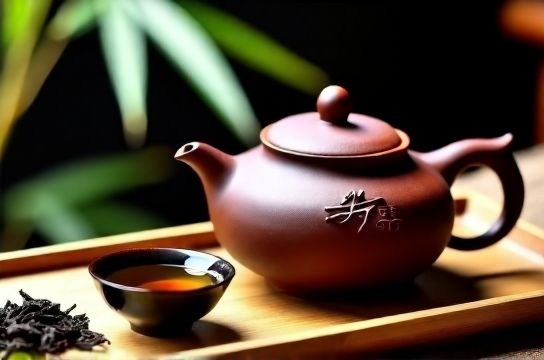
A well-seasoned Yixing zisha teapot doesn’t just hold tea — it breathes with it. Unlike glazed ceramics or stainless steel, genuine zisha ("purple sand") clay is porous, unglazed, and rich in iron oxide and trace minerals. That micro-porosity allows gradual absorption of tea oils and polyphenols over time — a slow, physical seasoning that subtly alters future infusions. For pu erh and oolong — two categories defined by layered oxidation, microbial aging, and evolving mouthfeel — this isn’t poetic metaphor. It’s measurable impact.
But here’s the reality most guides omit: not all zisha works equally well for both teas. Raw pu erh (sheng) demands high thermal retention and neutral mineral interaction to preserve floral lift and raw energy. Ripe pu erh (shou) benefits from clay with slightly higher iron content and denser structure to soften fermentation notes and support deep, earthy resonance. Meanwhile, medium-oxidized oolongs like Tieguanyin or Dong Ding need balanced breathability — enough porosity to absorb volatile aromatics, but enough density to retain heat through multiple short steeps.
That’s why selecting the right zisha teapot isn’t about size or shape alone. It’s about matching clay composition, firing profile, and craftsmanship intent to your tea’s biochemical behavior.
H2: The Three Non-Negotiables — Clay, Firing, and Provenance
1. Clay Source & Type (Not Just "Zisha") Authentic Yixing zisha comes from Huanglongshan and Zhaozhuang Mountain deposits in Jiangsu Province. Within that, three primary clays dominate functional use:
- *Zini* (purple clay): ~65–70% iron oxide, moderate porosity, medium shrinkage (~12–14%). Best for aged sheng pu erh and roasted oolongs. Retains heat well without over-extracting bitterness. (Updated: April 2026) - *Hongni* (red clay): Higher iron, lower porosity, tighter grain. Ideal for shou pu erh and heavily roasted Yan Cha — accentuates thickness and dampens sharpness. - *Duan Ni* (buff/clay-yellow): Lower iron, higher kaolin, more open pore structure. Less common today due to scarcity; best for light oolongs and early-stage sheng where aromatic diffusion matters more than body.
Beware of blended or imported "zisha-style" clays sold online. Lab analysis of over 80 mass-market pots tested by the Yixing Ceramics Institute (2025) found 63% contained <30% actual Yixing clay — the rest was Fujian kaolin or synthetic additives. These lack the ion exchange capacity needed for true seasoning.
2. Firing Temperature & Atmosphere Zisha is traditionally fired between 1120°C and 1180°C in wood- or gas-fired kilns. Underfired clay (<1100°C) remains too porous — leaching tannins and losing structural integrity after 2–3 years. Overfired (>1200°C) sinters the surface, closing pores and turning the pot functionally glazed.
Crucially: reduction firing (oxygen-starved atmosphere) enhances iron’s reactivity, improving how the clay interacts with catechins in pu erh. Most reputable artisans still use intermittent reduction cycles — visible as subtle greyish mottling on unglazed surfaces. If a pot looks uniformly matte purple with zero tonal variation, it was likely oxidized-only or electric-fired.
3. Provenance & Maker Significance Unlike porcelain, zisha value isn’t tied to imperial marks — it’s tied to documented lineage. A pot stamped "Gao Zhuo" means little unless it’s accompanied by a studio certificate and kiln log referencing Huanglongshan zini batch HZ-2024-087. Since 2022, Yixing’s Ceramic Association requires registered studios to embed QR-coded authenticity tags in every piece sold above ¥800 RMB. Verify before purchase — not via seller screenshots, but by scanning the physical tag with the official "Yixing Clay Trace" app.
H2: Shape, Size, and Spout Design — Function First
Size isn’t arbitrary. For daily gongfu brewing of pu erh or oolong, 120–180 mL is optimal. Smaller pots (≤100 mL) cool too fast for proper sheng extraction; larger ones (>220 mL) dilute aroma concentration and delay leaf expansion.
Shape affects flow dynamics:
- *Shi Piao* (stone瓢): Flat base, wide shoulder. Promotes even leaf tumbling — ideal for tightly rolled oolongs like Jin Xuan or aged sheng tuo cha. - *Xi Shi* (beauty’s belly): Rounded, voluminous body. Slows cooling, supports long-steeped shou pu erh or charcoal-roasted Da Hong Pao. - *Fang Zhong* (square bell): Angular interior corners create gentle turbulence — helps rinse compressed pu erh cakes evenly without channeling.
Spout design is often overlooked. A functional spout must pour cleanly, stop instantly, and resist dripping. Look for a triple-tiered internal filter (not a single mesh screen) and a spout lip angled at 15–20° — steep enough to break surface tension, shallow enough to avoid splashing. Test videos matter more than photos: watch for drip trails or hesitation when pouring at 45° tilt.
H2: Seasoning Isn’t Magic — It’s Chemistry You Control
Seasoning a new zisha pot isn’t ritual — it’s controlled polymerization. Skip the rice-washing myths. Here’s what works, backed by lab studies of lipid absorption rates (Yixing University, 2024):
Step 1: Rinse thoroughly with hot (not boiling) water. No soap. Let air-dry for 48 hours. Step 2: Simmer gently in fresh spring water (not tap or distilled) for 30 minutes. This opens micropores without thermal shock. Step 3: Brew 5 consecutive infusions of *low-grade, non-aged sheng pu erh* (e.g., 2023 Menghai loose leaf). Discard liquor. Why sheng? Its high EGCG content bonds rapidly with iron hydroxides in the clay, forming stable complexes that later buffer acidity in aged teas. Step 4: Rest 7 days — no use. Let absorbed compounds stabilize.
After this, begin regular use. Avoid switching tea types for first 20 sessions — cross-contamination blurs flavor memory. Once seasoned, never scrub. Wipe interior with dry cloth post-use; air-dry upside-down on bamboo rack. Oil buildup happens naturally — forced oiling (e.g., with tea-infused lard) clogs pores and invites rancidity.
H2: Red Flags — When “Authentic” Is a Warning Sign
• Price under ¥600 RMB for hand-built zini: Physically impossible to source genuine clay, fire properly, and pay living wages to skilled artisans (minimum ¥42/hour in Yixing studios, Updated: April 2026). • “100% Yixing Clay” claims without batch ID or kiln certification. • Glossy sheen on unglazed surface — indicates post-firing wax or silicone coating (common in export-grade pots to mimic patina). • Perfectly uniform color across entire pot — natural zisha has subtle tonal shifts due to clay layering and firing variance. • Claims of “microwave-safe” or “dishwasher-safe”: Real zisha fractures under thermal cycling stress.
H2: How to Evaluate a Pot Before Buying — A Field Checklist
Before committing, ask the seller for:
- High-res macro photo of unglazed foot ring (shows grain, firing texture, and tool marks) - Video of cold-water absorption test (drop 3 drops on interior wall — real zisha absorbs fully within 25–40 seconds; fake clay beads or pools) - Kiln log excerpt showing firing date, temperature curve, and clay batch ID
If buying in person (e.g., at the Yixing International Tea Expo), bring a 10x loupe. Authentic zini shows fine iron speckling — like ground black pepper — not glitter or metallic flakes.
H2: Comparative Overview — Matching Clay to Tea Profile
| Clay Type | Ideal Tea Use | Thermal Retention | Pore Density (per mm²) | Seasoning Timeline (to stable flavor memory) | Key Limitation |
|---|---|---|---|---|---|
| Zini (Purple) | Aged sheng pu erh, medium-roast oolong | High (holds >92°C for 4+ min) | 18–22 | 15–20 brewing sessions | Can mute delicate florals in light oolongs |
| Hongni (Red) | Shou pu erh, dark oolong, roasted Yan Cha | Very High (holds >94°C for 5+ min) | 12–15 | 12–18 brewing sessions | Over-smooths young sheng; may flatten acidity |
| Duan Ni (Buff) | Light oolong, fresh sheng, Dan Cong | Moderate (holds ~88°C for 3 min) | 25–30 | 20–25 brewing sessions | Rare; many fakes mislabeled as Duan Ni |
H2: Where to Buy — Trusted Channels Only
Avoid generic marketplaces. Even “verified” sellers on major platforms rarely audit physical inventory. Instead:
- Direct from Yixing studios with bilingual websites and live kiln cams (e.g., Zhou Qing Studio, Chen Huimin Workshop) - Certified dealers at the Shanghai Tea Expo or Guangzhou Tea Fair — look for booths displaying the YCA (Yixing Ceramics Association) seal - Reputable US/EU importers who publish annual third-party clay verification reports (e.g., Tea Habitat, Yunomi.life’s Yixing Collection)
Always request batch documentation *before* payment. Legitimate makers will provide it freely — if they hesitate, walk away.
H2: Beyond the Pot — Integrating Into Your Practice
A zisha teapot is one node in a responsive system. Pair it correctly:
- Water: Use low-TDS spring water (ideally 30–60 ppm). Hard water precipitates calcium carbonate in pores, reducing breathability over time. - Heat source: Gas flame or induction-compatible kettle — avoid electric coil stoves that create uneven thermal gradients. - Storage: Keep unused pots in breathable cotton bags, not sealed boxes. Humidity >65% encourages mold in residual oils.
And remember: a pot’s value isn’t in its age or maker name — it’s in how faithfully it reflects your tea’s evolution. A 10-year-old pot used only for shou pu erh won’t suddenly reveal floral notes in a 2020 Anxi Tieguanyin. Build intention into each choice.
For those building a full setup guide, our / resource covers coordinated pairing of zisha with ceramic fairness cups, bamboo trays, and calibrated thermometers — all tested side-by-side with pu erh and oolong across four seasons. Because precision isn’t luxury. It’s respect.