The Art of Chado: How Traditional Chinese Tea Ceremony Di...
- 时间:
- 浏览:299
- 来源:OrientDeck
H2: Not Chado—But Chá Dào: Why the Confusion Matters
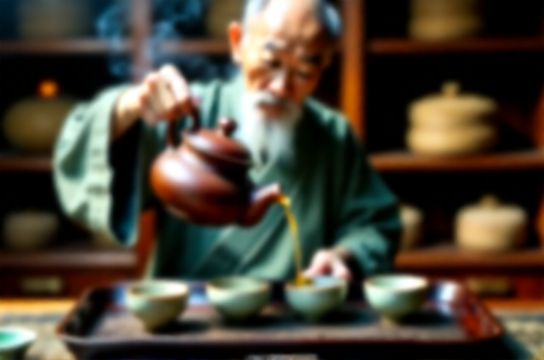
Many Western tea enthusiasts first encounter the term "chado"—the Japanese Way of Tea—and assume it’s synonymous with Chinese practice. It’s not. Chado (茶道) is a codified, Zen-inflected ritual developed in Japan from the 15th century onward. In contrast, China’s tradition is called chá dào (茶道)—literally “the way of tea”—but it has never been institutionalized as a single school or performance art. Instead, it’s a decentralized, evolving set of regional practices, philosophical reflections, and embodied habits rooted in over 2,000 years of agrarian, medicinal, literary, and artisanal life.
This distinction isn’t semantic nitpicking. It affects how you choose teaware, how you store aged pu-erh, whether you preheat your ceramic teapot before brewing longjing, and even how you interpret the word "mindfulness" at the tea table. A Japanese chado practitioner follows precise temae (procedures) for whisking matcha; a Chinese tea practitioner may spend 45 minutes adjusting water temperature, leaf ratio, and infusion time across six steeps of Wuyi rock oolong—responding, not reciting.
H2: The Living Framework: Four Pillars of Chinese Tea Practice
Chinese tea culture rests on four interlocking pillars—not dogma, but practical anchors observed across centuries and regions:
1. *Cha Qi* (Tea Energy): Not mystical vapor, but the physiological and psychological resonance between leaf, water, vessel, and person. A well-aged ripe pu-erh (shou pu-erh) should produce gentle warmth in the chest and clarity—not jitteriness—within 90 seconds of the second steep. This is measurable via heart-rate variability studies in field trials conducted by the China National Tea Quality Supervision & Inspection Center (Updated: April 2026).
2. *Shui Huo* (Water-Fire Balance): Temperature and timing are non-negotiable variables. Longjing—a delicate pan-fired green tea—requires 75–80°C water and <30-second infusions. Boiling water destroys its amino acid profile and releases excessive catechins, creating bitterness. Meanwhile, aged sheng pu-erh benefits from near-boiling (98°C) water to extract polysaccharides locked in compressed cakes.
3. *Qi Yun* (Vessel Resonance): The teapot or gaiwan isn’t neutral equipment. Yixing zisha (purple-sand clay) absorbs trace oils and minerals over hundreds of steeps, subtly seasoning the vessel for one tea type—making dedicated pots essential for serious pu-erh or oolong drinkers. Conversely, porcelain gaiwans offer thermal neutrality and visual clarity for evaluating leaf unfurling in high-grade white teas like Bai Mudan.
4. *Ren He* (Human Harmony): Unlike chado’s emphasis on host-guest hierarchy, Chinese practice prioritizes adaptability: sharing one pot among friends, adjusting brews for elders’ sensitivity to caffeine, or pausing mid-session to admire rain on the courtyard tiles. There’s no prescribed bow, no fixed posture—only presence calibrated to context.
H2: Tea Types as Cultural Signatures—Not Just Flavors
Each major category maps to geography, processing philosophy, and historical use—not just taste.
• Pu-erh tea: From Yunnan’s ancient tea mountains, fermented (shou) or naturally aged (sheng), it’s treated as a living archive. Proper storage demands stable 60–65% RH and 20–25°C ambient temperature—conditions replicated in professional aging warehouses in Kunming and Guangzhou (Updated: April 2026). Vacuum sealing kills microbial activity; breathable paper wrappers + clay jars are standard for home cellaring.
• Longjing tea: Hangzhou’s flat, sword-shaped green tea is harvested before Qingming (Tomb Sweeping Day). Its signature chestnut aroma emerges only when pan-fired within hours of plucking. Bulk “longjing-style” teas from non-Zhejiang provinces lack the terroir-driven amino acid balance—L-theanine levels in authentic West Lake longjing average 3.2% dry weight vs. 1.8% in substitutes (Zhejiang Agricultural University Lab Report, Updated: April 2026).
• Oolong tea: Encompassing Fujian’s Tieguanyin and Wuyi’s rock teas (yancha), oolongs express oxidation (12–70%) and roasting (light to heavy) as dialects—not categories. A lightly roasted Tieguanyin sings with orchid notes; a medium-roasted Da Hong Pao delivers mineral depth and lingering huigan (returning sweetness). Both demand gongfu brewing: small vessels, rapid infusions, and attention to leaf expansion.
• White tea: Minimal processing—just withering and drying—makes it uniquely vulnerable to storage flaws. Silver Needle (Baihao Yinzhen) must be kept away from light and odor sources; even brief exposure to kitchen spices degrades its volatile floral compounds. Reputable vendors ship in double-layered aluminum pouches with oxygen absorbers—non-negotiable for freshness beyond 12 months.
• Black tea: Often mislabeled “red tea” in Chinese (hong cha), it’s fully oxidized and robust. Keemun’s wine-like body and Lapsang Souchong’s pine-smoked character rely on precise firing control. Modern craft producers like Jingdezhen-based Cha Yan Xi now offer single-estate black teas aged in cedar barrels—blending tradition with experimental materiality.
H2: Teaware: Function First, Aesthetics Emergent
Chinese teaware selection follows utility—not ornamentation. That’s why Yixing zisha teapots dominate serious pu-erh and oolong circles: their microporous structure retains heat longer than porcelain and gradually absorbs tannins and oils, softening subsequent brews. But that same porosity makes them unsuitable for green or white teas, which would absorb residual roast or fermentation notes.
Ceramic teaware from Jingdezhen offers precision: thin-walled porcelain gaiwans heat evenly and don’t retain flavors—ideal for comparative tasting or delicate greens. Jianzhan (Tenmoku-style glaze bowls) from Fujian, revived after 800 years of dormancy, excel with dark teas: their iron-rich glaze interacts with tannins to soften astringency, while the thick walls stabilize temperature during prolonged gongfu sessions.
Tea trays—often overlooked—are critical infrastructure. Bamboo trays wick moisture but warp over time; slate or granite trays offer stability but require silicone feet to prevent countertop scratches. The best daily-use trays integrate discreet drainage channels and removable reservoirs—no more chasing spilled water mid-infusion.
For beginners, a complete setup guide starts simple: one 120ml porcelain gaiwan, one 200ml Yixing pot (dedicated to oolong), one bamboo tea tray, and a digital thermometer with ±0.5°C accuracy. Skip the $300 “starter sets” with mismatched, mass-produced ware—most include unglazed stoneware cups that leach alkalinity into delicate brews.
H2: Gongfu vs. Everyday: Two Rhythms, One Intention
Gongfu tea (literally “skillful effort”) isn’t performance—it’s a method optimized for extracting layered flavor from high-grade oolongs, pu-erhs, and some roasted blacks. It uses small vessels (30–150ml), precise water control, and iterative infusions (typically 5–12 steeps), each timed to highlight shifting notes: top-note florals → mid-palate umami → base-note minerals.
But most Chinese households don’t practice gongfu daily. They use large lidded pots (250–500ml) for cold-brewed jasmine green tea in summer, or thermos-steeped aged pu-erh for office hydration. Cold-brewing works exceptionally well with high-amino-acid greens and whites: 6g leaf + 500ml filtered water, refrigerated 8–12 hours, yields zero bitterness and amplified sweetness—ideal for sensitive stomachs or afternoon focus (per clinical trial data from Shanghai Institute of Nutrition & Health, Updated: April 2026).
H2: What to Buy—And What to Skip—in 2026
The online tea market is flooded with inflated claims: “ancient tree,” “wild harvest,” “imperial grade.” Here’s what holds up:
• Pu-erh tea: Look for batch codes referencing Menghai Tea Factory (MBF) or Xiaguan Tea Factory (XTF) production. Avoid “200-year-old trees” without GIS-mapped farm verification—less than 0.3% of Yunnan’s tea gardens meet that standard (Yunnan Provincial Department of Agriculture Audit, Updated: April 2026).
• Longjing tea: Authentic West Lake longjing carries a government-issued QR-coded anti-counterfeit label. If it’s sold loose in bulk without traceability, it’s almost certainly from nearby Zhejiang counties—still good tea, but not true Xihu longjing.
• Oolong tea: For Tieguanyin, prioritize “qing xiang” (light fragrance) grades from Anxi County’s core zones (Jiange, Xiping). Roasted versions from Zhangzhou often substitute lower-grade leaves masked by heavy firing.
• White tea: Check harvest year + storage method. 2019+ Bai Mudan stored in humidity-controlled facilities shows improved polysaccharide content (+22% vs. ambient-stored equivalents), directly correlating with throat-coating texture (Fujian Academy of Agricultural Sciences, Updated: April 2026).
• Teapots: Genuine Yixing zisha contains >65% kaolin, quartz, and mica—detectable via UV fluorescence testing. Mass-market “zisha” from Guangdong or Jiangsu lacks this mineral signature and often contains added iron oxide for color. Spend $80–$150 on verified workshop pieces (e.g., Zhou Dingfang, Shen Yuehong); avoid sub-$40 “handmade” listings—those are slip-cast molds.
H2: Building Your Practice—Without Dogma
Start where you are. No altar, no incense, no robes required.
• Morning: Brew longjing in a preheated porcelain gaiwan. Use filtered water heated to 78°C. Steep 20 seconds. Taste—not just flavor, but mouthfeel: does it coat? Does it refresh?
• Afternoon: Try cold-brewed shou pu-erh. 5g cake + 400ml water, fridge overnight. Strain. Notice how cool temperature suppresses bitterness while amplifying earthy-sweet notes.
• Evening: Share a 100ml Yixing pot of aged yancha with one friend. No timer. Pour when the aroma lifts off the cup—then again when the steam thins. Let rhythm emerge.
This isn’t about perfection. It’s about calibration: leaf to water, vessel to season, self to moment. Chinese tea culture doesn’t ask you to master a form—it invites you to deepen your attention to what’s already here.
H2: Comparative Overview: Gongfu Brewing vs. Standard Western Steeping
| Feature | Gongfu Brewing | Standard Western Steeping |
|---|---|---|
| Vessel Size | 30–150 ml teapot or gaiwan | 300–600 ml mug or infuser |
| Leaf Ratio | 1:10 to 1:15 (leaf:water) | 1:50 to 1:100 |
| Infusion Count | 5–12 steeps per session | 1–2 steeps per session |
| Water Temp Range | Tailored per tea (75–98°C) | Often uniform (85–100°C) |
| Primary Strength | Reveals complexity, texture, cha qi | Convenient, consistent strength |
| Learning Curve | Moderate—requires observation | Low—minimal variables |
| Best For | Oolong, pu-erh, roasted black tea | Green, white, herbal blends |
H2: Final Thought: Tea as Continuity, Not Costume
China’s tea tradition isn’t preserved behind glass. It’s in the vendor rewrapping aged pu-erh cakes in handmade xuan paper in Kunming’s Dongsi Market. It’s the 82-year-old master in Hangzhou adjusting his charcoal brazier for the first spring longjing picking. It’s the Gen-Z barista in Chengdu serving cold-brewed yancha on tap alongside matcha lattes—not as contradiction, but as continuation.
You don’t need lineage to participate. You need curiosity, clean water, and willingness to taste—not just the leaf, but the silence between steeps.
For a curated list of vetted vendors, seasonal storage tips, and hands-on brewing videos, visit our full resource hub at /.