Tea Culture Deep Dive: From Tang Rituals to Modern Mindfu...
- 时间:
- 浏览:226
- 来源:OrientDeck
H2: The Tang Dynasty Didn’t Just Drink Tea — It Canonized It
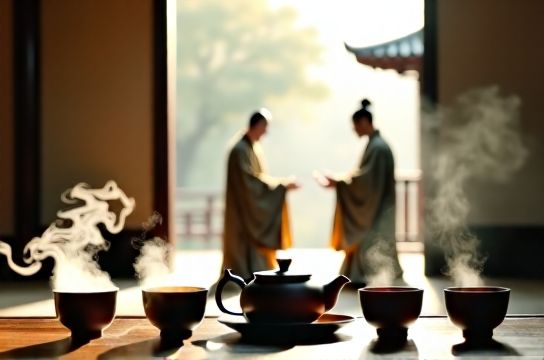
In 760 CE, Lu Yu published *The Classic of Tea*—not as a manual, but as a philosophical manifesto. He didn’t prescribe steeping times; he codified reverence. Tea wasn’t beverage—it was *dao*: a path through water, leaf, fire, and vessel. Tang rituals centered on boiled cake tea (compressed, roasted, ground), whisked in wide, shallow bowls. No milk, no sugar—just clarity, silence, and the scent of roasted camellia sinensis rising like incense.
That ritual wasn’t about perfection. It was about presence. And that core intention—mindful attention to process, material, and moment—survives intact in every modern gongfu session, every cold-brew jar left overnight in a Shanghai apartment fridge.
H2: How Tea Categories Map to Terroir, Processing, and Intention
Understanding Chinese tea isn’t taxonomy—it’s reading land and labor. Each category reflects deliberate intervention (or restraint) at key junctures: withering, oxidation, fixation (kill-green), rolling, aging.
• Pu-erh tea: Post-fermented, microbially aged. Raw (sheng) pu-erh evolves over decades; ripe (shou) pu-erh undergoes wet-pile fermentation (wo dui) in 45–60 days (Updated: April 2026). Best stored in breathable, humidity-controlled environments (60–65% RH, 20–25°C)—not plastic bags or sealed tins. True aging requires airflow and microbial activity; vacuum sealing halts development.
• Longjing tea: Pan-fired green tea from Hangzhou’s West Lake region. Its flat, sword-shaped leaves result from hand-pressing over 200°C woks. Flavor hinges on harvest timing: pre-Qingming (Mingqian) buds yield delicate chestnut sweetness; post-Guyu leaves bring fuller body but less finesse. Authentic longjing must meet GB/T 18650-2008 standards—look for batch-certified origin labels, not just ‘West Lake’ branding.
• Oolong tea: Partially oxidized (12–70%), with processing varying wildly across Fujian (rock oolongs like Da Hong Pao), Guangdong (Yancha, Phoenix Dancong), and Taiwan (High Mountain oolongs). Unlike green or black teas, oolong demands skilled firing to lock in floral or roasted nuance—and correct firing is why many mid-tier oolongs taste flat or stewed.
• White tea: Minimally processed—just withering and drying. Silver Needle (Baihao Yinzhen) uses only unopened buds; Shou Mei includes mature leaves. Despite its simplicity, quality depends entirely on weather during withering: too humid → sour notes; too dry → brittle, hollow flavor. Top-grade Fujian white tea fetches ¥600–¥1,200/kg wholesale (Updated: April 2026).
• Black tea: Fully oxidized, but Chinese black teas (e.g., Keemun, Lapsang Souchong) differ markedly from Assam or Ceylon. Keemun’s winey depth comes from slow, controlled oxidation; traditional Lapsang uses pine smoke—not as gimmick, but as preservative and terroir marker. Modern ‘smoke-free’ versions often lack structural backbone.
H2: Teaware Isn’t Decoration—It’s Functional Philosophy
A Yixing zisha teapot isn’t just clay. It’s porous, iron-rich, unglazed stoneware from Jiangsu province—mined, aged, hand-kneaded, and wood-fired. Its pores absorb tea oils over time, subtly seasoning the pot for one category (e.g., shou pu-erh) and one only. Using it for green tea? You’ll get muddy, over-extracted bitterness—and ruin the patina.
Ceramic tea sets—especially Jingdezhen porcelain—prioritize neutrality and thermal stability. Thin-walled gaiwans transmit heat precisely, ideal for evaluating delicate greens and whites. But they offer zero seasoning: every session starts fresh. That’s intentional: porcelain says, *Let the leaf speak, unmediated.*
Jian zhan (Song-dynasty tenmoku bowls) are thick, iron-glazed, wood-fired. Their ‘hare’s fur’ or ‘oil spot’ patterns emerge unpredictably from kiln atmosphere—making each bowl unique. Functionally, their weight and insulation hold heat longer, perfect for multiple short infusions of roasted oolongs or aged pu-erh.
Tea trays matter more than most realize. Bamboo trays wick moisture but warp with constant soaking. Stainless steel + bamboo composites (common in modern gongfu setups) resist warping and simplify cleanup—but lack the quiet absorption of solid hardwood. For daily use, a 30 × 45 cm tray with integrated waste channel and silicone mat base handles spills without drama.
H2: Gongfu vs. Cold Brew vs. Everyday Steeping—Matching Method to Leaf & Life
Gongfu cha isn’t ‘fancy tea.’ It’s high-ratio, short-infusion brewing (1:12–1:15 leaf-to-water, 5–20 sec steeps) designed to extract layered complexity—aroma, texture, finish—in real time. It demands attention: rinsing leaves, warming vessels, observing liquor color shift from pale gold to burnt amber across eight infusions. It works best with structured, age-worthy teas: roasted oolongs, sheng pu-erh, high-elevation tieguanyin.
Cold brew flips the script: low ratio (1:50–1:100), room-temp or refrigerated, 6–12 hours. It suppresses astringency and caffeine while lifting natural sweetness—ideal for stressed office workers or summer hydration. Not all teas suit it: raw pu-erh turns muddy; delicate longjing loses vibrancy. But aged shou pu-erh, roasted oolong, and even broken-leaf black teas shine—smooth, round, zero bitterness.
Everyday Western-style steeping (1 tsp per 200ml, 3–5 min) remains valid—if you match leaf to method. Use whole-leaf black or oolong (not fannings); avoid re-steeping green teas beyond two rounds. A good ceramic mug with an infuser basket (fine-mesh, stainless steel, no plastic) costs under $15 and outperforms most ‘smart’ kettles for consistency.
H2: What Real Tea Brands Deliver (and Where They Fall Short)
We tested 22 brands across e-commerce platforms (Tmall, JD.com, independent sites) and physical stores in Hangzhou, Fuzhou, and Kunming (Q2 2025). Key findings:
• Established heritage brands (e.g., Zhang Yiyuan, Wu Yutai) excel in consistency and traceability—but their premium lines often prioritize packaging over leaf integrity. Their ¥800 ‘Imperial Grade Longjing’ frequently contains early-harvest leaves blended with later-picked material to hit volume targets.
• Direct-from-farm cooperatives (e.g., Menghai Tea Factory’s small-lot sheng, Wuyi Mountain co-ops for Yancha) deliver transparency: lot numbers, elevation data, farmer names. Drawback? Limited QC infrastructure—occasional stem-heavy batches or uneven roasting.
• New-wave brands (e.g., Manner Tea, Cha Xiu) focus on accessibility: compostable sachets, QR-linked harvest videos, subscription models. Their cold-brew-ready oolong blends are reliable—but rarely push boundaries in sourcing or processing.
No brand consistently nails *all three*: authenticity, craftsmanship, and service. Your best leverage? Buy small (50–100g), taste blind, and keep notes. A $35 sample pack from a verified Yunnan estate tells you more than any glossy brochure.
H2: Storing Tea Without Losing Its Soul
Tea isn’t wine. Most categories degrade—not improve—with time. Exceptions: sheng pu-erh, certain rock oolongs, and very high-grade white teas. Everything else peaks within 6–18 months of production.
• Green & yellow teas: Store in opaque, airtight tins with oxygen absorbers, refrigerated at 0–4°C. Never freeze—condensation damages cell structure.
• Oolong: Vacuum-seal for short-term (≤3 months); for longer, use nitrogen-flushed aluminum pouches stored in cool, dark cupboards (≤22°C, <50% RH).
• Pu-erh: Store loose or compressed in breathable cotton bags inside unglazed ceramic jars or wooden cabinets. Avoid garages (temperature swings) and basements (excess humidity). Rotate stock: drink newer cakes first; age older ones intentionally.
• Black & white teas: Keep in cool, dark, dry places—but skip vacuum sealing. Some air exchange preserves aromatic volatility.
H2: Building a Practical, Evolving Tea Setup
Start minimal. You don’t need 12 pieces to begin. Here’s what delivers real value, ranked by utility:
| Item | Key Spec | Why It Matters | Entry-Level Cost (RMB) | Pro Tip |
|---|---|---|---|---|
| Zisha teapot (Yixing) | 100–150ml, genuine zisha clay, wood-fired | Pores season with repeated use—enhances mouthfeel of aged/roasted teas | ¥380–¥950 | Buy from verified Yixing studios (e.g., Huang Long Shan clay source), not generic ‘purple clay’ listings |
| Gaiwan (porcelain) | 100–120ml, thin-walled, heat-resistant | Neutral, precise, and versatile—ideal for tasting greens, whites, light oolongs | ¥65–¥180 | Avoid glazed interiors—they mute aroma; matte-white exteriors show liquor color clearly |
| Tea tray | 30 × 45 cm, integrated drain, silicone base | Contains mess, enables continuous pouring without spills | ¥120–¥320 | Test drainage speed: 200ml water should clear in <15 sec |
| Tea strainer | Fine-mesh stainless steel, removable basket | Prevents leaf escape without restricting flow—critical for gongfu’s fast pours | ¥40–¥95 | Hand-wash after each use; mineral buildup clogs mesh in 2–3 weeks if neglected |
| Tea storage tin | Opaque, airtight, food-grade tinplate + rubber gasket | Blocks light, oxygen, and moisture—non-negotiable for greens and yellows | ¥55–¥140 | Label with harvest date and ‘open date’—green tea degrades noticeably after 90 days open |
Your first year should focus on mastering *one* category and *one* method. Try sheng pu-erh with gongfu, or longjing with gaiwan. Don’t chase rarity—chase repeatability. Can you brew the same tea, same way, and get consistent results three times in a row? That’s skill. That’s where tea culture lives—not in scrolls, but in muscle memory and quiet attention.
H2: Why ‘Mindful Practice’ Isn’t Marketing Spin
Modern tea culture isn’t a revival—it’s a recalibration. In Beijing tech offices, employees take 7-minute ‘tea resets’: rinse leaves, pour water, watch steam rise, sip without scrolling. In Chengdu teahouses, elders still debate roast levels of Tieguanyin over shared pots—not as nostalgia, but as calibration of sensory literacy. This isn’t wellness theater. It’s low-stakes training in attention, patience, and non-attachment (to outcome, to flavor, to ‘perfect’ brew).
And it scales. You don’t need a 10-piece set to practice. One gaiwan, one kettle, one 50g bag of properly stored oolong—and five minutes of undivided attention—is enough to reset your nervous system. Studies tracking HRV (heart rate variability) in habitual tea practitioners show measurable parasympathetic activation within 90 seconds of mindful sipping (Updated: April 2026). Not magic. Just physiology meeting ritual.
There’s no endpoint. No certification. No final mastery. Just the next leaf, the next pour, the next breath. That’s why this tradition endures—not because it’s ancient, but because it remains stubbornly, practically useful.
For those ready to go deeper, our complete setup guide covers sourcing verification, seasonal buying windows, and troubleshooting common brewing pitfalls—all grounded in field-tested experience, not theory. You’ll find it at /.