Cold Brew Tea Revolution: Best Chinese Teas for Iced Infu...
- 时间:
- 浏览:290
- 来源:OrientDeck
H2: Why Cold Brew Tea Isn’t Just a Trend—It’s a Precision Shift
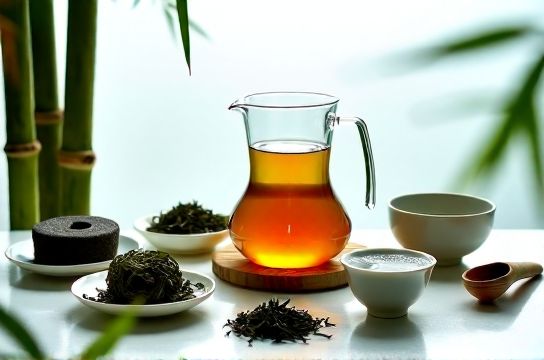
Cold brew tea isn’t about convenience alone. It’s a recalibration of extraction physics: lower temperatures suppress tannin release, mute bitterness, and elevate volatile aromatic compounds that heat would volatilize or degrade. In China, where hot infusion dominates centuries-old ritual, cold brewing has quietly gone from backyard experiment to serious craft—especially among urban professionals in Shanghai and Guangzhou seeking clarity, low-caffeine refreshment, and shelf-stable freshness without preservatives.
But not all Chinese teas respond equally well to cold infusion. Some flatten; others bloom with unexpected nuance. And unlike Japanese sencha—often optimized for chilled service—most traditional Chinese teas were never designed for sub-20°C extraction. That means success hinges on leaf structure, oxidation level, processing method, and post-harvest handling—not just origin or grade.
H2: The Five Teas That Excel—And Why They Do
H3: Pu-erh Tea (Aged Raw & Ripe)
Raw (sheng) Pu-erh aged 3–8 years develops layered microbial complexity—think dried plum, damp stone, and aged parchment—that unfolds slowly in cold water. Unlike hot brewing, which can emphasize sharp astringency in younger sheng, cold infusion softens edges while preserving its structural backbone. Ripe (shou) Pu-erh, fermented via wet-pile technique, delivers deep umami, cocoa, and damp earth notes—ideal for 12–24 hour fridge infusions. Key: Use loose-leaf, not compressed cakes, unless you break them finely (a common misstep). Avoid over-oxidized or overly baked batches—those lose aromatic lift when chilled. (Updated: April 2026)
H3: Longjing Tea (Dragon Well)
High-grade Longjing—specifically pre-Qingming spring harvests with flat, jade-green leaves—retains delicate chestnut, steamed edamame, and lily notes even at 4°C. But only if it’s *fresh*. Most supermarket Longjing is roasted too heavily or stored poorly, leading to hay-like flatness when cold-brewed. Look for tight, uniform leaves with visible downy tips and a faint vegetal sweetness—not grassy or smoky. Cold brew time: 6–8 hours refrigerated. Over-steeping (>10 hrs) dulls its signature vibrancy. Not recommended for summer-harvest or machine-rolled versions.
H3: Oolong Tea (Especially High-Mountain & Wuyi Rock Varietals)
Medium-oxidized oolongs (30–50%) like Dong Ding or Alishan shine brightest: their floral-citrus top notes remain vivid, while deeper honeyed body stays integrated. Heavily roasted oolongs (e.g., traditional Tieguanyin or some Da Hong Pao) are less ideal—the roasting oils congeal slightly in cold liquid, yielding a waxy mouthfeel. However, lightly roasted Yancha (rock oolong) with mineral lift—think Zhengyan cultivars grown in Wuyishan’s weathered granite fissures—delivers surprising saline depth and orchid fragrance when cold-infused for 10–14 hours. Avoid tightly rolled balls unless you gently loosen them first; compact forms limit water contact surface area.
H3: White Tea (Bai Mudan & Shou Mei)
White tea’s minimal processing preserves high levels of amino acids (theanine) and polyphenols—ideal for cold extraction. Bai Mudan (white peony), with its tender buds and young leaves, yields a silky, honeysuckle-sweet infusion with subtle melon skin finish. Shou Mei, coarser and more oxidized, brings darker dried fruit and herbaceous notes—excellent for longer infusions (16–20 hrs) and blending with citrus peel. Silver Needle (Bai Hao Yin Zhen) is *not* recommended for cold brew: its dense, silvery buds extract too slowly and often taste faintly metallic when under-extracted. Storage matters: white tea degrades faster than most when exposed to light or humidity—keep it sealed in opaque, nitrogen-flushed pouches.
H3: Black Tea (Keemun & Lapsang Souchong—Selectively)
Most Chinese black teas oxidize 80–95%, making them prone to tannic harshness when cold-brewed. But two exceptions stand out: high-elevation Keemun Gongfu (not standard Keemun), with its winey, bergamot-tinged profile, gains elegant restraint when steeped cold for 8 hours. And *smoke-free* Lapsang Souchong—yes, they exist—is increasingly available from Fujian producers who skip pine-smoking but retain the rich, malty base. These yield clean, brisk infusions with dark cherry and toasted almond notes—zero campfire aftertaste. Skip any black tea labeled “robust” or “bold”: those indicate higher tannin and caffeine, which translate poorly to cold water.
H2: What *Doesn’t* Work—and Why
Green teas beyond Longjing—like Bi Luo Chun or Mao Feng—tend to turn briny or seaweed-like when cold-infused due to chlorophyll breakdown and residual enzyme activity. Yellow teas (Jun Shan Yin Zhen) lack sufficient structural complexity to hold up across long extractions. And heavily scented teas (jasmine, osmanthus) rely on volatile oils that don’t solubilize well below 60°C—so their fragrance dissipates entirely.
Also avoid: powdered teas (matcha-style), tea bags with microplastics (many non-woven sachets leach particles at cold temps), and teas with added flavorings or sweeteners—these destabilize over time and encourage microbial growth.
H2: Gear That Makes or Breaks Your Cold Brew
Your vessel isn’t neutral. Material, seal integrity, and light exposure directly impact stability and flavor.
• Glass carafes (borosilicate): Ideal for visibility and neutrality—but must be kept in total darkness. UV light degrades catechins rapidly. Store inside an opaque cabinet or wrap in linen. • Food-grade stainless steel pitchers: Excellent insulation and light-blocking, but avoid cheap grades that impart metallic off-notes. Look for 304 or 316 stainless. • Ceramic jars with silicone gaskets: Best for batch prep and storage. Glazed interiors prevent absorption; unglazed stoneware (like some Yixing zisha) is *not* suitable—its porosity traps moisture and invites mold.
Tea filters matter too. Fine-mesh stainless steel infusers work—but only if rinsed *immediately* after use. Residual tannins harden into stubborn film. For daily use, consider reusable silicone tea pods with laser-cut micro-perforations (tested leakage-free at 4°C for 72 hrs).
H2: Storage, Shelf Life, and Safety Realities
Cold-brewed tea lasts 3–5 days refrigerated *if* brewed with filtered water (≤1 ppm chlorine), sealed tightly, and kept at ≤4°C consistently. At 6°C—a common fridge fluctuation—microbial load doubles every 18 hours. Discard if cloudiness, sour aroma, or film appears. Never freeze cold brew: ice crystals rupture cell walls, releasing bitter compounds upon thaw.
For dry leaf storage pre-brew: keep whole-leaf teas in matte-finish aluminum pouches with oxygen absorbers. Avoid clear plastic or paper bags—even in drawers. Light and ambient oxygen degrade volatile aromatics within 14 days for green/oolong, 90 days for ripe Pu-erh. (Updated: April 2026)
H2: A Practical Brewing Table—Time, Ratio, Vessel, and Outcome
| Tea Type | Cold Brew Time | Leaf-to-Water Ratio | Recommended Vessel | Pros | Cons & Fixes |
|---|---|---|---|---|---|
| Pu-erh (ripe) | 12–24 hrs | 1:50 (g/ml) | Stainless steel pitcher | Rich umami, zero bitterness, stable for 5 days | Can develop slight sediment—strain through 75-micron filter before serving |
| Longjing (spring) | 6–8 hrs | 1:60 | Opaque ceramic jar | Bright vegetal lift, clean finish, no astringency | Rapid flavor fade after 8 hrs—brew in smaller batches |
| Oolong (Dong Ding) | 10–14 hrs | 1:45 | Glass carafe (stored in dark) | Floral persistence, balanced body, no waxiness | Light exposure causes rapid browning—never leave on counter |
| White (Bai Mudan) | 12–16 hrs | 1:55 | Food-grade silicone bag + glass bottle | Silky texture, lingering sweetness, low caffeine | Under-extraction risk—use digital scale, not volume measures |
| Black (Keemun Gongfu) | 8–10 hrs | 1:50 | Double-walled vacuum carafe | Winey depth, no tannic grip, clear amber color | Loses brightness after Day 2—best consumed same-day |
H2: Beyond the Brew—Pairing With Tea Ware & Culture
Cold brew doesn’t erase tradition—it reshapes it. A minimalist ceramic teacup from Jingdezhen, glazed in celadon or iron-black tenmoku, grounds the experience in material authenticity. For shared service, a low-profile bamboo tea tray with integrated drainage channels keeps condensation tidy—no need for elaborate multi-tiered setups. And while gongfu cha emphasizes heat retention and repeated short infusions, cold brew invites contemplative pacing: one slow pour, one quiet sip, attention held in the space between notes.
That said, don’t force ritual where it doesn’t fit. If your morning routine is 6 a.m. espresso and a 10-minute commute, cold brew’s make-ahead flexibility aligns better with real life than mastering yixing clay seasoning. The goal isn’t orthodoxy—it’s resonance.
H2: Where to Buy—And What to Watch For
Online, look for vendors that disclose harvest date, oxidation %, and storage conditions—not just “authentic” or “premium.” Reputable sellers (e.g., Yunnan Sourcing, Verdant Tea, and local cooperatives like Menghai Tea Factory’s direct channel) list lab-tested heavy metal and pesticide data. Avoid platforms that bundle teas with unrelated “tea gift sets” unless you verify inner packaging: many include silica gel desiccants *inside* the tea pouch—fine for dry storage, disastrous for cold-brew prep, as residual moisture encourages clumping and uneven extraction.
For beginners, start with a curated cold-brew starter kit—ideally including calibrated scale, fine-mesh strainer, opaque storage jars, and three single-origin samples (e.g., aged shou Pu-erh, spring Longjing, and Bai Mudan). You’ll find everything you need in our complete setup guide, updated monthly with verified supplier reviews and seasonal availability alerts.
H2: Final Notes—Taste Is Data, Not Dogma
Cold brew tea reveals what heat obscures: the raw architecture of leaf chemistry. It won’t replace gongfu cha or matcha ceremony—but it expands the sensory map of Chinese tea. Try brewing the same Longjing two ways: hot (80°C, 2 min) and cold (6 hrs, 4°C). Note how the hot version emphasizes umami and warmth, while the cold highlights floral volatility and mineral crispness. Neither is “better.” They’re complementary lenses.
The revolution isn’t in temperature alone. It’s in permission—to simplify, to pause, to trust the leaf without fire. And in doing so, rediscover Chinese tea not as artifact, but as living, adaptable practice.
(Updated: April 2026)