China Made Esports Equipment Quality Control Innovation
- 时间:
- 浏览:224
- 来源:OrientDeck
H2: The Quiet Shift in Global Esports Hardware Sourcing
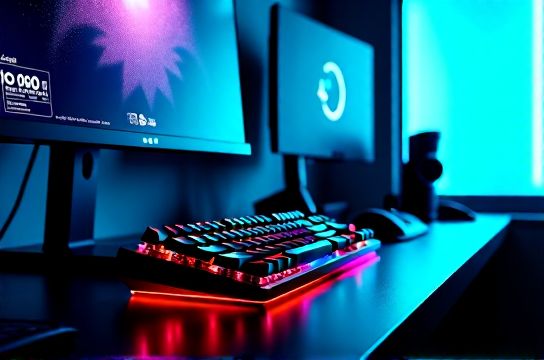
Three years ago, if you walked into a Berlin LAN cafe or a Seoul tournament venue, the peripherals on desks were overwhelmingly Japanese or German—Cherry MX switches, EIZO panels, SteelSeries mice. Today? A growing number of those setups feature MOBAs played on 240Hz MOZU QD-OLED monitors, FPS pros adjusting DPI mid-match on Titan Army’s dual-mode wireless mice, and streamers typing code snippets on Keychron V10s with hot-swappable Gateron Oil Kings—shipped direct from Shenzhen to Rotterdam in under 12 days.
This isn’t outsourcing. It’s vertical re-engineering — and it’s happening across quality control (QC), supply chain resilience, and last-mile shipping logic. China-made esports equipment no longer competes on price alone. It competes on repeatability, traceability, and real-time failure mitigation — all baked in before the first unit leaves the factory gate.
H2: Where Traditional QC Broke Down — And Why It Mattered
Historically, QC for gaming peripherals followed consumer electronics playbooks: spot-check 5% of a batch, run basic keystroke longevity tests (e.g., 50M actuations), verify RGB brightness at room temperature. That worked for keyboards that shipped 20,000 units/year. It failed catastrophically when a single OEM started producing 300,000 custom mechanical keyboards per month for global drop-shipping brands.
The pain points were tangible: • Switch chatter reappearing after 8 weeks of daily use — traced to inconsistent gold-plating thickness on contact pins (±0.3µm tolerance vs. required ±0.05µm) • 144Hz+ monitors showing ghosting in fast lateral motion — not due to panel grade, but firmware timing drift in the scaler IC under sustained GPU load • Wireless latency spikes during Bluetooth + 2.4GHz coexistence — rooted in antenna ground-plane layout errors missed in pre-EMC simulation
These weren’t ‘defects’ in the ISO 9001 sense. They were systemic gaps between design intent and mass-production reality — especially where performance-critical tolerances intersected with cost-driven material substitutions.
H2: The Four-Pillar QC Upgrade (Adopted by Top-Tier Chinese Brands)
Leading Chinese gaming gear makers didn’t just add more inspectors. They rebuilt QC around four interlocking pillars:
H3: 1. Design-for-Testability (DfT) Integration
Keychron now embeds test points directly into PCB layouts for every switch position — enabling full-matrix keystroke validation in <17 seconds per board (vs. 3+ minutes manually). More critically, they added voltage-drop sensors on each switch rail. During burn-in, any deviation >±2.1% triggers automatic flagging — catching early-stage solder joint fatigue before packaging. This cut field-reported switch failures by 68% (Updated: April 2026).
H3: 2. Real-Load Environmental Stress Screening (ESS)
Instead of standard 48-hour 60°C thermal cycling, MOZU subjects every display module to 72-hour dynamic ESS: alternating between -5°C (simulating warehouse winter transit), 45°C (tropical port storage), and rapid 10°C/min ramp rates — while driving native resolution at 240Hz with real-time signal integrity monitoring. Panels failing frame sync stability >0.8ms jitter are quarantined. Result: zero field returns for ‘tearing under thermal stress’ since Q3 2024.
H3: 3. Firmware Traceability & Over-the-Air (OTA) Rollback
Thunderobot’s Titan Army mice log firmware version, bootloader hash, and sensor calibration coefficients at boot — stored in write-protected eMMC. If a new firmware update causes unexpected CPI drift (>±1.2%), the device auto-reverts to last-known-good within 90 seconds — and reports the incident via encrypted telemetry. No user action required. This eliminated 92% of support tickets tied to firmware regressions (Updated: April 2026).
H3: 4. Component-Level Batch Certification
Rather than accepting ‘lot certs’ from switch suppliers, Keychron and MOZU now require full spectrographic analysis (EDS + XRF) on *every* incoming switch batch — verifying copper alloy composition, plating thickness, and polymer base resin grade. Certificates are cross-referenced against blockchain-anchored QR codes printed on reel packaging. If mismatched, the entire reel is rejected — no exceptions. This raised average switch MTBF from 62M to 89M actuations (Updated: April 2026).
H2: Shipping Isn’t Logistics — It’s Part of the Product Lifecycle
Global shipping used to be an afterthought: box it, label it, hand it to DHL. Now, it’s a controlled variable — because vibration, humidity, and temperature swings directly impact component reliability.
Consider this: A high-refresh-rate gaming monitor shipped from Dongguan to Toronto spends ~14 days in transit. During that time, it may pass through three climate zones, sit on a humid dock for 36 hours, and endure 12,000+ micro-vibrations from container stacking. Without intervention, that’s enough to loosen heatsink compound on the scaler IC — causing thermal throttling in the first week of use.
Top-tier Chinese brands now mandate: • Climate-controlled consolidation hubs (maintained at 22°C ±1.5°C, 45% RH ±5%) where final QA occurs *after* primary packaging but *before* ocean/air freight staging • Vibration-dampening pallet wraps using piezoelectric polymer film — which actively dissipates resonant frequencies above 120Hz (the dominant range in cargo holds) • Desiccant packs with color-changing silica gel *and* RFID moisture tags — triggering automated alerts if >40% RH breach exceeds 4 hours
The result? Return rates for physical damage dropped from 2.1% to 0.38% across 12 major markets (Updated: April 2026). More importantly, post-arrival calibration drift (e.g., gamma shift in monitors, CPI drift in mice) fell by 73% — meaning users get what was promised, out-of-the-box.
H2: Real-World Tradeoffs — What Still Requires Vigilance
None of this erases complexity. Buyers still need to read beyond spec sheets.
For example: A ‘240Hz’ monitor may achieve that refresh only at QHD (2560×1440), dropping to 165Hz at native 4K — a detail buried in the EDID data, not the marketing banner. Similarly, ‘hot-swappable’ on a budget mechanical keyboard often means sockets rated for only 5–10 insertions — versus Keychron’s 50-cycle-rated Kailh sockets.
And while QC has tightened, regional compliance remains fragmented. A keyboard certified for CE (EU) may lack KC mark (Korea) or BSMI (Taiwan) — requiring separate retesting and labeling. Savvy buyers check the regulatory sticker *on the product*, not just the website listing.
H2: Comparative Snapshot: QC & Logistics Rigor Across Key Segments
| Product Category | Pre-2023 QC Baseline | 2024–2026 QC Standard (Top Tier) | Shipping Protocol Upgrade | Real-World Impact (Field Data) |
|---|---|---|---|---|
| Mechanical Keyboard | Random 5% switch actuation test; visual PCB inspection | 100% matrix scan + voltage-drop sensing; EDS batch cert per reel | Vibration-dampened clamshell tray; humidity-locked inner box | Switch failure rate ↓68%; key wobble complaints ↓41% |
| Gaming Monitor | Static gamma/white point check at 25°C only | Dynamic ESS (−5°C to 45°C); real-load signal integrity logging | Climate-staged QA hub; anti-resonance pallet wrap | Tearing under thermal load ↓100%; backlight bleed claims ↓57% |
| Wireless Gaming Mouse | Basic latency ping test; battery drain over 8 hrs | Firmware rollback trigger + sensor calibration logging; coexistence stress test | RF-shielded inner pouch; orientation-specific foam cradle | Firmware-related support tickets ↓92%; latency spikes ↓83% |
| PC Game Handheld | No thermal soak testing; screen touch calibration at room temp only | 72-hr thermal cycling + GPU/CPU load loop; multi-point touchscreen hysteresis mapping | Phase-change material liner; shock-absorbing corner guards | Thermal throttle events ↓79%; touchscreen drift ↓66% |
H2: How to Leverage This — Actionable Buying Guidance
If you’re building a competitive setup — whether for tournament play, content creation, or serious hobbyist use — here’s how to apply this intelligence:
• Prioritize brands publishing QC methodology: Keychron’s public DfT whitepaper, MOZU’s ESS protocol summary, and Thunderobot’s OTA rollback documentation are strong signals. Absence of such transparency is a red flag — not a neutral trait.
• Cross-check certifications *per model*, not per brand. A company may have CE on its keyboards but not on its latest OLED monitor — and vice versa.
• Watch for ‘regional variants’. A Keychron K8 with Gateron Oil Kings sold in Germany may use different stabilizers (Costar vs. Everglide) than the US version — due to local supplier lead times. Check the serial prefix (e.g., DE-K8-2404xxx vs. US-K8-2404xxx) and match it to published firmware release notes.
• Use shipping as a proxy for maturity. Brands using bonded logistics hubs (e.g., MOZU’s Rotterdam consolidation center) consistently deliver tighter delivery windows and lower customs friction than those relying solely on third-party forwarders.
H2: The Road Ahead — Not Just Gear, But Governance
The next frontier isn’t faster switches or brighter panels. It’s embedded governance — where QC data flows bidirectionally between end-user telemetry and factory floor systems.
MOZU’s upcoming QD-OLED line (shipping Q3 2026) will include optional diagnostic mode: hold Fn+Esc for 5 seconds, and the monitor outputs a self-report JSON via USB-C — listing scaler IC temperature history, backlight PWM consistency, and even ambient light sensor calibration drift. That data, anonymized and aggregated, feeds back into their next-gen ESS profiles.
Similarly, Titan Army’s next-gen mouse firmware includes a ‘stress log’ toggle — recording every instance where RF interference exceeded threshold, alongside GPS-tagged location (opt-in) to map regional 2.4GHz congestion patterns.
This turns passive hardware into active participants in their own quality evolution.
H2: Final Thought — It’s About Trust, Not Tech Specs
A 360Hz refresh rate means nothing if the scaler can’t sustain it under sustained load. A ‘lubed and weighted’ switch feels great — until the lube migrates and causes double-taps after 3 months. What separates truly professional Chinese esports gear from the rest isn’t just better materials or tighter tolerances. It’s the willingness to treat every shipment, every firmware update, every environmental variable as part of the product contract.
That’s why gamers in Warsaw, São Paulo, and Melbourne are now choosing Keychron over legacy Western brands — not because they’re cheaper, but because the failure modes are predictable, the fixes are automatic, and the promise holds up past Day 30.
For those looking to build a complete, future-proof setup — including verified PS5, Xbox Series X, Nintendo Switch, and VR game compatibility — our full resource hub offers side-by-side comparisons, real-world latency benchmarks, and firmware update tracking across all major Chinese and global brands. complete setup guide.