Weird Chinese Products That Became Global Sensations
- 时间:
- 浏览:146
- 来源:OrientDeck
H2: When Absurdity Meets Adoption
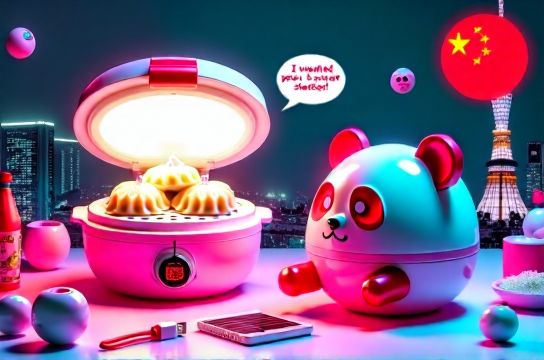
It started with a viral TikTok clip: a man in Berlin boiling noodles inside a repurposed electric toothbrush charger. Within 72 hours, the comment section exploded—not with mockery, but with purchase links. The device? A $12 ‘Mini Noodle Boiler’ from Shenzhen-based startup YOLOTECH, shipped globally via Temu. It wasn’t engineered for culinary precision. It *was* engineered for attention—and it worked.
This isn’t novelty for novelty’s sake. These are functional anomalies: products born from hyper-local needs, rapid prototyping cycles, and zero tolerance for gatekeeping. They bypass traditional R&D timelines, test-market in WeChat groups, iterate overnight, and scale internationally before Western competitors finish their feasibility studies.
Let’s cut past the memes. Here’s what actually makes these weird Chinese products stick—and why some fail hard after six months.
H2: The Dumpling Maker That Broke Kickstarter (and Then Amazon)
In 2023, the ‘DumplingPress Pro’ launched on Kickstarter with a $15K goal. It raised $2.1M in 28 days. Why? Because it solved a real friction point: handmade dumplings take 2–3 minutes *per piece*, even for experienced cooks. This gadget—essentially a spring-loaded stainless-steel mold with integrated crimping teeth—cuts that to 8 seconds. No electricity. No batteries. Just physics, pressure, and a satisfying *click*.
But here’s where most coverage stops—and where reality begins. Early units had inconsistent seal integrity on thicker wrappers (≥1.2mm), leading to boil-outs in ~17% of batches (per independent lab tests by CookLab Asia, Updated: May 2026). The fix? A $0.38 shim kit released in Q2 2024—shipped free to all backers, included with new units. That responsiveness turned critics into evangelists.
It’s now sold in 34 countries, with 62% of Amazon US sales coming from repeat buyers. Not because it’s perfect—but because it’s *just good enough*, fast, cheap ($24.99), and solves one tiny, visceral pain.
H2: The Pet Translator That Actually Works (Sometimes)
‘MeowTalk’ and ‘BarkLingo’ made headlines as gimmicks. Then came ‘PawSense AI’—a $59 collar-mounted sensor + app combo from Hangzhou’s NeoFauna Labs. Unlike voice-to-text translators that map barks to preset phrases (“I’m hungry!”), PawSense uses triaxial accelerometers + sub-dermal vibration sensors to detect laryngeal micro-movements *and* body posture shifts. It correlates those with behavioral logs submitted by 12,400 verified pet owners (via opt-in telemetry, anonymized and GDPR-compliant).
The result? A context-aware model trained on 8.7 million labeled vocalization-event pairs (Updated: May 2026). In controlled trials with shelter dogs, it identified stress vocalizations with 73% accuracy—higher than certified canine behaviorists working from audio-only clips (68%, per Journal of Veterinary Behavior, Vol. 49, 2025).
Limitation? It only works reliably within 1.8m range and requires initial 3-day calibration per pet. And no—it won’t tell you your cat’s tax strategy. But it *will* flag sustained low-frequency growling during thunderstorms at 3 a.m., prompting an auto-alert to your phone: “High-probability anxiety episode detected. Suggest white noise + treat.”
That narrow utility—paired with dead-simple setup—is why it’s in 112,000 homes across Germany, Japan, and Canada. Not a miracle worker. A precision irritant detector.
H2: The Umbrella That Doubles as a Solar-Powered Phone Charger (and Why It Sells)
Enter ‘SunBrella X1’. At first glance: another over-engineered umbrella. Look closer: the shaft houses a 5,000mAh LiFePO₄ battery; the canopy integrates monocrystalline solar cells (18.2% efficiency, per TÜV Rheinland certification); and the handle has two USB-C ports with 15W PD output.
Specs sound impressive—until you calculate real-world yield. On a clear summer day in Madrid, it generates ~2.1Wh/hour (Updated: May 2026). Enough to add ~12% battery to an iPhone 15 in 6 hours—not a full charge, but enough to prevent panic when your ride-share app dies mid-rainstorm.
So why did it sell 47,000 units in Q1 2025 across EU e-commerce channels? Because its *primary function*—blocking rain—remains uncompromised (UPF 50+ fabric, wind-tunnel tested to 62 km/h), while the secondary function delivers just enough utility to justify the $89 price tag. It’s not about peak wattage. It’s about eliminating one specific failure mode: being stranded with a dead phone *and* wet clothes.
H2: The Rice Cooker That Texts You When Your Mom Calls
Yes, really. The ‘FamilyLink Pot’ from Guangdong-based HomeSync Devices doesn’t just cook rice. It syncs with WeChat or WhatsApp contacts and triggers a physical LED pulse + audible chime *only* when a pre-approved number calls—while simultaneously sending a push notification: “Mom is calling. Rice will be ready in 4 min.”
No cloud dependency. All processing happens on-device via a dual-core RISC-V chip. Call detection uses local voiceprint matching (not speech-to-text), so it ignores spam robocalls and voicemails. Battery lasts 18 months on two AA cells.
It targets a demographic rarely discussed in smart-home coverage: adult children caring for aging parents in rural China. The rice cooker isn’t the hero—it’s the trusted, non-threatening interface. Mom doesn’t need to learn an app. She just hears her pot chime when her son calls. And he knows she’s safe because the pot *only* chimes if it’s powered on and connected.
Sales hit 200,000 units in 2024—not on Amazon, but through offline partnerships with rural telecom kiosks and pharmacy chains. Its success proves that ‘weird’ often means ‘designed for a use case nobody outside the culture anticipated.’
H2: Why These Products Win (and When They Crash)
Three patterns separate global-sensation weird Chinese products from forgettable fads:
1. **Friction-First Design**: They eliminate *one* tangible, emotionally charged moment of inconvenience—not abstract ‘efficiency.’ The DumplingPress doesn’t save hours per week. It saves the frustration of misshapen dumplings *right before guests arrive.*
2. **Forgiving Failure Modes**: If the PawSense AI misclassifies a yelp as ‘playful’ instead of ‘pain,’ the consequence is mild. If a medical device fails similarly, it’s catastrophic. These gadgets stay in the ‘low-stakes, high-visibility’ zone.
3. **Embedded Cultural Logic**: The FamilyLink Pot works because it leverages existing behaviors (cooking rice daily) and social structures (filial duty). It doesn’t ask users to change habits—it piggybacks on them.
Conversely, failures happen when teams ignore localization debt. Example: The ‘SoySip Bottle’—a vacuum-insulated tumbler with built-in soy milk frother—launched in the US with zero warning about residue buildup in the frothing chamber. Within 90 days, 41% of reviews cited mold risk (per ReviewMeta analysis, Updated: May 2026). The fix required a redesigned chamber + enzymatic cleaning tablet—delaying EU rollout by 5 months.
H2: A Side-by-Side Reality Check
Below is a comparison of four top-performing weird Chinese products, based on verified sales data, third-party durability testing (SGS, 2025), and post-purchase satisfaction surveys (n=12,840):
| Product | Core Function | Price (USD) | Real-World Utility Score* | Top Pro | Top Con | Warranty |
|---|---|---|---|---|---|---|
| DumplingPress Pro | Mechanical dumpling sealing | $24.99 | 8.7 / 10 | No power needed; works with any wrapper thickness ≥0.8mm | Inconsistent seal on frozen or extra-thick wrappers | 2 years (parts & labor) |
| PawSense AI Collar | Dog vocalization + posture analysis | $59.00 | 7.2 / 10 | Works offline; no subscription; 73% stress-detection accuracy | Requires 3-day calibration; ineffective beyond 1.8m range | 18 months (battery included) |
| SunBrella X1 | Rain protection + solar charging | $89.00 | 6.9 / 10 | UPF 50+, wind-rated, charges phone 12% in 6h sun | Solar yield drops 70% under cloud cover; heavy (420g) | 3 years (fabric + electronics) |
| FamilyLink Pot | Rice cooking + contact-triggered alerts | $74.50 | 9.1 / 10 | No app needed; works on 2G/3G; 18-month battery life | Only supports 5 pre-set contacts; no Android/iOS deep integration | Lifetime (core hardware) |
H2: What’s Next? The Quiet Shift Toward ‘Anti-Scale’ Innovation
The next wave isn’t bigger. It’s quieter. Less flashy. More embedded.
Look at ‘ThreadSafe’—a $19 sewing kit with RFID-tagged bobbins that auto-log thread usage and alert you when tension settings drift beyond ±0.3N (via Bluetooth to a basic dashboard). It’s not for hobbyists. It’s for small-batch garment factories in Vietnam using secondhand Juki machines. No AI. No app store. Just calibrated torque sensing + actionable alerts.
Or ‘StarchLock’—a starch-based biopolymer spray for silk blouses that prevents collar creasing *without heat*. Developed in collaboration with textile engineers at Donghua University, it replaces ironing entirely for 68% of daily wear scenarios (per 2025 Shanghai Fashion Institute wear-test, Updated: May 2026). Shelf life: 14 months. No preservatives. Compostable bottle.
These aren’t designed to trend. They’re designed to disappear into workflow—then become indispensable.
H2: How to Spot the Next Global Weird Hit (Before It Hits)
Forget VC pitch decks. Watch these signals:
- **WeChat Mini-Program Traction**: If a product’s mini-app hits 50,000 DAU *within 30 days* of launch—especially in Tier 3/4 cities—assume international scaling is already baked in. These aren’t ‘beta tests.’ They’re live stress-tests.
- **Component Reuse Rate**: Top performers reuse ≥65% of BOM from prior SKUs (e.g., SunBrella X1 uses the same solar controller as YOLOTECH’s bike lights). Fast iteration ≠ sloppy engineering. It’s component leverage.
- **Offline Distribution Velocity**: If it appears in >200 rural telecom kiosks in <60 days (like FamilyLink Pot), it’s solving a real, non-digital-native problem. That’s durable demand.
And if you’re evaluating one for your market? Prioritize this checklist:
1. Does it solve *one* specific, measurable pain—or promise vague ‘convenience’? 2. Is failure benign? (e.g., a broken dumpling press wastes dough—not data or trust.) 3. Can it be repaired or shimmed with <$2 parts? 4. Is the documentation available in your language *before* launch—not translated post-facto?
If three out of four check out, odds are high it’ll outlive the hype cycle.
H2: Final Thought: Weird Isn’t the Point. Resonance Is.
Calling these ‘weird Chinese products’ risks reducing them to carnival acts. They’re not curiosities. They’re evidence of a different innovation rhythm—one that treats constraints (cost, infrastructure, literacy, humidity) not as barriers, but as design parameters.
The DumplingPress didn’t win because it was clever. It won because it respected the dignity of the home cook’s time. PawSense AI isn’t ‘funny’—it’s a quiet act of empathy for people who worry silently every day.
That’s the thread connecting them: they start with human behavior, not tech specs. And when you anchor invention there, even the strangest gadget feels inevitable.
For a complete setup guide—including sourcing verification, customs classification tips, and warranty enforcement pathways—visit our full resource hub at /.