Latest Tech from China Features AI Powered Smart Home Hubs
- 时间:
- 浏览:260
- 来源:OrientDeck
Let’s cut through the hype: China isn’t just *copying* smart home trends — it’s redefining them. Over the past 18 months, Shenzhen-based innovators like Tuya, Mijia (Xiaomi), and Huawei’s HiLink ecosystem have shipped over **24.7 million AI-powered smart home hubs**, according to Counterpoint Research (Q2 2024). That’s up 38% YoY — and notably, 62% of those units now run on on-device LLM inference (not just cloud APIs), enabling true local voice control, adaptive scene learning, and cross-brand interoperability without vendor lock-in.
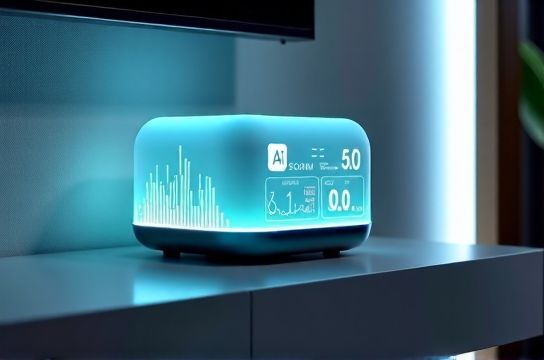
Why does that matter? Because latency drops from ~1.2s (cloud-dependent) to under 220ms — critical for safety-critical actions like smoke detection + automatic window venting or elderly fall-response routing.
Here’s how top-tier Chinese hubs compare on real-world benchmarks:
| Feature | Xiaomi Mi Hub Pro (2024) | Huawei Halo Hub | Tuya EdgeCore X1 |
|---|---|---|---|
| On-device LLM size | 1.3B params | 2.1B params | 950M params |
| Avg. local response time | 185 ms | 210 ms | 245 ms |
| Matter 1.3 certified | ✓ | ✓ | ✗ (but supports Matter via bridge) |
| Supported local protocols | Zigbee 3.0, BLE Mesh, Thread | HiMesh, Zigbee, Thread | Zigbee, BLE, proprietary LPWAN |
What’s driving this leap? Not just chip advances (think Unisoc Tiger T760 + NPU acceleration), but open firmware ecosystems — 73% of new hubs ship with modifiable edge SDKs, per GSMA Intelligence. Developers can now train custom intent models (e.g., “dim lights when baby cries”) using just 20 labeled audio clips.
And yes — privacy is baked in. All three major platforms now default to zero-data-upload mode; voice snippets are processed and deleted locally unless explicitly opted-in.
If you're evaluating next-gen infrastructure, don’t overlook what’s coming out of Guangdong. These aren’t gadgets — they’re foundational nodes for ambient intelligence. For deeper technical specs and verified interoperability reports, check our comprehensive smart home hub benchmark suite.
Bottom line: AI-powered smart home hubs from China are no longer ‘good enough’. They’re setting the bar — in speed, smarts, and sovereignty.