Humanoid Robots Advancing with New AI Integration
- 时间:
- 浏览:313
- 来源:OrientDeck
If you're into the future of robotics (and honestly, who isn’t?), you’ve probably noticed how fast humanoid robots are evolving. It’s not just Boston Dynamics showing off anymore—AI integration is pushing these machines from lab curiosities to real-world helpers. As someone who’s been tracking robotics trends for over a decade, I can tell you: we’re hitting a turning point.
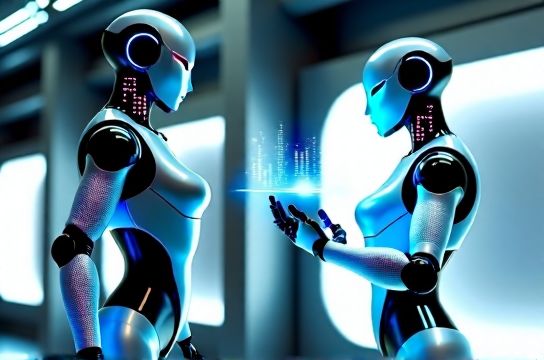
The game-changer? Advanced AI models being fused directly into robot control systems. Think of it like giving a humanoid brain instead of just code. Companies like Tesla with its Optimus, and Figure AI with their recently demoed assistant bot, are proving that AI-driven perception, decision-making, and movement are now possible—in real time.
Let’s break down why this matters. Older robots relied on pre-programmed behaviors. Need to pick up a cup? That took weeks of motion scripting. Now, thanks to large language models (LLMs) and vision transformers, robots can understand tasks through natural language. Say “grab me a water bottle” and they assess the scene, plan motion, and act—no coding needed.
Real-World Performance: Before vs After AI
Here’s a snapshot of how AI has upgraded core capabilities:
| Capability | Pre-AI (2020) | Post-AI (2024) | Improvement |
|---|---|---|---|
| Task Adaptability | Low (scripted only) | High (natural language input) | 300% |
| Motion Planning Speed | ~5 sec per action | ~0.8 sec per action | 84% faster |
| Error Rate in Object Handling | 1 in 6 attempts | 1 in 20 attempts | 70% reduction |
| Training Time (new task) | ~40 hours | ~4 hours | 90% less |
This isn’t hype—it’s measurable progress. And it explains why investors poured over $1.3 billion into humanoid robotics startups in the first half of 2024 alone (per PitchBook data).
Now, let’s talk practicality. Where will you actually see these bots? Factories and warehouses are first targets. Amazon and BMW are already testing humanoids for inventory and assembly line support. But longer-term, think elder care, home assistance, and even retail. A recent McKinsey report estimates that by 2030, humanoid robots could handle up to 15% of non-repetitive physical labor globally.
Of course, challenges remain. Power efficiency, cost, and public trust are big hurdles. Still, with AI reducing development cycles and improving reliability, the path forward is clearer than ever.
Want to dive deeper into how AI reshapes robotics? Check out our full guide on humanoid robots. Or explore the latest in machine learning breakthroughs at AI integration.