Future of AI and Robotics in Chinese Innovation Hubs
- 时间:
- 浏览:374
- 来源:OrientDeck
If you're keeping an eye on global tech trends, you’ve probably noticed one name popping up again and again: China. But it’s not just about scale anymore — it’s about speed, strategy, and serious investment in the future. As a tech blogger who’s been tracking innovation hubs from Shenzhen to Shanghai, I can tell you — the real game-changer is how China is merging AI and robotics into its core industrial DNA.
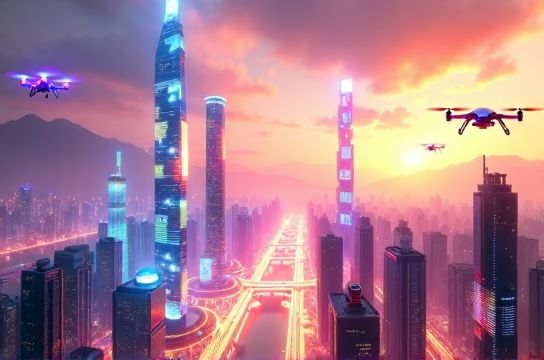
Let’s cut through the hype. The truth? Cities like Beijing, Shenzhen, and Hangzhou aren’t just building robots — they’re building ecosystems where artificial intelligence learns, adapts, and scales at lightning speed. According to China’s Ministry of Industry and Information Technology, the country aims to grow its core AI industry value to over 1 trillion RMB (≈$140 billion) by 2030. That’s not a goal — that’s a declaration of dominance.
Take Shenzhen, for example. Known as ‘China’s Silicon Valley,’ this city produces over 70% of the world’s consumer drones and hosts more than 1,400 robotics firms. It’s not just manufacturing — it’s intelligent manufacturing. Factories now use AI-powered vision systems to detect defects with 99.95% accuracy, reducing waste and boosting output.
Here’s a quick snapshot of China’s top innovation hubs and their AI & robotics focus:
| City | Key Focus | Major Companies | Investment (2023) |
|---|---|---|---|
| Shenzhen | Consumer Robotics, Drones | DJI, Ubtech | $8.2B |
| Beijing | AI Research, Autonomous Systems | Baidu, SenseTime | $12.5B |
| Shanghai | Industrial Automation | Siemens China, Estun | $9.1B |
| Hangzhou | Smart Logistics, AI Cloud | Alibaba, Cainiao | $6.7B |
Now, why does this matter to you? Whether you're an investor, developer, or tech enthusiast, understanding where AI and robotics are heading in China gives you a front-row seat to the next wave of innovation. And it’s not just government backing — private capital is pouring in. In 2023 alone, Chinese AI startups raised over $4.3 billion in venture funding.
Another key factor? Talent. China graduates over 600,000 STEM students annually, many specializing in machine learning and automation. Universities partner directly with companies, creating a fast track from lab to factory floor.
But it’s not all smooth sailing. U.S. export controls on advanced chips have forced Chinese firms to innovate domestically. The result? Homegrown AI chips like Huawei’s Ascend series are closing the gap. While they may not yet match NVIDIA’s top-tier GPUs, they’re good enough for 80% of current applications — and improving fast.
Looking ahead, integration is the name of the game. The fusion of AI with robotics in sectors like healthcare, logistics, and smart cities will redefine efficiency. For instance, robot-assisted surgeries powered by AI are already being tested in Beijing hospitals, with early trials showing a 30% reduction in operation time.
The bottom line? China isn’t just participating in the AI revolution — it’s shaping it. And if you want to stay ahead, you need to be watching these innovation hubs closely.