Digital Twins Use AI to Simulate Industrial Processes
- 时间:
- 浏览:357
- 来源:OrientDeck
Ever wonder how factories stay ahead of breakdowns before they even happen? Welcome to the world of digital twins—a game-changing tech merging real-time data with artificial intelligence to simulate industrial processes like never before. As a longtime industrial IoT consultant, I’ve seen this shift firsthand: companies using digital twins aren’t just surviving Industry 4.0—they’re leading it.
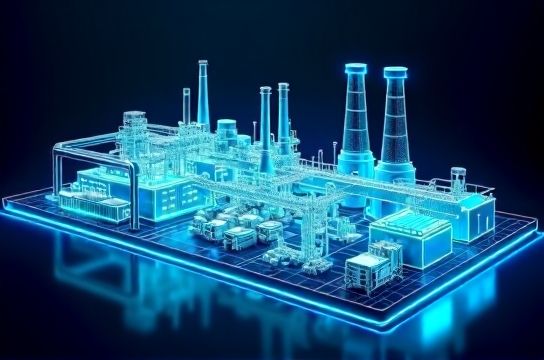
So what exactly is a digital twin? Think of it as a living, breathing virtual clone of a physical asset—be it a wind turbine, production line, or entire smart factory. Sensors on the actual equipment feed live operational data into its digital counterpart. Using AI and machine learning, the twin doesn’t just mirror reality—it predicts future failures, optimizes performance, and runs ‘what-if’ scenarios without shutting down operations.
Take Siemens, for example. Their gas turbine digital twin reduced unplanned downtime by up to 30% and boosted efficiency by 15%. Or consider General Electric, which uses digital twins across 700,000+ industrial assets globally, saving over $1 billion annually in maintenance costs alone.
But it’s not just giants reaping rewards. Mid-sized manufacturers are jumping in thanks to cloud-based platforms like Azure Digital Twins and AWS IoT TwinMaker cutting entry costs by nearly 60% compared to five years ago.
Why Digital Twins Outperform Traditional Monitoring
Old-school SCADA systems collect data—but they don’t anticipate. Digital twins go further by modeling behavior. Here’s how they stack up:
| Feature | Traditional Monitoring | Digital Twin + AI |
|---|---|---|
| Fault Prediction | Reactive (after failure) | Predictive (hours/days in advance) |
| Data Usage | Historical reporting | Real-time simulation & optimization |
| Maintenance Cost | High (unscheduled) | Reduced by 25–40% |
| ROI Timeline | 2+ years | Under 12 months |
As you can see, the edge isn’t small—it’s transformative. And with AI continuously refining the model based on new inputs, accuracy improves over time. That’s self-learning intelligence in action.
One of the hottest applications? Predictive maintenance in manufacturing. A study by Deloitte found that plants using digital twins cut equipment downtime by 35–45% and extended asset life by up to 30%. For context, the average factory loses $50,000 per hour during unplanned outages. Even a 20% reduction here means millions saved yearly.
Want to get started? Focus on high-value, failure-prone assets first. Start with one production line, integrate sensor data, build your twin in a platform like PTC ThingWorx or Siemens MindSphere, then scale. The key is starting small but thinking big.
Ultimately, embracing AI-powered simulation isn’t about chasing trends—it’s about building resilience, slashing costs, and staying competitive. The factories of tomorrow are already being tested—in silicon, not steel.