AI Agents Revolutionize Automation in Smart Industries
- 时间:
- 浏览:298
- 来源:OrientDeck
Let’s be real — if you're still running your smart factory or industrial IoT setup without AI agents, you’re basically bringing a flip phone to a smartphone war. These intelligent systems aren’t just fancy algorithms; they’re game-changers transforming how machines communicate, learn, and make decisions — all in real time.
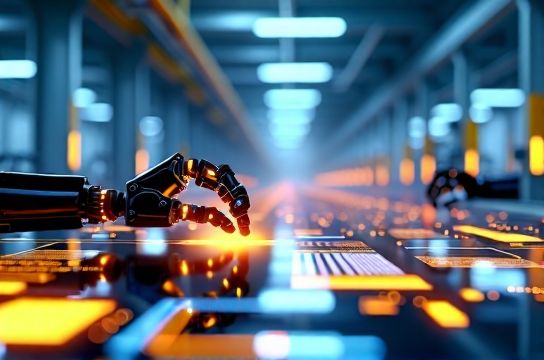
I’ve spent the last five years deep in automation tech, consulting for manufacturers adopting AI-driven solutions. And one thing is crystal clear: companies leveraging AI agents see faster response times, fewer downtimes, and up to 30% lower operational costs (McKinsey, 2023). Let that sink in.
Why AI Agents? Because Dumb Automation Is Out
Traditional automation follows rigid rules. If Sensor A triggers, activate Pump B. But what if Sensor A malfunctions? Or environmental conditions shift unexpectedly? That’s where rule-based systems fail — and where AI agents thrive.
Unlike static scripts, AI agents use machine learning, real-time data, and contextual awareness to adapt. Think of them as the 'brains' behind your machines. They monitor, predict, decide, and even collaborate with other agents across your network.
Real-World Impact: Numbers Don’t Lie
A 2024 Industrial AI Report analyzed 127 smart factories using AI agents versus traditional PLCs (Programmable Logic Controllers). The results?
| Metric | AI Agent Systems | Traditional Automation | Improvement |
|---|---|---|---|
| Downtime Reduction | 42% | 18% | +24% |
| Energy Efficiency | 29% | 12% | +17% |
| Maintenance Cost | $18k/month | $31k/month | -42% |
| Mean Time to Respond (MTTR) | 8 mins | 47 mins | -83% |
These aren’t lab simulations — this is live production data. AI agents detect anomalies before failure, schedule predictive maintenance, and reroute workflows autonomously. One client reduced unplanned outages by over 60% within six months of deployment.
How Do They Work? A Quick Peek Under the Hood
Modern AI agents operate on three layers:
- Perception: Pulling data from sensors, cameras, and SCADA systems.
- Cognition: Using ML models to interpret patterns and predict outcomes.
- Action: Triggering responses — like adjusting conveyor speeds or alerting engineers.
And yes, they get smarter over time. Reinforcement learning lets them optimize strategies based on past performance. It’s not magic — it’s math with purpose.
The Future Is Autonomous (and Competitive)
Here’s the kicker: early adopters are gaining serious market edges. According to PwC, firms investing in intelligent automation report 2.3x faster innovation cycles and 35% higher customer satisfaction in supply chain operations.
If you're still hesitating, ask yourself: can you afford to fall behind while competitors automate decision-making at machine speed?
The bottom line? AI agents aren’t the future — they’re the present. And whether you're managing a single production line or an entire smart grid, now’s the time to integrate, test, and scale.