AIPowered Robots Enhance Productivity in Factories Today
- 时间:
- 浏览:283
- 来源:OrientDeck
If you're still thinking factory robots are clunky machines from the '80s, it’s time to wake up. We’re in 2024, and AI-powered robots are not just assisting workers—they’re transforming entire production lines. As someone who’s spent over a decade analyzing automation trends, I’ve seen the shift firsthand: factories that once relied on rigid programming now thrive on adaptive intelligence.
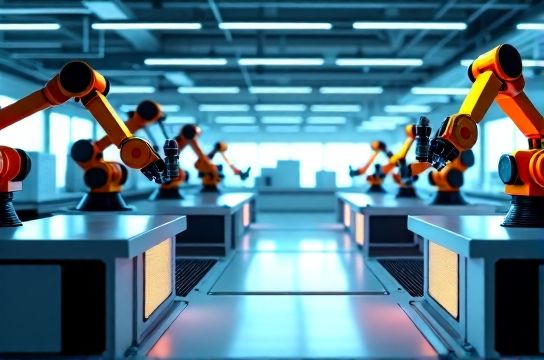
Let’s cut through the hype. Real-world data shows that AI-driven automation boosts output by up to 30% while reducing error rates by nearly half. A 2023 McKinsey report found that manufacturers using smart robotics saw a 25% reduction in operational costs within two years. That’s not pocket change—it’s profit reinvestment territory.
So what makes these robots different? Traditional industrial bots follow fixed paths. They weld, paint, or assemble—same way, every time. But today’s AI-enhanced models use computer vision, machine learning, and real-time sensor feedback to adapt. Think of them as the ‘self-driving cars’ of the factory floor.
Where AI Robots Outperform Humans (and Old-School Bots)
It’s not about replacing people—it’s about augmenting precision and endurance. For example, in quality control, human inspectors average a 70–85% defect detection rate. AI vision systems? Over 99%. And they don’t get tired after eight hours.
Here’s a quick comparison of performance metrics:
| Metric | Human Worker | Traditional Robot | AI-Powered Robot |
|---|---|---|---|
| Defect Detection Accuracy | 75% | 88% | 99.2% |
| Downtime per Shift | 15% | 8% | 3% |
| Task Adaptability | High | Low | Very High |
| ROI Timeline | N/A | 3–5 years | 1.5–2 years |
As you can see, AI-powered robots dominate in accuracy and efficiency. But the real game-changer is adaptability. These systems learn from each task, improving over time—something no traditional robot can do.
Real-World Wins: Who’s Leading the Charge?
Tesla’s Gigafactories use AI-guided arms that adjust grip strength and alignment in real time—critical when handling delicate battery cells. Siemens has deployed self-optimizing assembly lines in Germany that reduce setup time by 40% when switching product models.
Even mid-sized manufacturers are jumping in. One Illinois-based medical device maker reported a 22% productivity jump after integrating AI robots for packaging and sterilization checks.
Is Your Factory Ready?
Not every shop floor needs full AI integration tomorrow. Start with pain points: high defect rates, frequent line changeovers, or labor shortages. Pilot a single AI workstation. Measure cycle times, error drops, and worker feedback.
Pro tip: Look for platforms with plug-and-play AI modules—like those from Fanuc or ABB—that integrate with existing PLCs. No need to rip and replace.
The bottom line? AI isn’t the future of manufacturing—it’s the present. And the early adopters aren’t just keeping up; they’re pulling ahead.