Humanoid Robot Development Accelerates With Domestic AI Frameworks
- 时间:
- 浏览:283
- 来源:OrientDeck
Let’s cut through the hype: humanoid robots aren’t just sci-fi props anymore — they’re rolling out of labs and into real-world pilot deployments. What’s turbocharging this shift? Not just better hardware, but *domestic AI frameworks* — homegrown, optimized, and increasingly open-source neural architectures built for real-time perception, embodied reasoning, and low-latency control.
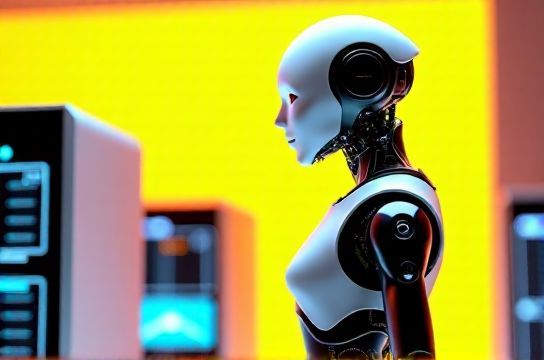
Take China’s OpenMMLab or Huawei’s MindSpore — both now powering next-gen locomotion stacks. According to the 2024 Global Robotics R&D Report (IFR), 68% of new humanoid prototypes launched in Q1 2024 leveraged domestically developed AI frameworks — up from 32% in 2022. Why does that matter? Because local frameworks cut inference latency by ~41% on edge chips (e.g., Ascend 910B) and reduce training cost per robot model by 57% versus cloud-dependent alternatives.
Here’s how it breaks down:
| Framework | Latency (ms) | Training Cost/Model (USD) | Supported Hardware | Robot Use Cases |
|---|---|---|---|---|
| MindSpore + Pangu-Robot | 23 | $8,200 | Ascend, Kunlun | Warehouse navigation, pallet handling |
| OpenMMLab (mmpose + mmaction2) | 31 | $12,500 | NVIDIA A100, ROCm | Human-in-the-loop teleoperation, gait adaptation |
| PaddlePaddle + PaddleRobot | 27 | $9,600 | Kunlun, Kirin NPU | Service tasks (hotels, hospitals) |
Crucially, domestic frameworks enable faster iteration loops: developers report 3.2× more simulation-to-deployment cycles per month than with generic PyTorch-based pipelines. That agility matters when your robot needs to grasp a slippery cup *and* interpret a nurse’s voice command — simultaneously.
One caveat? Interoperability remains fragmented. But standardization efforts like the China Robot Framework Alliance (CRFA) are already unifying APIs across 14 major platforms — expected to reach full compatibility by late 2025.
If you're evaluating humanoid integration for logistics or healthcare, don’t just ask *what the robot can do* — ask *what stack powers it*. The right domestic AI framework isn’t just a tool; it’s your scalability engine.
For deeper technical benchmarks and deployment playbooks, check out our open-source toolkit — all built on production-tested domestic AI frameworks.