Exploring Next Gen EV Innovations from Tesla and BYD
- 时间:
- 浏览:316
- 来源:OrientDeck
If you're eyeing the future of electric vehicles (EVs), two names dominate the conversation: Tesla and BYD. As someone who's been tracking EV trends for years—reviewing specs, driving prototypes, and crunching sales data—I can tell you this isn’t just a battle of batteries. It’s a clash of philosophies, tech stacks, and global ambitions.
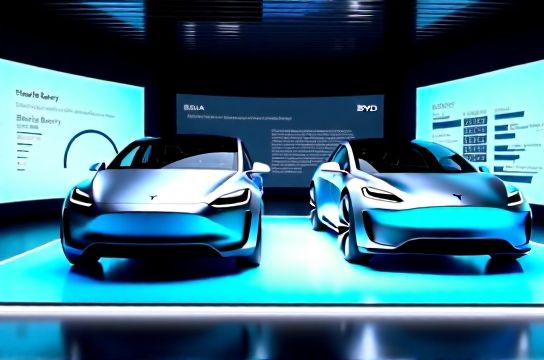
Tesla has long been the poster child of EV innovation. But in the past three years, BYD has flipped the script. In 2023, they surpassed Tesla in total plug-in vehicle sales—1.78 million vs. 1.46 million—thanks to their vertical integration and aggressive pricing. Let that sink in: BYD is now the world’s largest EV maker by volume.
So what’s behind their rise? And where does Tesla still hold the edge?
Battery Tech: Blade vs. 4680
BYD’s secret sauce is the Blade Battery, a lithium iron phosphate (LFP) pack known for safety and longevity. It survived nail penetration tests without fire—a huge win for consumer trust. Meanwhile, Tesla’s rolling out its 4680 cells, aiming for higher energy density and lower cost per kWh through dry electrode tech.
Here’s how they stack up:
| Feature | BYD Blade Battery | Tesla 4680 |
|---|---|---|
| Chemistry | LFP | NCA/NCM |
| Energy Density | ~140 Wh/kg | ~272 Wh/kg |
| Cycle Life | 3,000+ cycles | 1,500 cycles |
| Safety | Exceptional (no fire) | Good |
Bottom line? BYD wins on durability and safety; Tesla leads in performance and range potential.
Production & Pricing Power
BYD manufactures nearly every component in-house—from chips to batteries. This vertical control slashes costs. Their Seal sedan starts at just $35,000 globally, undercutting Tesla’s Model 3 by thousands in key markets like Europe and Southeast Asia.
Tesla, while still efficient, relies more on external suppliers. However, their Gigafactories in Texas and Berlin are streamlining production. The new Model Y Highland update reduced parts by 20%, cutting assembly time and boosting margins.
Autonomous Driving: FSD vs. DiPilot
Tesla’s Full Self-Driving (FSD) Beta remains the most advanced consumer system, with over 5 billion real-world miles logged. It uses pure vision—no radar—which is bold but controversial.
BYD’s DiPilot is more conservative, focusing on Level 2 assistance. It’s reliable but not pushing boundaries like Tesla. For now, if you want cutting-edge autonomy, Tesla EV innovations still lead.
Global Reach & Strategy
BYD is going global fast. They’ve launched in Germany, Australia, Japan, and Thailand, often partnering with local fleets. In Q1 2024, 25% of their sales were outside China—up from 10% in 2022.
Tesla still dominates North America and holds strong in Europe, but growth has slowed. BYD’s mix of affordability and tech is resonating in emerging markets.
The verdict? Both brands are shaping the next generation of EVs—but in different ways. BYD delivers accessible, safe, and efficient EVs for the masses. Tesla pushes the envelope on performance and autonomy.
Whichever you choose, the future of driving is here—and it’s electric.