Autonomous Driving Breakthroughs in China's Smart Mobility Sector
- 时间:
- 浏览:232
- 来源:OrientDeck
China is no longer just catching up in the autonomous driving race — it’s leading. If you’ve been watching the global smart mobility scene, you’ve probably noticed how fast Chinese tech giants and automakers are pushing boundaries. From fully driverless taxis to AI-powered traffic systems, the country is turning sci-fi into reality — and doing it at scale.
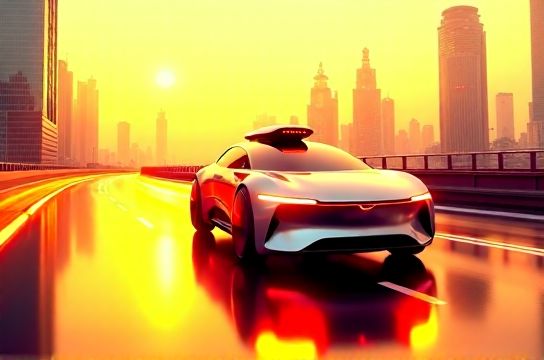
Let’s break it down with real data. As of 2024, over 50 cities in China have launched autonomous vehicle (AV) pilot zones, with Beijing, Shanghai, and Shenzhen taking the crown. Baidu’s Apollo Go has completed more than 7 million paid rides — a world record for robotaxis. Meanwhile, Pony.ai and WeRide are expanding into international markets, proving their tech stacks up globally.
What’s fueling this surge? Three key factors: government support, massive infrastructure investment, and fierce private-sector competition. The National Development and Reform Commission has pledged $400 billion by 2025 for intelligent transport systems. That’s not just roads — it’s 5G-enabled V2X (vehicle-to-everything) networks that let cars ‘talk’ to traffic lights, pedestrians, and each other.
Top AV Players in China: Who’s Winning?
| Company | Valuation (USD) | Robotaxi Rides (2023) | Licensing Level | Key Partners |
|---|---|---|---|---|
| Baidu Apollo | $12B | 4.8M+ | L4 | BYD, BMW, Intel |
| Pony.ai | $8.5B | 1.2M+ | L4 | Toyota, Sinopec |
| WeRide | $6B | 900K+ | L4 | Nissan, GAC |
| DeepRoute.ai | $2.1B | 500K+ | L4 | Cainiao, Geely |
As you can see, autonomous driving in China isn’t just about flashy demos. These companies are logging millions of real-world miles, refining AI models, and building operational muscle. Baidu alone operates driverless fleets in 10+ cities, with plans to expand to 100 by 2026.
But what about safety? Critics often raise concerns, but data tells a different story. According to China’s Ministry of Industry and IT, AVs in pilot zones have an accident rate 40% lower than human drivers. Most incidents involve minor fender-benders — nothing fatal since 2021, thanks to redundant sensors and edge-computing fallbacks.
Now, here’s where it gets interesting for consumers: pricing. Robotaxis now cost as little as ¥10–15 per ride (~$1.40–2.10), undercutting Didi and traditional taxis. This isn’t subsidized gimmickry — it’s profitability in motion. Baidu reports Apollo Go turned a city-level profit in Wuhan, thanks to high utilization and low maintenance.
If you’re investing, building, or just riding the future, pay attention to smart mobility innovations. The convergence of AI, 5G, and electric vehicles is creating a perfect storm. By 2030, McKinsey estimates 40% of urban trips in Tier-1 Chinese cities could be autonomous — making car ownership obsolete for many.
The bottom line? China isn’t waiting for permission. It’s deploying, learning, and scaling. Whether you love it or fear it, the self-driving revolution is already on the road — and it’s made in China.