China's EV Makers Export Growth Reshapes Global Auto Industry
- 时间:
- 浏览:297
- 来源:OrientDeck
If you've been paying attention to the global auto scene, one trend is impossible to ignore: China's EV makers are no longer just dominating their home market — they're going global, and fast. From Europe to Southeast Asia, Chinese electric vehicles (EVs) are rolling into showrooms, winning over drivers, and shaking up century-old automakers.
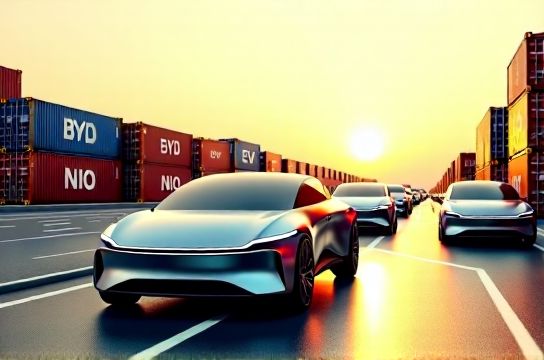
Last year alone, China exported over 1.2 million new energy vehicles (NEVs), a 78% jump from 2022, according to China Association of Automobile Manufacturers (CAAM). That’s more than double Germany’s total EV exports. And it’s not slowing down — projections suggest exports could hit 1.8 million by 2025.
Why Are Global Buyers Choosing Chinese EVs?
It’s simple: value, tech, and timing. Chinese EVs offer premium features — think panoramic sunroofs, Level 2 autonomous driving, and 5G connectivity — at prices that undercut European and American rivals by 20–30%. Take the BYD Atto 3, which starts at €37,000 in Germany — about €8,000 less than a comparable Volkswagen ID.4.
Battery tech is another edge. CATL, the world’s largest battery maker (based in China), supplies cells to Tesla, BMW, and Ford. Their innovations in sodium-ion and condensed batteries could soon slash costs even further.
Top Markets for Chinese EV Exports
Let’s break down where these cars are landing — and why:
| Market | Annual EV Imports from China (2023) | Key Chinese Brands | Market Share Gained |
|---|---|---|---|
| Thailand | 58,000 | Great Wall, NIO, BYD | 35% |
| Germany | 42,000 | MG (SAIC), BYD | 8% |
| Norway | 36,000 | Geely, NIO, Xpeng | 15% |
| Australia | 28,000 | MG, Omoda (Chery) | 12% |
Thailand has become a hotspot, with the government offering tax breaks for EV assembly. Meanwhile, Norway’s pro-EV policies make it a perfect testing ground for premium brands like NIO.
How Are Legacy Automakers Responding?
Not quietly. Stellantis has called for EU tariffs on Chinese EVs, while Toyota CEO Akio Toyoda once dismissed EVs as “overhyped.” But actions speak louder: Toyota just launched its first competitive EV, the bZ4X, and VW is fast-tracking its SSPro platform to match Chinese cost efficiency.
The truth? Many legacy OEMs can’t match the speed-to-market or vertical integration of companies like BYD, which makes its own chips, motors, and batteries. This control slashes production costs and lets them iterate faster.
What’s Next?
Expect more localized production. BYD just broke ground on a Hungary factory to serve Europe, avoiding potential tariffs. Other brands will follow. We’ll also see smarter software, better charging networks, and fiercer competition in the under-$30K segment.
Bottom line: China's EV makers aren’t just participating in the global auto industry — they’re reshaping it. Whether you're a buyer, policymaker, or competitor, ignoring this shift isn’t an option.