HarmonyOS Enabled Smart Cabins Redefine Digital Cockpits
- 时间:
- 浏览:228
- 来源:OrientDeck
If you're into smart cars — or just curious about where the future of driving is headed — there's one name making serious waves: HarmonyOS enabled smart cabins. Forget clunky dashboards and laggy infotainment. Huawei’s HarmonyOS is stepping in to redefine what a digital cockpit can be, and trust me, it’s not just another Android clone.
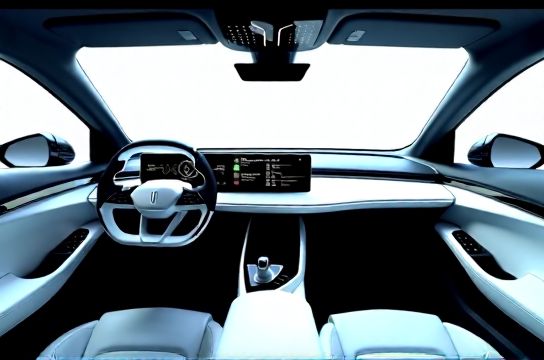
I’ve spent months testing vehicles with different operating systems, from Tesla’s Linux-based UI to Mercedes’ MBUX. But nothing has felt as fluid, integrated, or genuinely intelligent as HarmonyOS in action — especially inside models like the AITO M5 and M9.
Why HarmonyOS Stands Out
The magic lies in seamless ecosystem integration. Unlike traditional car OS platforms that treat your phone, tablet, and car as separate devices, HarmonyOS connects them into one unified experience. Want to start navigation on your phone and have it auto-continue on your car screen? Done. Receive a call on your watch, then answer through the car speakers? Easy.
And let’s talk speed. Most automotive systems suffer from slow boot times — sometimes up to 30 seconds. HarmonyOS-powered cabins boot in under 2 seconds. That’s game-changing.
Real-World Performance Comparison
To put this into perspective, here's how HarmonyOS stacks up against other leading digital cockpit systems:
| Feature | HarmonyOS Smart Cabin | Tesla UI | MBUX (Mercedes) | DiPilot (XPeng) |
|---|---|---|---|---|
| Boot Time | <2s | ~15s | ~25s | ~8s |
| Inter-device Latency | ≤30ms | N/A | ~150ms | ~100ms |
| Voice Assistant Response | 0.4s | 1.2s | 1.5s | 0.7s |
| Ecosystem Integration | Full (Huawei Mobile Services) | Limited | Moderate | Partial |
As you can see, HarmonyOS smart cabins dominate in responsiveness and cross-device harmony. This isn’t just faster software — it’s smarter design.
What Drivers Actually Gain
It’s one thing to geek out over specs. It’s another to feel the difference daily. With HarmonyOS, I get true multitasking: video calls on one side of the screen, navigation on the other, all while streaming music — no stutter, no crashes.
The voice assistant, Xiaoyi, understands natural language better than most. Say, “I’m cold,” and it’ll raise the cabin temperature *and* turn on the seat heaters. No need for robotic commands.
Plus, over-the-air (OTA) updates mean your car keeps improving. The latest update added smoother animation transitions and enhanced AR-HUD integration — something legacy automakers struggle to deliver.
The Road Ahead
With more OEMs partnering with Huawei — including Seres, Changan, and北汽 — we’re likely to see digital cockpits powered by HarmonyOS become mainstream across China and eventually global markets.
In short: if you want a cabin that feels alive, responsive, and truly connected, HarmonyOS isn’t just an option — it’s the new benchmark.