Wireless Charging Roads Could Change How EVs Refuel Daily
- 时间:
- 浏览:318
- 来源:OrientDeck
Let’s be real—charging your electric vehicle (EV) can still be a hassle. Plugging in, waiting, hunting for stations… it breaks the flow of driving. But what if roads themselves could charge your car while you drive? Sounds like sci-fi, right? Not anymore. wireless charging roads are inching from lab experiments to real-world trials, and they might just revolutionize how we power EVs.
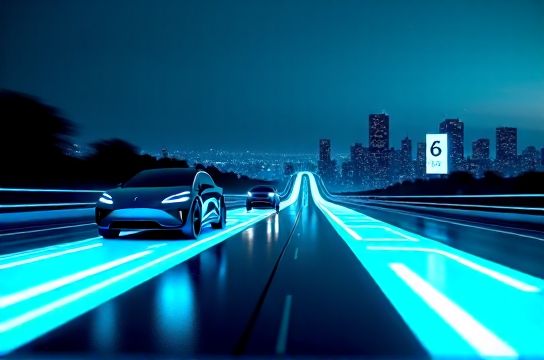
I’ve been tracking smart mobility tech for years, and this one’s a game-changer. Countries like Sweden, Germany, and South Korea are already testing dynamic wireless power transfer (DWPT) systems on public roads. The idea? Embed coils under the asphalt that send energy to receivers on EVs—no cords, no stops.
Take Sweden’s E16 highway trial. They’ve installed a 2-kilometer stretch near Stockholm where trucks get charged via rails embedded in the road. According to the Swedish Transport Administration, these roads can deliver up to 750 kW of power—enough to keep heavy-duty vehicles running without battery fatigue.
But it’s not just for trucks. In South Korea, KAIST tested a bus route with DWPT and saw 85% energy transfer efficiency. That’s nearly as good as plug-in charging, but completely seamless.
How Does It Work?
Simple physics, really. Electromagnetic induction: when current flows through a coil beneath the road, it creates a magnetic field. A receiver coil on the car captures that energy and converts it to electricity. No contact needed. Think of it like your wireless phone charger—but scaled up.
Real-World Performance: By the Numbers
Benchmarks from recent pilots show promising results:
| Country | Project Length | Power Delivered | Efficiency | Vehicle Type |
|---|---|---|---|---|
| Sweden | 2 km | 750 kW | 90% | Trucks |
| South Korea | 1.2 km | 100 kW | 85% | Buses |
| Italy | 1 km | 200 kW | 75% | Cars & Vans |
As you can see, efficiency varies based on speed, alignment, and power load—but even the lowest is competitive with fast charging, minus the downtime.
Why This Matters for Everyday Drivers
Imagine highway lanes that keep your EV topped up. You’d need smaller batteries (cutting costs), reduce range anxiety, and slash charging stops. For cities, this means cleaner air and quieter streets—no more idling at chargers.
And yes, it’s expensive now. Installing wireless charging roads costs about $1–2 million per kilometer. But scale and innovation will drop prices—just like solar panels did.
Plus, automakers are getting onboard. BMW and Mercedes are testing compatible receivers. The EU plans to roll out 3,000 km of charging roads by 2030. If that happens, dynamic wireless charging could become standard, just like seatbelts.
The future isn’t just electric—it’s invisible. And if you’re tired of plugging in, you’ll love driving on power. Stay tuned, because the road ahead literally charges your ride.
For more insights on next-gen EV tech, check out our deep dive into smart infrastructure trends.