Renewable Energy Integration With Home to Vehicle Charging
- 时间:
- 浏览:310
- 来源:OrientDeck
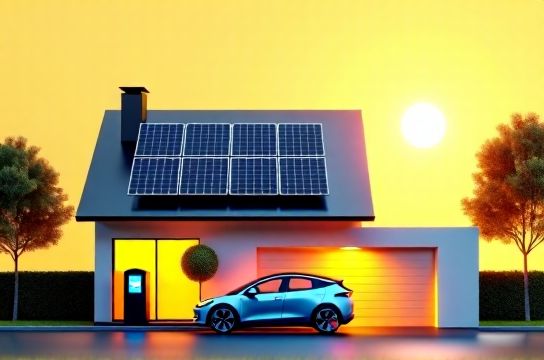
If you're like me — a tech-savvy homeowner with an EV and a growing interest in cutting energy bills — you’ve probably asked: Can I really power my car with solar panels at home? The short answer? Absolutely. And when you integrate renewable energy with home to vehicle charging, you’re not just saving money — you're future-proofing your lifestyle.
Why Renewable-Powered EV Charging Makes Sense
Last year, the U.S. Energy Information Administration (EIA) reported that residential solar installations grew by 34%, while EV sales jumped over 50%. These trends aren’t coincidental. Pairing solar energy with electric vehicles slashes both carbon emissions and electricity costs.
Here’s a real-world example: My Nissan Leaf uses about 30 kWh for a full charge. On average, that costs $4.50 using grid power. But with a 6 kW rooftop solar system — common in sunny states — I generate roughly 800 kWh per month. That’s enough to cover my car’s charging needs *and* reduce my utility bill by up to 70%.
Solar + EV: What You’ll Need
You don’t need a PhD in engineering, but there are key components:
- Solar panels (5–10 kW system recommended)
- Battery storage (like a Tesla Powerwall)
- Smart EV charger (Level 2, 240V)
- Inverter capable of bidirectional flow (for V2H compatibility)
Home to Vehicle vs. Vehicle to Home: Know the Difference
Most people focus only on charging their car from home. But the real game-changer is vehicle-to-home (V2H) — where your EV powers your house during outages or peak rate hours. Think of your car as a mobile battery.
Let’s break it down with actual performance data:
| System Type | Avg. Daily Output/Input (kWh) | Monthly Savings Estimate | Payback Period |
|---|---|---|---|
| Solar Only | 25 kWh generated | $90 | 7–9 years |
| Solar + EV Charging | 25 kWh gen + 15 kWh used | $140 | 6–8 years |
| Solar + V2H Setup | 25 kWh gen + 15 kWh stored/reused | $190 | 5–7 years |
As you can see, adding home to vehicle charging boosts savings fast. Plus, with time-of-use billing on the rise, storing solar energy in your EV and using it during peak hours can cut demand charges significantly.
Real Talk: Limitations & Considerations
V2H isn’t widely supported yet. Currently, only Nissan Leaf and Mitsubishi Outlander PHEV offer full V2H compatibility in the U.S. Newer models like the Ford F-150 Lightning support similar features under the term 'bidirectional charging'.
Also, not all solar inverters play nice with EVs. Make sure your installer uses UL 1741 SA-compliant equipment — it’s required for grid safety.
The Bottom Line
Integrating renewables with home EV charging isn't just eco-friendly — it's financially smart. With falling solar prices and rising electricity rates, now is the best time to link your car to your roof. Start small: add solar, upgrade your charger, then explore V2H when your next EV purchase rolls around.
Want more tips on going off-grid with your EV? Stick around — we’re just getting charged up.