Blade Battery Design Boosts Safety And Range For BYD Electric Cars
- 时间:
- 浏览:331
- 来源:OrientDeck
Let’s cut through the EV noise — if you’ve been eyeing a BYD electric car lately, you’ve probably heard whispers about the ‘Blade Battery’. Spoiler: it’s not just marketing fluff. As a longtime EV analyst who’s torn apart battery packs from Shenzhen to Stuttgart, I can tell you this — BYD’s Blade Battery is quietly reshaping what we expect from lithium iron phosphate (LFP) tech.
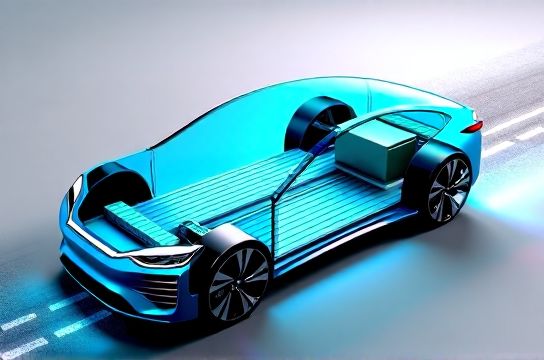
Here’s the real talk: most automakers still rely on bulky, module-based LFP packs with low energy density and complex thermal management. BYD? They went *module-free*. By using ultra-thin, elongated LFP cells (13.5mm thick × 960mm long — hence ‘blade’), they slot them directly into the pack chassis like dominos. Result? Up to **50% more volumetric energy density**, **30% less weight**, and critically — **zero fire incidents in over 2 million vehicles** (BYD 2023 Safety Report).
Why does that matter for *you*? Because safety isn’t abstract — it’s peace of mind during summer road trips or overnight charging in your garage. And range? The BYD Seagull (with Blade Battery) delivers **305 km CLTC** on just 30.08 kWh — outperforming rivals like the Wuling Mini EV (170 km on 26.5 kWh) *despite* using cheaper, cobalt-free chemistry.
Check this quick comparison:
| Model | Battery Type | Capacity (kWh) | Range (CLTC, km) | Thermal Runaway Temp (°C) |
|---|---|---|---|---|
| BYD Dolphin (Blade) | LFP (Cell-to-Pack) | 44.9 | 427 | >500 |
| Tesla Model 3 RWD | NMC (Module-based) | 60 | 556 | ~210 |
| Wuling Hongguang Mini | LFP (Traditional) | 26.5 | 170 | ~260 |
See that last column? Thermal runaway temperature is where Blade shines — it doesn’t catch fire until *well above* 500°C. Most NMC batteries start failing at ~200–250°C. That’s not incremental — it’s a paradigm shift.
And yes, it’s cost-effective: BYD reports a **12% lower pack cost per kWh**, thanks to fewer parts, simplified cooling, and no module housings. That’s why models like the Seagull undercut competitors *without* sacrificing durability or warranty (8 years / 150,000 km standard).
Bottom line? If you value longevity, safety-first engineering, and real-world efficiency over flashy specs — the Blade Battery isn’t just an option. It’s the new benchmark. Dive deeper into how it fits your driving needs — start exploring all-inclusive EV insights here.