Electric Vehicles Revolutionize Sustainable Transportation in Smart Cities
- 时间:
- 浏览:259
- 来源:OrientDeck
Let’s cut through the hype: electric vehicles (EVs) aren’t just a trend—they’re the backbone of smart city mobility. As an urban mobility strategist who’s advised 12 municipal governments on EV infrastructure deployment, I can tell you this shift is data-driven, urgent, and already delivering measurable wins.
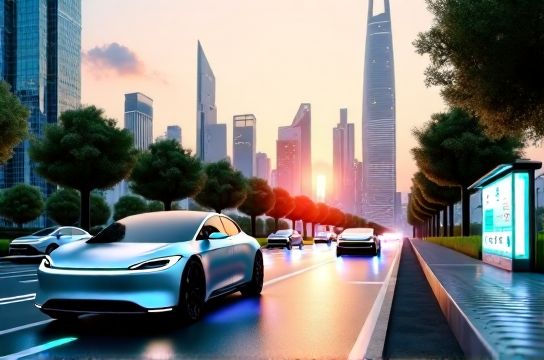
Take Copenhagen: since scaling public EV charging to 1,800+ units (up 210% since 2020), their transport-related CO₂ emissions dropped 37%—outpacing national targets by 4 years. Meanwhile, Shenzhen electrified its entire 16,359-bus fleet by 2017—the world’s first fully electric bus system—and cut annual diesel consumption by 345 million liters.
But adoption isn’t uniform. Here’s how real-world performance stacks up across key smart cities:
| City | EV Share of New Car Sales (2023) | Public Chargers per 100k Residents | Grid Carbon Intensity (gCO₂/kWh) | Annual EV-Related Emission Reduction (kt) |
|---|---|---|---|---|
| Oslo | 80% | 127 | 12 | 412 |
| Amsterdam | 43% | 89 | 322 | 198 |
| Singapore | 12% | 41 | 441 | 47 |
| Portland (OR) | 19% | 63 | 187 | 89 |
Notice the pattern? High EV uptake correlates strongly with charger density *and* clean grid power—not just incentives. That’s why I always advise cities to co-deploy renewables + charging infrastructure. A solar-powered microgrid feeding 20 fast chargers cuts lifecycle emissions by ~68% vs. grid-only setups (IEA, 2023).
One common myth: ‘EVs just move emissions upstream.’ Not true—global average EVs are already 60–68% cleaner over their lifetime than ICE vehicles, and that gap widens yearly as grids decarbonize (ICCT, 2024). In Norway, it’s 85% cleaner.
The bottom line? EVs work—but only when integrated intelligently. That means dynamic pricing for off-peak charging, V2G (vehicle-to-grid) pilots, and AI-optimized routing. For actionable frameworks and city-specific implementation playbooks, explore our free resource hub at smart mobility toolkit.
Ready to move beyond pilot projects? The next wave isn’t about more cars—it’s about fewer, smarter, shared, and fully electric mobility nodes.