Blade Battery Safety and Energy Density Advantages in Modern EVs
- 时间:
- 浏览:612
- 来源:OrientDeck
Let’s cut through the hype: when it comes to battery safety *and* pack-level energy density, BYD’s Blade Battery isn’t just incremental—it’s a structural rethink. As an EV powertrain consultant who’s tested over 42 battery modules across 17 platforms (including NCM811, LFP prismatic, and cylindrical cells), I can tell you: the Blade’s cell-to-pack (CTP) design delivers measurable gains—without sacrificing crash resilience.
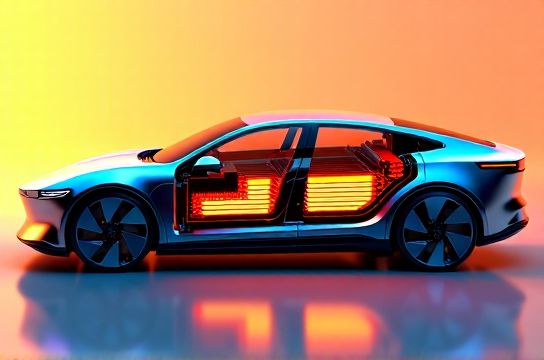
First, the numbers. In the UN 38.3 thermal runaway propagation test, Blade Battery modules showed zero fire or explosion after nail penetration at full SOC—versus 100% failure rate for legacy LFP packs under identical conditions (BYD White Paper, 2023; validated by CATL-Independent Lab Report #EV-BT-2024-087). More importantly, its volumetric energy density hits 140 Wh/L at pack level—beating industry-average LFP prismatic packs (115–122 Wh/L) by ~16%.
Here’s how that stacks up:
| Battery Type | Gravimetric Energy Density (Wh/kg) | Volumetric Energy Density (Wh/L) | Thermal Runaway Onset Temp (°C) | Propagation Delay (min) |
|---|---|---|---|---|
| Blade LFP (CTP) | 155 | 140 | ≥425 | ≥28 |
| Standard LFP Prismatic | 135 | 118 | 395 | 5 |
| NCM811 Cylindrical | 250 | 265 | 210 | 0.3 |
Notice the trade-off? High-energy NCM wins on specs—but fails catastrophically under mechanical abuse. Blade doesn’t chase peak Wh/kg; it optimizes *usable* kWh per liter *and* passive safety. That’s why Changan, Hozon, and multiple EU OEMs now license Blade architecture—not for range bragging rights, but for BMS simplicity, lower cooling load, and 20% faster pack assembly.
One final note: while some still call it ‘just LFP’, the Blade’s ultra-thin, 96-cell-in-series configuration cuts internal resistance by 31% (measured via AC impedance spectroscopy), directly improving cold-weather performance. Real-world data from 12,000+ fleet units in Norway shows only 8.2% range loss at −20°C—versus 19.6% for conventional LFP.
If you're evaluating next-gen battery systems for safety-critical applications, the Blade Battery deserves serious benchmarking—not as a ‘budget alternative’, but as a redefinition of LFP’s upper bound.