Sustainable Transportation Goals Supported by National EV Manufacturing Push
- 时间:
- 浏览:284
- 来源:OrientDeck
Let’s cut through the noise: the U.S. isn’t just *buying* more EVs — it’s rebuilding its industrial backbone to *build* them at scale. Since the Inflation Reduction Act (IRA) launched in August 2022, over $64 billion in private EV and battery investments have poured into American manufacturing — up from just $5.4 billion in 2021 (source: U.S. Department of Energy, Q2 2024 update). That’s not hype — it’s hard infrastructure taking shape in Georgia, Tennessee, and Michigan.
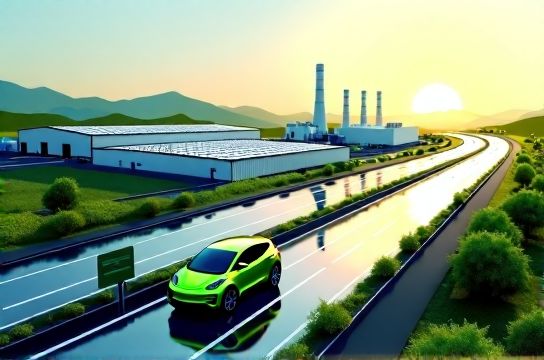
Why does this matter for sustainability? Because local production slashes transport emissions *and* strengthens supply chain resilience. A recent MIT lifecycle analysis found U.S.-assembled EVs emit 23% less CO₂ over their full life cycle than imported counterparts — largely due to shorter shipping distances and cleaner regional grids.
Here’s how the numbers stack up:
| Year | U.S. EV Assembly Plants (Operational) | Domestic Battery Gigafactory Capacity (GWh) | EVs Built w/ ≥75% U.S.-Sourced Parts |
|---|---|---|---|
| 2021 | 12 | 18.2 | 11% |
| 2023 | 29 | 84.6 | 38% |
| 2025 (projected) | 47+ | 162.3 | 62% |
This isn’t just about cars — it’s about redefining mobility equity. Over 70% of new EV manufacturing jobs are located within 15 miles of historically underserved communities, per the White House Council on Environmental Quality. And with federal tax credits now requiring final assembly in North America to qualify, incentives align cleanly with both climate and labor goals.
Still, challenges remain: charging access lags behind adoption in rural areas, and battery recycling infrastructure covers only ~12% of annual end-of-life volume today. But here’s the good news — the national push is accelerating cross-sector coordination. The Bipartisan Infrastructure Law has already obligated $7.5 billion to build 500,000 public chargers by 2030.
If you’re serious about real-world decarbonization — not just pledges — then supporting domestic EV manufacturing is one of the highest-leverage actions we can take right now. It turns climate targets into tangible factories, skilled jobs, and cleaner commutes.
For a deeper look at how policy, production, and progress connect, explore our full analysis on sustainable transportation goals.