EV Battery Recycling Initiatives Support Circular Economy in Mobility Sector
- 时间:
- 浏览:282
- 来源:OrientDeck
Let’s cut through the hype: electric vehicles (EVs) aren’t truly green—*unless* we close the loop on their batteries. As global EV sales hit **10.6 million units in 2023** (IEA), lithium-ion battery waste is projected to reach **12.5 million tonnes by 2030**. That’s not just an environmental risk—it’s a $34B raw material opportunity (Circular Energy Storage, 2024).
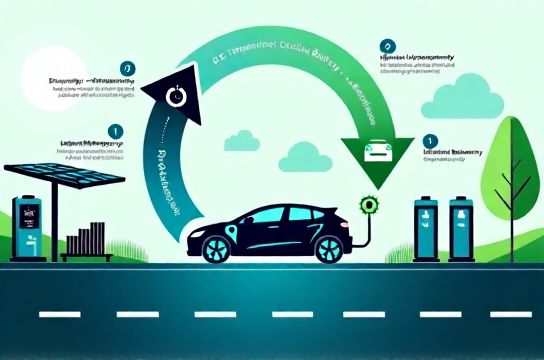
The good news? Forward-thinking recycling initiatives are scaling fast—not just for compliance, but for competitive advantage. Companies like Redwood Materials and Li-Cycle now recover >95% of cobalt, nickel, and lithium from end-of-life EV batteries using hydrometallurgical and direct cathode recycling methods.
Here’s how it breaks down:
| Recycling Method | Recovery Rate | Energy Use vs. Virgin Mining | Commercial Readiness (2024) |
|---|---|---|---|
| Pyrometallurgy | ~70–80% | 3–5× higher | Mature (e.g., Umicore) |
| Hydrometallurgy | 92–99% | ~40% lower | Scaling rapidly (Redwood, Ascend Elements) |
| Direct Cathode Recycling | 95%+ structural integrity | ~75% lower | Pilot-to-commercial (Battery Resourcers, MIT spin-off) |
What’s holding us back? Fragmented collection logistics, inconsistent battery designs, and regulatory gaps—especially outside the EU and China. The EU’s new Battery Regulation, effective August 2024, mandates 90% collection rates and minimum recycled content (12% cobalt, 4% lithium by 2030). That’s already reshaping OEM procurement strategies.
Real-world impact? In Sweden, Northvolt’s Revolt program powers 50% of its new cells with recycled nickel and lithium—cutting upstream emissions by 70%. Meanwhile, Tesla’s Nevada Gigafactory recycles 100% of its manufacturing scrap internally.
Bottom line: Recycling isn’t a sustainability add-on—it’s the backbone of resilient, cost-competitive EV supply chains. Ignoring it means paying premium prices for constrained metals while missing ESG targets.
If you’re an OEM, fleet operator, or policy stakeholder: start mapping battery passports, standardizing pack disassembly protocols, and partnering with certified recyclers *now*. The circular mobility economy isn’t coming—it’s already rolling.