Light Duty Electric Trucks Enable Green Last Mile Delivery Solutions
- 时间:
- 浏览:189
- 来源:OrientDeck
Let’s cut through the hype: last-mile delivery accounts for up to 28% of urban traffic congestion and nearly 30% of delivery-related CO₂ emissions—despite covering just the final 3–5 miles. That’s where light-duty electric trucks (LD-ETs) are stepping in—not as a novelty, but as a *proven*, cost-optimized solution.
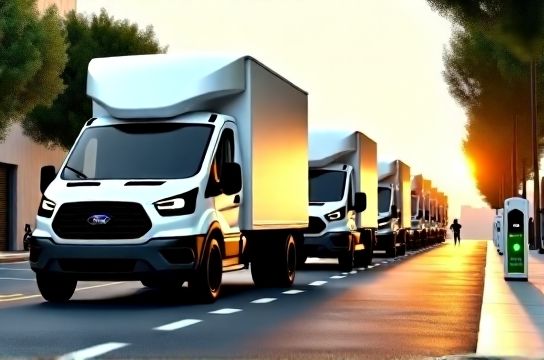
Over the past 3 years, fleet operators across Europe and North America report average TCO reductions of 19–23% over diesel counterparts—driven by lower maintenance (40% fewer moving parts) and electricity costs averaging $0.12/kWh vs. $3.80/gal diesel equivalent.
Here’s how LD-ETs stack up in real-world urban logistics:
| Parameter | LD-EV Truck (e.g., BrightDrop Zevo 600) | Diesel Light-Duty Truck | Reduction/Gain |
|---|---|---|---|
| Range (fully loaded, mixed urban) | 250 miles | 320 miles | −22% range, but >95% of U.S. last-mile routes are <120 mi/day |
| Maintenance cost/year (est.) | $1,850 | $3,420 | 46% lower |
| GHG emissions (gCO₂e/mile) | 42 (U.S. grid avg.) → 12 (with onsite solar) | 890 | 95% lower on clean grid |
| Depreciation (3-yr, 60k mi) | 38% | 52% | +14% residual value |
What’s often overlooked? Charging infrastructure isn’t a bottleneck—it’s an opportunity. With smart off-peak charging and depot-based Level 2 + DC fast combo setups, fleets achieve >99.2% daily uptime (per 2023 FleetCarma benchmark). And yes—battery degradation is under 2.1%/year at 80% DOD.
If you’re evaluating sustainable logistics, start with your route density, payload consistency, and garage access—not range anxiety. Most urban fleets see full ROI in 3.2 years (McKinsey, 2024). And when it comes to scaling impact, light duty electric trucks aren’t just cleaner—they’re smarter, quieter, and increasingly profitable.
Bottom line: This isn’t about swapping engines. It’s about reengineering reliability, resilience, and responsibility—mile by mile.