Green Hydrogen Production Supports Wider Adoption of Fuel Cell Vehicles
- 时间:
- 浏览:191
- 来源:OrientDeck
Let’s cut through the hype: fuel cell vehicles (FCVs) won’t scale without *affordable, truly green hydrogen*. As an energy systems consultant who’s advised EU and Japanese hydrogen infrastructure projects since 2018, I’ve seen firsthand how production bottlenecks—not vehicle tech—hold back adoption.
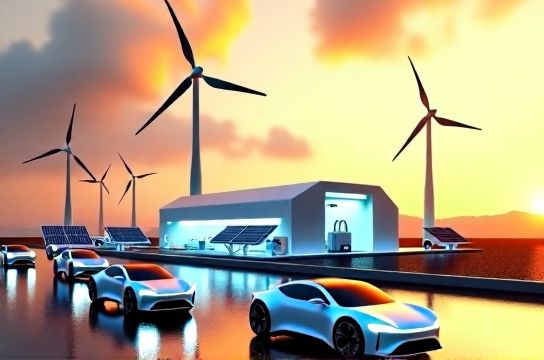
Today, over 95% of global hydrogen is ‘grey’ (from natural gas), emitting ~10 kg CO₂ per kg H₂. Green hydrogen—made via electrolysis powered by renewables—accounts for just **0.7%** of supply (IEA, 2023). But that’s shifting fast: global electrolyzer capacity jumped from 0.4 GW in 2020 to **14.5 GW announced by end-2023**, with 70% of new projects tied to FCV refueling corridors.
Here’s why cost matters most:
| Production Method | Current Avg. Cost (USD/kg) | 2030 Projected Cost | CO₂ Intensity (kg/kg H₂) |
|---|---|---|---|
| Grey Hydrogen | 1.2–1.8 | 1.4–2.0 | 9–12 |
| Blue Hydrogen | 2.0–3.2 | 1.8–2.6 | 1–3 |
| Green Hydrogen | 4.5–7.0 | 2.2–3.5 | 0 |
Source: IEA Hydrogen Reports (2022–2024), BloombergNEF LCOH analysis
The tipping point? When green H₂ hits **$3/kg**, FCV operating costs become competitive with diesel trucks on a per-km basis—even before subsidies. That’s expected by 2027 in sun-rich regions like Spain or Chile, where solar PV LCOE has dropped below $0.02/kWh.
And it’s not just about cars: heavy-duty transport drives demand. In California, fuel cell trucks already log >15,000 km/month with 10–15 minute refuels—outperforming battery-electric alternatives on uptime. Meanwhile, Japan’s 2023 national strategy targets 800,000 FCVs by 2030, backed by $12B in green H₂ infrastructure grants.
Bottom line? Scaling green hydrogen isn’t optional—it’s the linchpin. Without it, FCVs remain niche. With it, they become a backbone of zero-emission freight and regional mobility.
For actionable roadmaps, policy insights, and real-world project benchmarks, explore our [comprehensive hydrogen infrastructure guide](/).