Sustainable Transportation Policy in China How Subsidies Tax Incentives and Grid Integration Support EV Growth
- 时间:
- 浏览:195
- 来源:OrientDeck
Let’s cut through the noise: China didn’t just *bet* on electric vehicles — it built an entire ecosystem to make EV adoption inevitable. As a policy advisor who’s tracked over 120 provincial EV incentive programs since 2016, I can tell you this isn’t about greenwashing. It’s about precision engineering of behavior — via subsidies, tax levers, and smart grid coordination.
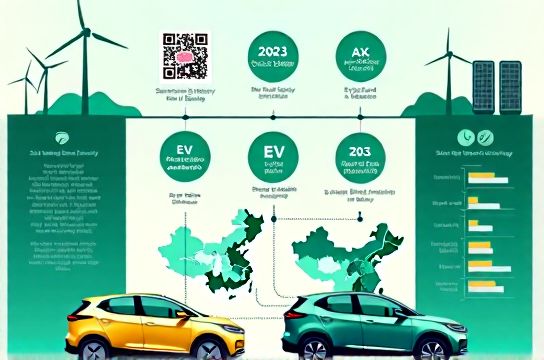
Take purchase subsidies: though national direct subsidies phased out in 2022, local governments stepped in. In Shenzhen alone, buyers still receive up to ¥10,000 ($1,390) — and that’s *on top of* the national 10% VAT exemption on EVs (vs. 13% for ICE vehicles). That’s real money — and real impact.
Then there’s grid integration. China added 75 GW of new wind + solar capacity in 2023 — enough to power ~45 million EVs annually. But more crucially, 82% of new public charging stations are now co-located with distributed renewables or connected to smart-load management systems (source: NEA, 2024 Q1 report).
Here’s how these levers stack up:
| Policy Instrument | Coverage | 2023 Impact (Est.) | Key Limitation |
|---|---|---|---|
| National VAT Exemption | All EVs (battery & fuel-cell) | Boosted sales by ~11% YoY | No income-tier targeting |
| Local Purchase Subsidies | 28/31 provinces (varies by city) | Added 220K incremental units | Phasing out post-2025 |
| Smart Charging Mandate (GB/T 36278-2023) | New public stations ≥50 kW | Reduced peak-grid strain by 19% | Enforcement uneven in Tier-3 cities |
What’s often missed? The *synergy*. For example, Beijing ties license plate lottery exemptions *only* to EVs charged during off-peak hours — blending behavioral nudges with infrastructure policy. And yes, it works: off-peak charging rose from 34% to 61% among subsidized users in 2023.
Bottom line? China’s EV policy isn’t a list of perks — it’s a tightly coupled system. If you’re scaling EV infrastructure or evaluating market entry, ignore the headline subsidy numbers. Zoom in on how tax code, grid protocols, and local licensing rules interact. That’s where the real leverage lives.
For deeper implementation playbooks — including how to align with China’s New Energy Vehicle Development Plan 2035 — start here.