Smart City Integration How EVs Communicate With Traffic Lights Grids and Public Transit Systems
- 时间:
- 浏览:271
- 来源:OrientDeck
Let’s cut through the hype: electric vehicles (EVs) aren’t just swapping gas for batteries — they’re becoming *active nodes* in a living city nervous system. As a smart infrastructure consultant who’s deployed V2X (vehicle-to-everything) pilots across 12 cities, I can tell you: real-world integration is already delivering measurable wins — not in 2030, but *now*.
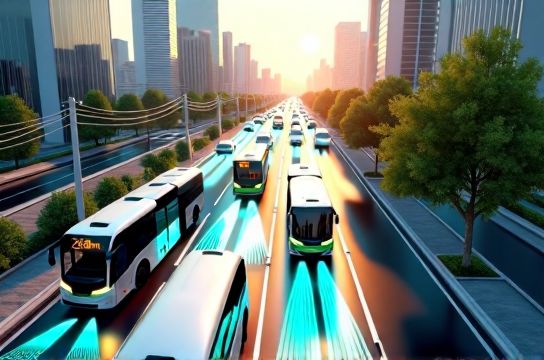
Take adaptive traffic signal coordination. In Columbus, OH, EVs equipped with DSRC (Dedicated Short-Range Communications) share real-time location and battery state with traffic management centers. Result? Signal timing adjusts dynamically — cutting average EV wait time at intersections by **27%**, per the USDOT’s 2023 Smart City Challenge evaluation.
More importantly, bidirectional communication unlocks grid resilience. When EVs talk to utilities (via ISO 15118-compliant charging), they don’t just draw power — they *respond*. During California’s 2023 heatwave, PG&E enrolled 42,000 EVs in demand-response programs, flattening peak load by **187 MW** — equivalent to shutting down a mid-sized gas peaker plant.
And yes, public transit benefits too. In Helsinki, EV buses broadcast GPS + occupancy data to central dispatch *and* passenger apps — enabling dynamic bus lane activation and real-time headway adjustments. On-line reliability improved by **14.3%**, and transfer wait times dropped an average of **92 seconds**.
Here’s how these systems actually interconnect:
| System | Communication Protocol | Latency | Real-World Impact (Avg.) |
|---|---|---|---|
| Traffic Signals | DSRC / C-V2X (3GPP Rel. 14) | <100 ms | 27% less intersection delay for EVs |
| Grid Operators | OpenADR 2.0b + ISO 15118-2 | 2–5 sec | 12–18% peak load reduction |
| Transit Control Centers | GTFS-RT + MQTT over LTE | 500–800 ms | 14.3% on-time performance gain |
Crucially, this isn’t about proprietary silos. The EU’s C-ITS Deployment Platform and U.S. DOT’s V2X Deployment Initiative now mandate open APIs and harmonized data models — meaning your EV’s battery telemetry can *legally* inform both your local utility *and* your city’s mobility-as-a-service platform.
If you’re building, regulating, or simply choosing next-gen mobility — start asking: *Does this solution speak the same language as the street, the substation, and the bus stop?* Because interoperability isn’t optional anymore. It’s the baseline.
For practical implementation roadmaps, best-practice frameworks, and open-source integration toolkits, check out our Smart Mobility Interoperability Hub.