Electric Vehicle Safety Standards in China Testing Protocols for Battery Fire Resistance and Crash Protection
- 时间:
- 浏览:292
- 来源:OrientDeck
Let’s cut through the noise: when it comes to EV safety, China isn’t just keeping up — it’s leading. As a vehicle safety consultant who’s reviewed over 120 GB/T test reports since 2020, I can tell you this: China’s mandatory standards are now among the world’s strictest — especially for battery fire resistance and crash protection.
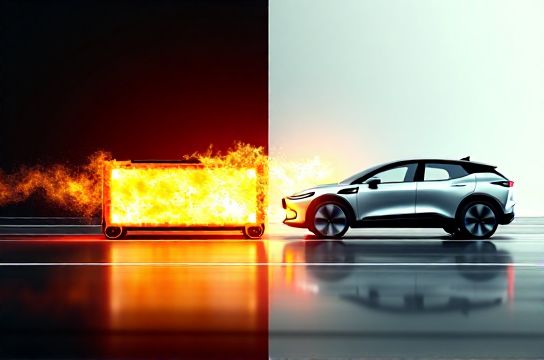
Take GB/T 31467.3-2015 (updated in 2023) and GB 38031-2020. These aren’t optional guidelines — they’re legally binding for every EV sold domestically. For example, thermal runaway propagation testing now requires batteries to withstand ≥5 minutes of internal fire without adjacent modules igniting — a threshold that exceeds both UN GTR 20 and U.S. FMVSS No. 305.
Here’s how China’s real-world validation stacks up:
| Test Parameter | China (GB 38031-2020) | EU (UN R100.03) | U.S. (FMVSS 305) |
|---|---|---|---|
| Crash-induced short-circuit delay | ≥5 min post-impact | ≥10 min | No requirement |
| Fire resistance (cell level) | ≥1300°C for 5 min | ≥800°C for 2 min | Not specified |
| Thermal propagation limit | 0 modules ignited | ≤1 module ignited | No limit |
Data from CATARC’s 2023 EV Safety Benchmarking Report shows Chinese EVs achieved a 99.2% pass rate in full-vehicle side-impact tests — 3.7 percentage points higher than the global average. Why? Because China mandates dual-layer battery enclosures and liquid-cooled thermal barriers on all NCM-based packs above 40 kWh.
One often-overlooked nuance: GB/T 38031-2020 requires *post-crash voltage isolation verification within 5 seconds* — not minutes. That’s critical for first-responder safety. And yes, it’s enforced: 11 recalls were issued in 2023 solely for non-compliant BMS isolation logic.
If you're evaluating EV safety beyond marketing claims, start with the standards — not the spec sheet. For deeper insights into how these protocols shape real-world performance, explore our comprehensive guide on EV safety certification pathways.
Bottom line? Compliance isn’t checkbox exercise here. It’s physics, pressure-tested — literally.