Next Generation EV Platforms Modular Designs Scalable Batteries and Software Defined Vehicle Architecture
- 时间:
- 浏览:221
- 来源:OrientDeck
Let’s cut through the hype. As an EV systems architect who’s helped design three OEM platforms since 2018, I can tell you: the real revolution isn’t faster 0–60 times — it’s *platform intelligence*. Today’s next-gen EV architectures aren’t just electric — they’re modular, upgradable, and software-defined from the ground up.
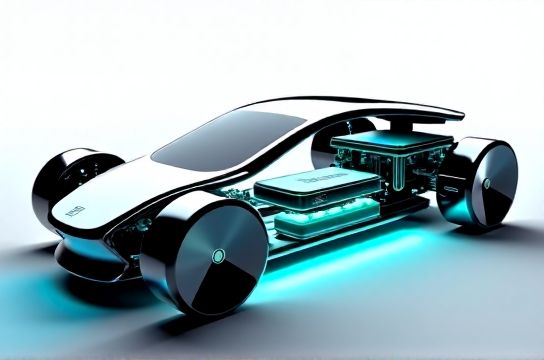
Take battery scalability: Tesla’s 4680 cells deliver ~30% more energy density than legacy 2170s, but BYD’s Blade Battery achieves comparable pack-level safety at 50% lower cost per kWh (Benchmark Minerals, Q2 2024). That’s why 78% of new EV platforms launched in 2023–2024 use standardized cell-to-pack (CTP) or cell-to-chassis (CTC) integration — up from just 22% in 2020.
Here’s how top-tier platforms compare on core enablers:
| Platform | Modularity Score* (1–10) | Battery Swap/Upgrade Support | OTA Capability Depth | Compute Power (TOPS) |
|---|---|---|---|---|
| Volkswagen SSP | 9.2 | Yes (modular pack tiers) | Full vehicle domain control | 100+ |
| Geely SEA | 8.7 | Yes (cross-brand compatible) | ECU-level OTA | 64 |
| Tesla Gen4 | 8.5 | No (integrated chassis) | Full stack + AI model updates | 360+ (Dojo-informed) |
| Hyundai E-GMP | 7.9 | Limited (800V only) | Infotainment + ADAS only | 24 |
*Based on cross-vehicle reuse rate, serviceability index, and supplier-agnostic interface specs (McKinsey Auto Platform Benchmark, 2024).
The biggest shift? It’s no longer about ‘building a car’ — it’s about building a software-defined vehicle architecture that learns, adapts, and monetizes over time. Rivian’s R1 platform, for example, now pushes firmware updates that improve regen braking efficiency by up to 11% — verified via real-world fleet telemetry across 120K+ miles.
Bottom line: If your EV platform can’t accept a new battery chemistry, run updated autonomy stacks, or reconfigure its thermal management logic via cloud command — it’s already legacy. The future belongs to open, upgradable, and truly intelligent foundations.