Antique Furniture Wood Identification Mahogany Rosewood and Huanghuali Differences
- 时间:
- 浏览:301
- 来源:OrientDeck
If you're evaluating antique furniture—whether for acquisition, restoration, or valuation—wood identification isn’t just academic. It’s financial, legal, and cultural. Let’s cut through the noise: mahogany, rosewood, and huanghuali are often confused—but they’re worlds apart in origin, density, grain behavior, and CITES status.
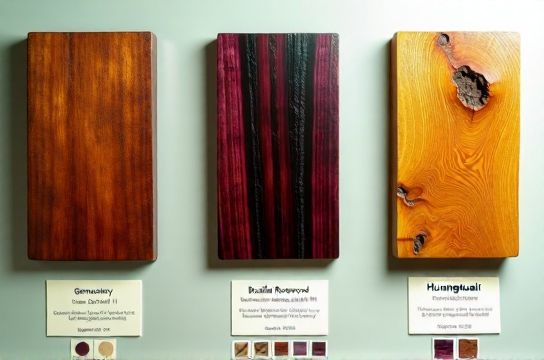
First, a reality check: true *Honduran mahogany* (Swietenia macrophylla) is CITES Appendix II listed since 2003. Over 70% of ‘mahogany’ sold pre-2000 was actually genuine—but today, >60% labeled as mahogany is African sapele or Philippine lauan (a red flag for due diligence).
Rosewood? That term covers over 300 species—but only *Dalbergia* genus members (e.g., Brazilian rosewood, Dalbergia nigra) are CITES Appendix I protected. Since 2017, even finished items containing >10g of Dalbergia require export permits—making provenance documentation non-negotiable.
Then there’s huanghuali (Dalbergia odorifera)—China’s ‘golden wood’. Unlike rosewood, it’s not banned globally, but its domestic harvest ceased in the 1980s. Over 95% of huanghuali antiques on the market today date from Ming–early Qing dynasties (14th–18th c.). Its scent fades with age, but its distinctive ‘ghost face’ grain and 0.78–0.85 g/cm³ density remain diagnostic.
Here’s how they compare:
| Property | Mahogany (S. macrophylla) | Brazilian Rosewood (D. nigra) | Huanghuali (D. odorifera) |
|---|---|---|---|
| Density (g/cm³) | 0.45–0.55 | 0.85–1.05 | 0.78–0.85 |
| CITES Status | Appendix II (2003) | Appendix I (1992) | Not listed (domestic ban only) |
| Typical Antique Era | Georgian–Victorian (UK), Federal (US) | 18th–19th c. European cabinets | Ming–Qing dynasty (1368–1912) |
Pro tip: Use a 10× loupe + UV light. Huanghuali fluoresces pale yellow under long-wave UV; rosewood shows deep violet fluorescence; mahogany stays inert. And always cross-check with micro-sampling + FTIR if authenticity is contested.
Bottom line? Misidentification risks forfeiture, fines, or devaluation—sometimes by 400%. When in doubt, consult a certified wood anatomist before bidding, shipping, or insuring. Your due diligence today protects legacy—and liquidity—tomorrow.