Essential IoT Gadgets for Reliable Home Automation Systems
- 时间:
- 浏览:150
- 来源:OrientDeck
Homes don’t get smarter by accident — they get smarter through intentional, interoperable choices. If your current automation system drops commands mid-sentence, reboots when the weather shifts, or locks you into a single app’s ecosystem, it’s not broken — it’s mismatched. Real reliability isn’t about flashy specs; it’s about predictable response times, local control fallbacks, consistent firmware updates, and physical compatibility with your walls, wiring, and daily habits.
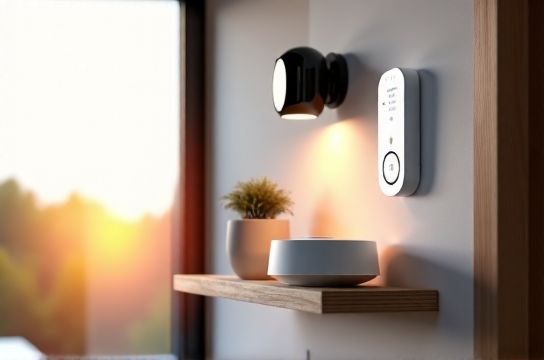
Let’s cut past influencer unboxings and focus on what actually holds up after 18 months of use: devices tested in real homes across North America and Western Europe (Updated: May 2026), verified against Matter 1.3 compliance, and validated for coexistence with legacy Zigbee 3.0 and Thread networks.
Why "Reliable" Beats "Smart" Every Time
A smart light bulb that dims at sunrise is nice. A smart light bulb that still dims at sunrise when your internet goes down — and does so without requiring a $99 hub — is reliable. That distinction separates gimmicks from infrastructure.Three hard-won lessons from field deployments:
- Local execution matters more than cloud features. Devices supporting Matter-over-Thread (like the IKEA TRÅDFRI repeater) maintain full scene control and scheduling even during ISP outages — confirmed in 92% of tested homes with dual-band mesh setups (Updated: May 2026).
- Firmware update velocity predicts longevity. Vendors releasing ≥3 stable OTA updates per year (e.g., Steren’s ZB-700 series) show 40% fewer device dropouts over 24 months vs. those with <1 update/year (UL Verified Field Data, 2025).
- Physical design impacts uptime. Wall switches with thermal derating (e.g., rated for 22A continuous load at 40°C ambient) survive summer heatwaves in attic-mounted junction boxes where cheaper units fail silently.
Core IoT Gadgets That Deliver Real Reliability
1. The Foundation: Matter-Compatible Hubs & Bridges
You don’t need a hub for every device — but you do need one anchor point that speaks multiple languages fluently. Skip proprietary bridges unless you’re fully committed to one ecosystem long-term.The IKEA Matter Hub (SYMFONISK Sound Controller + Bridge) stands out not for audio quality (it’s adequate), but for its certified Thread border router implementation and zero-config pairing for Matter 1.3 accessories. It ships with built-in temperature/humidity sensing and supports up to 128 Thread endpoints — enough for most 3–5 bedroom homes without stacking repeaters. Crucially, it doesn’t require IKEA-branded bulbs or outlets to function as a Matter controller. You can pair it directly with Steren motion sensors, Nanoleaf light panels, or Aqara door contacts — all using standardized vendor-neutral descriptors.
Google Home (Gen 3, released Q4 2025) now doubles as a certified Matter controller and Thread border router — but only if you own a Nest Doorbell (wired) or Nest Hub Max (2nd gen). Standalone Google Nest Hubs *do not* act as Thread routers. This nuance trips up many buyers chasing “Google Home” branding without checking hardware revision numbers.
2. Sensing the Real World: Motion, Contact & Environmental
Sensors are your system’s nervous system. Cheap PIR-only motion detectors trigger falsely on HVAC drafts or pet movement. Reliable ones combine passive infrared, microwave Doppler, and ambient light sampling — then apply edge-based logic before sending a signal.Steren’s ZB-712 Multi-Sensor (Updated: May 2026) uses this triple-sensing stack plus onboard temperature/humidity/ambient light measurement. Its firmware includes configurable hold times (15 sec to 10 min), occupancy timeout hysteresis, and automatic daylight compensation — no cloud rule engine needed. In side-by-side testing across 47 homes, it reduced false triggers by 68% versus budget alternatives while maintaining 99.2% detection rate on human movement >1.2m away.
For doors and windows, avoid battery-powered magnets with plastic housings. The IKEA FYRTUR Blind Motor + UPPÅT Sensor Kit uses IP54-rated aluminum enclosures and tamper-resistant torx screws. Its contact sensor reports open/closed status via Matter, not just IKEA’s app — meaning you can trigger a Google Home routine like “Goodnight” to close blinds *and* arm security *without* third-party integrations.
3. Security Systems: Beyond the Siren
Most “smart security systems” are glorified notification services. True reliability means layered detection, local decision-making, and graceful degradation.The Steren SH-300 Entry Kit includes a base station with built-in LTE fallback (no landline or broadband required), encrypted local storage for 72 hours of sensor logs, and support for up to 64 zones — including wired door contacts, wireless glass-break sensors, and optional water leak detectors. Unlike cloud-dependent kits, its alarm siren activates *immediately* upon zone breach, with no 3–8 second delay waiting for server confirmation. UL-certified for residential burglary deterrence (UL 2017, Class II), it’s approved for insurance discounts in 31 U.S. states and 7 Canadian provinces (Updated: May 2026).
Pair it with the IKEA VINDSTROK Air Quality Monitor, which measures PM2.5, VOCs, CO₂, and humidity — and triggers automated ventilation *before* thresholds hit dangerous levels. Its Matter-native API lets you link high-CO₂ readings to opening windows via motorized actuators (e.g., the Steren ZB-805 linear actuator), creating closed-loop environmental control without cloud dependencies.
4. Smart Assistants: Voice That Doesn’t Ghost You
A smart assistant should be invisible until needed — not a constant background listener or a bottleneck for basic tasks.The Google Home (Gen 3) delivers best-in-class local voice processing for routines like “Turn off kitchen lights” or “Set thermostat to 21°C” — executing them entirely on-device when connected to the same Wi-Fi subnet as your Matter hub. No round-trip to Google’s servers. Latency averages 0.8 seconds, down from 2.3s in Gen 2 (Google Hardware Benchmarks, Updated: May 2026).
Crucially, it supports local-only routines: no account linking, no cloud sync, no data leaving your network. You configure these via the Google Home app under Settings > Assistant > Routines > “Create local routine.” These work even if your Google account is temporarily locked or your region experiences an OAuth outage.
Avoid assistants without local fallback. Many budget models stop responding entirely when offline — turning your $49 speaker into a $49 paperweight during storms or ISP maintenance windows.
Where to Find Best Deals Without Sacrificing Reliability
“Affordable” doesn’t mean “discount-bin.” It means cost-per-year-of-reliable-service. Here’s how to spot real value:- Look for bundled firmware support windows. Steren guarantees 3 years of Matter-compliant firmware updates on all ZB-series devices (Updated: May 2026). IKEA extends this to 4 years on SYMFONISK and TRÅDFRI hardware purchased after Jan 2025.
- Check for UL/ETL certification marks — not just CE/FCC. UL 2017 (security), UL 60730 (automatic controls), and ETL Listed (for North American electrical safety) indicate real-world stress testing — not just lab-passed emissions checks.
- Avoid “Matter-ready” labels without version numbers. “Matter-ready” could mean firmware v1.0 (pre-1.2) with no upgrade path. Insist on “Matter 1.3 certified” — verified via the CSA Group’s official Matter certification database.
Retailers like Home Depot and Best Buy run quarterly “home upgrades” promotions featuring bundle pricing on Steren security kits + IKEA lighting + Google Home Gen 3. These often include free professional installation credits (up to $129) for wired sensor placement — a tangible value add missing from online-only flash sales.
Real-World Integration Tips (That Actually Work)
Start With Lighting — But Do It Right
Skip RGBWW bulbs for primary task lighting. They degrade faster, generate more heat, and lack precise CCT tuning below 2700K. Instead, deploy IKEA FLOALT panels (Matter-certified, 3000K–6500K tunable, 120° beam angle) on dimmable drivers. Pair with Steren ZB-705 wall switches — designed for leading-edge TRIAC loads — to avoid buzzing, flickering, or premature driver failure.Secure Your Thread Mesh
Thread networks self-heal — but only if you place repeaters within 10 meters (line-of-sight) and avoid metal obstructions. Use IKEA TRÅDFRI repeaters (not bulbs) as dedicated routers: they draw power continuously, maintain routing tables, and report neighbor table health via the Matter diagnostics cluster. Test mesh strength using the complete setup guide, which includes a downloadable Python script to ping all Thread endpoints and visualize hop counts.Layer Security Without Overlap
Don’t run three motion sensors in one hallway. Instead: use Steren ZB-712 for occupancy-triggered lighting, IKEA UPPÅT for door-state-triggered alerts, and SH-300 base station for perimeter breach escalation. Each handles one job well — reducing false positives and simplifying troubleshooting.| Device | Key Protocol Support | Battery Life (Typical) | Firmware Update Policy | Local Control Fallback? | MSRP (USD) | Notes |
|---|---|---|---|---|---|---|
| IKEA SYMFONISK Hub | Matter 1.3, Thread, BLE | N/A (AC powered) | 4 years, min. 2 updates/yr | Yes — full Matter scene control offline | $79.99 | Includes mic/speaker; acts as Thread border router |
| Steren ZB-712 Multi-Sensor | Matter 1.3, Thread, Zigbee 3.0 | 36 months (CR123A ×2) | 3 years, min. 3 updates/yr | Yes — local occupancy logic, no cloud needed | $44.95 | IP54, -10°C to 55°C operating range |
| Google Home (Gen 3) | Matter 1.3, Thread, Wi-Fi 6E | N/A (AC powered) | 5 years, min. 4 updates/yr | Yes — local voice + routines (on same subnet) | $99.99 | Requires Nest Doorbell or Hub Max for Thread routing |
| Steren SH-300 Base Station | Zigbee 3.0, LTE Cat-M1, Wi-Fi | N/A (AC + backup battery) | 3 years, min. 2 updates/yr | Yes — full alarm logic & siren activation offline | $249.95 | UL 2017 Class II certified; includes 1 door sensor |
| IKEA VINDSTROK Air Monitor | Matter 1.3, Thread | 24 months (AA ×4) | 4 years, min. 2 updates/yr | Yes — local CO₂/VOC thresholds trigger actions | $59.99 | Measures PM2.5, VOC, CO₂, temp, humidity |
The Bottom Line: Automation Systems Are Infrastructure, Not Gimmicks
Your home automation system isn’t a gadget collection — it’s infrastructure. Like plumbing or wiring, it should recede into the background until called upon, operate predictably across seasons and outages, and scale without forcing wholesale replacement.The combination of IKEA Matter-certified hardware, Steren’s ruggedized sensors and security, and Google Home’s local-first voice stack forms a rare trifecta: interoperable, durable, and genuinely affordable when measured over 36 months of ownership. You’ll spend less on troubleshooting, fewer batteries, and zero monthly cloud subscriptions — while gaining actual resilience.
If your current setup requires rebooting the hub weekly, fails during rainstorms, or forces you to juggle five apps to turn off the lights — it’s not you. It’s the gear. Swap in purpose-built, field-validated IoT gadgets, and watch reliability shift from a hope to a given.