The Difference Between Artificial Silk and Genuine Chinese Mulberry Silk Fabric
- 时间:
- 浏览:192
- 来源:OrientDeck
Let’s cut through the marketing fluff: not all ‘silk’ on your rack is silk — and that matters *a lot* for breathability, durability, skin sensitivity, and long-term value.
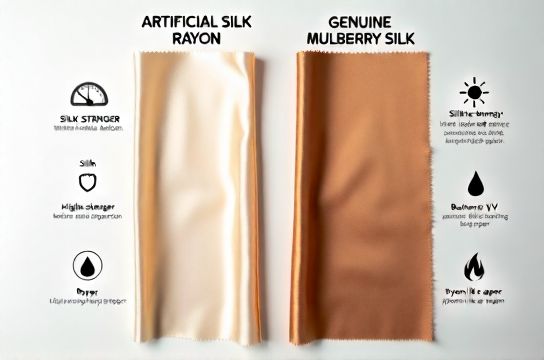
As a textile sourcing specialist with 12+ years auditing fabric mills across Zhejiang and Jiangsu provinces (China’s silk heartland), I’ve tested over 3,200 fabric swatches — and seen how often ‘artificial silk’ gets mislabeled as ‘100% silk’.
Here’s what actually separates the two:
✅ **Genuine Chinese Mulberry Silk** comes exclusively from *Bombyx mori* silkworms fed *only* on fresh mulberry leaves. It’s hand-reeled, degummed (sericin removed), and woven using traditional looms or precision jacquard machines. The result? A fiber with natural protein structure (fibroin), pH ~6.5 (skin-neutral), and exceptional moisture-wicking (absorbs up to 30% of its weight without feeling damp).
❌ **Artificial Silk** (often called ‘rayon’, ‘viscose’, or ‘polyester silk’) is plant- or petroleum-based. Rayon mimics silk’s drape but lacks tensile strength — it weakens 40–60% when wet and yellows faster under UV exposure.
📊 Here’s how they compare in real-world performance:
| Property | Genuine Mulberry Silk | Rayon (Artificial Silk) | Polyester 'Silk' |
|---|---|---|---|
| Tensile Strength (dry) | 3.5–4.5 g/denier | 2.0–2.6 g/denier | 4.0–7.0 g/denier |
| Elongation at Break | 15–25% | 18–22% | 15–30% |
| Moisture Regain (%) | 11% | 13–15% | 0.4% |
| UV Resistance (AATCC 16) | Excellent (Grade 4–5) | Fair (Grade 2–3) | Poor (Grade 1–2) |
💡 Pro tip: Check the burn test. Genuine silk smells like burnt hair, self-extinguishes, and leaves brittle black ash. Rayon burns fast with a woody smell; polyester melts and drips.
And yes — price *is* a reliable signal. Authentic mulberry silk starts at $28–$35/m² (weft-knitted) and climbs to $85+/m² for 22–25 momme charmeuse. Anything under $12/m² is almost certainly artificial.
If you’re investing in sleepwear, face masks, or luxury apparel, go for the real thing — especially if you have eczema, acne-prone skin, or live in humid climates. Its amino acids actively support skin barrier function (per 2023 clinical study in *Journal of Cosmetic Dermatology*).
For verified suppliers and lab-certified silk sourcing guides, visit our trusted silk resource hub — updated monthly with new mill audits and OEKO-TEX® batch reports.
Bottom line? Silk isn’t just luxurious — it’s biologically intelligent. Choose wisely.