Discover the Rich Heritage of Chinese Tea
- 时间:
- 浏览:209
- 来源:OrientDeck
H2: Not Just a Drink—A Living Archive in Every Cup
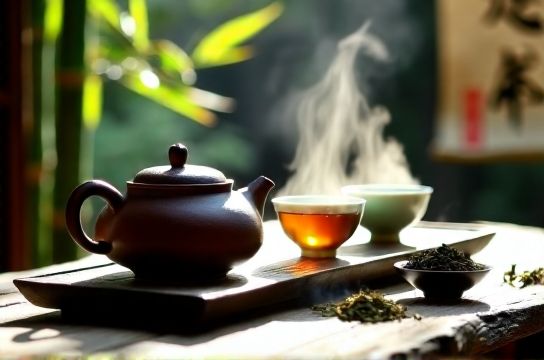
When you hold a warmed Yixing zisha teapot, smell the damp earthiness of aged Pu-erh cake, or watch Longjing leaves unfurl like jade needles in clear water—you’re not tasting tea alone. You’re touching over 4,700 years of agrarian wisdom, imperial patronage, monastic discipline, and merchant networks that once stretched from Fujian ports to St. Petersburg. Chinese tea isn’t folklore—it’s infrastructure. And its heritage isn’t preserved behind glass; it’s steeped, shared, and reinterpreted daily.
That said, navigating it honestly means acknowledging friction points: inconsistent labeling on e-commerce platforms (e.g., ‘Shu Pu-erh’ sold as ‘raw’), misleading claims about ‘ancient tree’ material (only ~12% of Yunnan’s commercial Pu-erh qualifies under provincial traceability standards), and ceramic glazes marketed as ‘food-safe’ but lacking SGS-certified leach testing (Updated: April 2026). This guide cuts through noise with field-tested criteria—not ideals.
H2: The Six Major Categories—Function Before Fashion
China officially classifies teas by oxidation level and processing method—not geography or prestige. That distinction matters because it determines how you store, brew, and age them. Here’s what actually holds up in practice:
• Longjing tea (Dragon Well): Pan-fired green tea from Hangzhou’s West Lake region. True Longjing must be hand-plucked before Qingming (early April), with flat, smooth leaves and chestnut aroma. Bulk ‘Longjing-style’ from Zhejiang’s inland counties lacks the terroir-driven umami and fades within 6 months if not vacuum-sealed and refrigerated.
• Pu-erh tea: Unique among global teas for post-fermentation. Raw (Sheng) Pu-erh is sun-dried, compressed, and aged naturally—developing complexity over decades. Ripe (Shou) Pu-erh undergoes wet-pile fermentation (Wo Dui) to accelerate aging, yielding earthy, smooth profiles in 1–3 years. Authenticity hinges on factory code (e.g., Menghai Tea Factory’s ‘7542’ recipe), not just ‘Yunnan origin’ labels.
• Oolong tea: Semi-oxidized, ranging from 12% (Tieguanyin’s floral lightness) to 70% (Dong Ding’s roasted depth). Key differentiator? Rolling technique. Tightly rolled ‘pearl’ oolongs (e.g., Dongfang Meiren) release flavor gradually—ideal for multiple infusions in gongfu style. Loosely twisted varieties (e.g., Wuyi Rock Oolong) need wider vessels to expand fully.
• White tea: Minimally processed—just withering and drying. Silver Needle (Baihao Yinzhen) uses only unopened buds; White Peony (Bai Mudan) adds one leaf. True Fujian white tea absorbs ambient humidity easily; storing it above 65% RH risks mold even in sealed tins (Updated: April 2026). Avoid ‘white tea’ blends with added flowers—those aren’t category-compliant.
• Black tea: Called ‘red tea’ (Hong Cha) in China due to its liquor color. Unlike Assam or Ceylon, Chinese black teas emphasize fragrance over strength: Keemun’s orchid-honey notes, Lapsang Souchong’s pine-smoked character (traditionally over pinewood fires, not liquid smoke). Most domestic consumption is loose-leaf—bagged versions often use fannings that over-extract bitterness in <30 seconds.
• Dark tea (Hei Cha): Broader category including Pu-erh, but also Hunan Anhua Fu Zhuan (with golden ‘golden flower’ fungus) and Guangxi Liubao. These are intentionally microbially fermented and built for long-term storage—even improving after 10+ years in breathable paper wrappers.
H2: Tools That Shape the Experience—Not Just Accessories
A teapot doesn’t ‘hold’ tea—it transforms it. Material, shape, and firing method change extraction kinetics, heat retention, and even mouthfeel. Skip the ‘aesthetic-only’ picks.
• Yixing zisha teapots: Made from unglazed purple clay mined near Yixing, Jiangsu. The porous structure absorbs tea oils over time, subtly seasoning the vessel. Critical nuance: Each clay type (Zi Ni, Hong Ni, Lü Ni) has distinct mineral content affecting pH interaction. Zi Ni (purple clay) works best for roasted oolongs and ripe Pu-erh; Hong Ni (red clay) suits delicate greens and whites. Never wash with soap—rinse only, air-dry upside-down. A well-seasoned pot lasts 30+ years.
• Ceramic tea sets: Jingdezhen porcelain offers thin walls and neutral taste—ideal for showcasing Longjing’s freshness or Bai Mudan’s subtlety. Look for high-firing (>1300°C) and lead-free glaze certification (GB 4806.4-2016 standard). Lower-fired ‘artisan’ ceramics may leach heavy metals when used with acidic infusions (e.g., cold-brewed citrus tea blends).
• Jian zhan (Tenmoku bowls): Iron-rich stoneware from Fujian’s Jianyang, traditionally used for Song dynasty tea competitions. Its thick walls retain heat for whisked matcha-style preparations—but modern versions vary widely in iron oxide content. Authentic pieces show hare’s fur or oil-spot patterns formed naturally in wood-fired kilns. Mass-produced electric-kiln versions lack thermal mass and visual depth.
• Tea trays: Not decorative—functional. Bamboo trays wick moisture but warp if soaked; slate trays are stable but heavy. Best-in-class options (e.g., Foshan-sourced black slate with routed drainage channels) direct runoff cleanly into reservoirs without pooling—a non-negotiable for consistent gongfu sessions.
H2: Brewing Realities—From Gongfu Precision to Cold-Steep Simplicity
Gongfu tea isn’t ritual for ritual’s sake. It’s a calibrated response to leaf structure. Tightly rolled oolongs need short, hot, repeated steeps (5–15 sec) to open evenly. Broken-leaf blacks benefit from longer, cooler infusions (95°C, 3 min) to avoid tannic bite. Ignoring this leads to wasted tea—not enlightenment.
Cold brewing flips the script: submerging whole-leaf greens or lightly oxidized oolongs in room-temp water for 6–12 hours extracts amino acids (theanine) while suppressing caffeine and catechins. Result? Silky, low-bitterness infusions perfect for summer or sensitive stomachs. Use glass or food-grade PET—avoid aluminum or reactive metals.
H2: Storage—Where Most Tea Loses Its Soul
Light, oxygen, moisture, and odor are tea’s four enemies. But blanket rules fail. Here’s what works:
• Greens & whites: Vacuum-sealed + refrigerated at 0–4°C. Use within 12 months. Do not freeze—condensation upon thawing degrades volatile aromatics.
• Oolongs: Nitrogen-flushed foil pouches at cool room temp (15–22°C). Roasted varieties last 24+ months; unroasted, 12–18 months.
• Pu-erh & dark teas: Store loose or compressed in breathable materials (cotton bags, bamboo baskets) at 60–70% RH and 20–25°C. Avoid plastic bins—they trap ethylene and encourage off-flavors. Rotate stock: consume newer cakes first; older ones mature in place.
H2: Buying Smart—Beyond Brand Names
Online tea shopping demands forensic reading. Check for:
– Harvest date (not ‘best before’) printed on inner wrapper
– Factory batch code (e.g., ‘Da Yi 8582–202309’ = Da Yi brand, recipe 8582, September 2023)
– Third-party lab reports (heavy metals, pesticide residues) linked in product description
– Origin specificity: ‘Wuyishan Zhengyan’ (core rock area) vs. ‘Wuyishan’ (entire prefecture—10x larger landmass)
Newer brands like Bitterleaf Teas and Mei Leaf publish full sourcing maps and seasonal lot notes. Legacy players (e.g., Dayi, Xiaguan) offer consistency but less transparency on individual batches.
H2: Tea as Cultural Syntax—Not Costume
‘Tea culture’ isn’t calligraphy scrolls and silk robes. It’s the Fujian farmer who sorts leaves by hand at dawn, the Chaozhou elder refilling your cup before you finish, the Shenzhen office worker doing 3-minute gongfu at her desk using a 150ml Gaiwan. It’s adaptability.
The resurgence of cold-brewed Longjing in Shanghai cafes, the use of vintage Yixing pots for single-origin Darjeeling in Beijing tea bars—these aren’t dilutions. They’re dialects. Chinese tea endures because it refuses museum status. It lives in utility.
H2: Practical Gear Comparison—What to Prioritize First
| Item | Entry-Level (Under $45) | Mid-Tier ($45–$180) | Premium ($180+) | Key Trade-Off |
|---|---|---|---|---|
| Yixing Zisha Teapot | Mechanically pressed clay, no provenance | Hand-thrown, sourced from licensed Yixing mines, basic stamp | Master artisan signed, documented clay source, 3+ years fired | Seasoning speed vs. authenticity—entry-level absorbs unevenly |
| Ceramic Gaiwan | Porcelain, 1100°C fired, no safety cert | Jingdezhen, 1320°C, GB 4806.4 certified | Hand-glazed, kiln-numbered, thermal shock tested | Weight vs. durability—lighter gaiwans crack faster under rapid temp shifts |
| Tea Tray | Bamboo, glued joints, no drainage slope | Slate or food-grade resin, routed channels, removable reservoir | Custom-cut black slate, CNC-machined flow paths, integrated waste valve | Portability vs. function—bamboo trays travel easy but leak under heavy pour |
| Storage Canister | Tin, rubber gasket, no UV barrier | Stainless steel, nitrogen-flush compatible, opaque | Vacuum-sealed ceramic with desiccant chamber | Cost vs. longevity—tin degrades after ~2 years with frequent opening |
H2: Your First Steps—No Ceremony Required
Start here—no gear needed:
1. Buy 50g of verified Longjing (look for ‘West Lake’ designation + harvest date) and 50g of Shou Pu-erh (check for Menghai factory code).
2. Brew both in the same vessel: a $12 porcelain gaiwan. Use 3g leaf, 100ml water, 85°C for Longjing, 95°C for Pu-erh.
3. Taste side-by-side. Note texture: Longjing’s slippery mouthfeel vs. Pu-erh’s round, coating body. That contrast reveals more than any lecture.
Then, if you want to go deeper, explore our complete setup guide—curated for real kitchens, tight budgets, and evolving taste. It includes vendor checklists, seasonal storage calendars, and video demos of proper gaiwan pouring angles (Updated: April 2026). No mysticism. Just clarity.