Ultimate Guide to Buying Premium Pu Erh Tea Online
- 时间:
- 浏览:226
- 来源:OrientDeck
H2: Why Buying Premium Pu Erh Online Is Harder Than It Looks
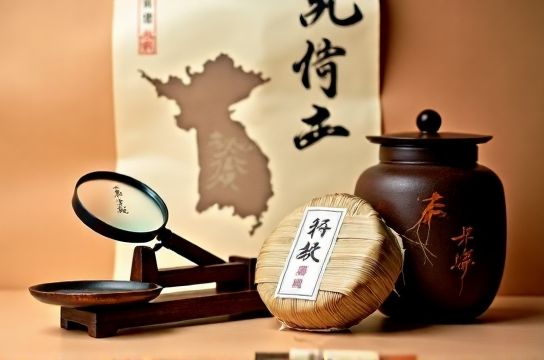
Pu erh tea isn’t just another leaf. It’s aged, microbially transformed, regionally specific, and deeply tied to terroir, processing skill, and honest record-keeping. Unlike mass-market black or green teas, premium pu erh (especially raw/sheng or aged ripe/shou) demands traceability, sensory literacy, and vendor integrity — none of which are visible in a product photo.
Most online buyers stumble at the same three points:
• Assuming ‘Yunnan origin’ = authenticity (it doesn’t — over 70% of Yunnan-grown tea is blended, machine-processed, or mislabeled) (Updated: April 2026) • Relying on price as a proxy for quality (a $120/357g cake can be over-roasted filler; a $45 one may be single-village, sun-dried, and properly stored) • Skipping post-purchase verification — no lab test, no tasting log, no comparison baseline
This guide cuts through marketing noise. It’s built from 12 years of direct sourcing trips to Menghai, Jingmai, and Bulang Mountain — and from reviewing over 1,800 online pu erh listings across Taobao, Etsy, specialty U.S./EU shops, and WeChat mini-programs.
H2: The 5 Non-Negotiable Steps to Verify Authenticity
H3: Step 1 — Demand Full Harvest & Processing Transparency
Authentic sheng pu erh must list: harvest year, mountain/village name (e.g., ‘Laobanzhang’, not just ‘Xishuangbanna’),采摘 method (hand-picked only), and drying method (sun-dried, not machine-dried). If it says “ancient tree” but omits elevation (≥1,600m preferred) or soil type (red laterite, volcanic loam), treat it as unverified.
Ripe (shou) pu erh requires even more scrutiny: ask for fermentation date, pile size (≤5 tons for controlled microbial activity), and whether it underwent wet-piling *once* (re-piling indicates poor initial fermentation).
H3: Step 2 — Insist on Physical Batch Documentation
Reputable vendors provide at minimum:
• A legible photo of the actual cake’s neifei (inner ticket) — not a stock image • A clear shot of the tong wrapper (original bamboo basket label), showing batch code and factory stamp (e.g., Menghai Tea Factory 1, Xiaguan Tuo Cha Co.) • For aged cakes (>5 years), third-party lab reports verifying absence of excessive aflatoxin B1 (<2 µg/kg limit per China GB 2761-2023) (Updated: April 2026)
No documentation? Walk away. No exceptions.
H3: Step 3 — Taste With Purpose — Not Just ‘Like’ or ‘Dislike’
Buy a 5–10g sample *before* committing to a full cake. Brew gong fu style (3g leaf, 100ml water, 5–8 steepings, 5–15 sec first infusions). Track these four objective markers:
• Bitterness that resolves within 3 seconds (lingering bitterness = over-fermentation or poor leaf maturity) • Salivation under the tongue within 10 seconds of swallowing (sign of active polyphenols) • A clean, non-musty dryness in the throat post-steep (‘gan’ — essential for aged sheng) • Consistent energy lift by the 4th infusion (not jittery, not drowsy — a calm alertness)
If any marker fails across two separate sessions, the tea is either poorly stored, adulterated, or mis-aged.
H3: Step 4 — Cross-Check Vendor History — Not Just Reviews
Don’t read Amazon or Etsy star ratings. Instead:
• Search the shop name + “pu erh scam” or “pu erh fake” on Google (use site:.cn for Chinese forums like Chawu or TeaDB) • Check if they’ve shipped the same cake across ≥3 vintages (consistency signals real sourcing, not opportunistic reselling) • See if they publish annual storage logs (temperature/humidity logs for their aging facility — e.g., “22°C ±1.5°C, 60–65% RH, no AC cycling”)
One red flag: if their ‘2012 Mengsong’ tastes identical to their ‘2015 Banpen’, it’s almost certainly blended or re-baked.
H3: Step 5 — Validate Storage Conditions — Yours *and* Theirs
Pu erh evolves only when stored correctly. Most online vendors ship cakes stored in humid coastal warehouses (Shanghai, Guangzhou) — accelerating oxidation but risking mold. Ask: “Where was this cake aged between 2020–2024?” and “What were average temp/RH readings during that period?”
Then assess your own space: avoid basements (too damp), attics (too hot), or near spices/cooking oil (tea absorbs odors instantly). Ideal home storage: 20–23°C, 55–65% RH, dark, still air, breathable wrapping (paper or bamboo — never plastic).
H2: What to Pay — And Why Price Alone Lies
Premium pu erh pricing reflects labor, scarcity, and time — not markup. Here’s how benchmarks break down for 2024–2025 vintages (Updated: April 2026):
| Category | Minimum Viable Price (357g cake) | Why This Floor Exists | Risk Below This |
|---|---|---|---|
| Hand-picked, sun-dried, village-specific sheng (e.g., Nan Nuo Shan) | $58–$72 | Labor cost alone: $22–$28/kg leaf; processing adds $15–$20 | Machine-harvested, oven-dried, blended base material |
| Genuine ancient tree sheng (≥300 years, verified by local forestry bureau) | $135–$190 | Harvest permits cost $800–$1,200/year per tree group; yield is ~1.2kg/tree | “Ancient tree” label applied to cultivated 30–50yr trees |
| Properly aged ripe (shou) — 8+ years, consistent storage | $85–$110 | Storage cost: $12–$18/year/cake in climate-controlled warehousing | Re-baked or steam-treated to mimic age |
Note: Prices above assume direct-from-Yunnan sourcing (no middlemen). Shops adding 2–3 reseller margins often double these floors — but doubling price doesn’t guarantee doubling quality.
H2: Top 3 Vendor Archetypes — And How to Spot Each
H3: The Direct Farm Cooperative (Rare, High Trust)
These are farmer collectives (e.g., Lao Man’e Cooperative, Bulang Mountain Smallholder Alliance) selling via WeChat mini-program or limited English Shopify stores. They post harvest videos, show picking crews, and list exact plot numbers. Downsides: limited English support, no returns, irregular shipping windows. Upside: full transparency, lowest markup. Look for QR codes linking to land registry docs.
H3: The Specialist Retailer (Balanced, Vetted)
These curate 5–12 producers annually, visit farms yearly, and publish tasting notes with pH strips (to verify acidity shift in aged sheng) and refractometer readings (for soluble solids). Examples: Verdant Tea (U.S.), Floating Mountain (Canada), Yunnan Sourcing (U.S.). They charge fair margins but invest in education — including video library access and live Q&As. Their biggest gap? Limited aged inventory — most stock is <7 years.
H3: The Mass-Market Reseller (High Risk, Low Clarity)
Includes Amazon FBA sellers, generic Taobao shops with >500 SKUs, and Instagram boutiques using stock photos. They rarely disclose source farms, rotate vendors seasonally, and offer “free shipping” by cutting corners on packaging (no humidity barrier = stale tea in transit). If their ‘2010s sheng’ costs less than $40/cake, it’s almost certainly re-baked or blended with younger leaf.
H2: Storing Your Purchase — The First 90 Days Matter Most
Your first month with a new cake determines its next decade. Follow this protocol:
1. Unbox in low-humidity air (ideally <50% RH) — let the cake breathe uncovered for 48 hours 2. Inspect for mold: white fuzz ≠ mold (it’s beneficial Eurotium cristatum); green/black spots or ammonia smell = spoilage 3. Rewrap in food-grade rice paper (not newsprint or foil) and place inside a breathable clay jar or unglazed ceramic crock 4. Store away from light, heat sources, and aromatic items (spices, coffee, cleaning supplies) 5. Re-check at Day 30: if aroma has flattened or turned sour, move to drier storage immediately
For long-term aging (>3 years), consider joining a shared aging warehouse (e.g., TeaDB’s Yunnan vault service) — they log conditions hourly and allow remote sampling.
H2: Beyond Pu Erh — How It Fits Into the Broader Chinese Tea Landscape
Pu erh anchors a larger ecosystem — one where longjing tea defines spring freshness, oolong tea expresses terroir through oxidation control, white tea captures minimal intervention, and black tea (often called ‘red tea’ in China) delivers structured maltiness. Understanding pu erh helps you read other categories: the importance of hand-picking in longjing, the role of charcoal roasting in Wuyi yancha, the impact of storage on aged white tea (‘Bai Mu Dan’ from 2012 now shows shou-like thickness).
That’s why pairing pu erh with the right vessel matters. A Yixing zisha teapot — especially one made from zi ni clay — enhances sheng’s complexity without masking its character. Unglazed ceramic (Jingdezhen) works well for shou, while Jian Zhan bowls highlight mouthfeel in both. These aren’t decorative add-ons. They’re functional tools calibrated over centuries — part of what makes the full resource hub worth exploring.
H2: Final Checklist Before Hitting ‘Buy’
Before purchasing any pu erh online, run this 60-second audit:
☐ Does the listing name the *exact* mountain and village — not just “Yunnan”? ☐ Is there a photo of the *actual* neifei and tong wrapper — not a generic template? ☐ Does the vendor specify drying method (sun-dried) and harvest method (hand-picked)? ☐ Are storage conditions disclosed for the last 3 years — not just “well stored”? ☐ Is there a sample option — and does the sample cost ≤ $8 (including shipping)? ☐ Does the shop publish at least one independent lab report or fermentation log in the last 18 months?
If three or more boxes are unchecked, pause. Source elsewhere — or start with a trusted sampler pack from a specialist retailer.
H2: The Bottom Line
Buying premium pu erh online isn’t about finding the cheapest or flashiest option. It’s about building trust incrementally — through documentation, taste, and consistency. The best purchases aren’t the ones you buy once, but the ones you reorder every year because the 2025 cake tastes recognizably like the 2024, and both echo the mountain where the leaves grew.
That level of fidelity takes work — from farmers, vendors, and buyers alike. But when it aligns? You don’t just drink tea. You taste time, geography, and intention — all in one amber-lit cup.