Why Longjing Tea Reigns Supreme Among Chinese Green Teas
- 时间:
- 浏览:334
- 来源:OrientDeck
H2: The Unmistakable Signature of Longjing Tea
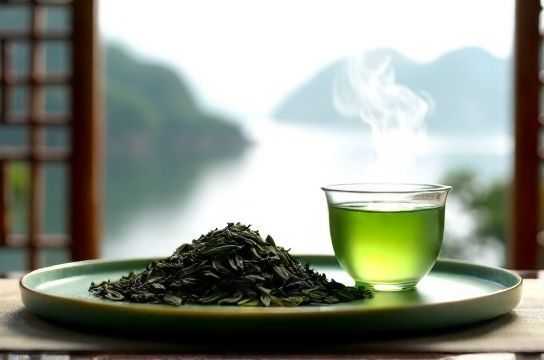
Walk into any reputable teahouse in Hangzhou—or even a high-end specialty shop in Berlin or Portland—and ask for a fresh spring green tea. More often than not, what arrives is Longjing tea (also spelled Longjing or Lung Ching), pan-fired in shallow woks, shaped into flat, smooth leaves with a subtle chestnut aroma and a clean, vegetal-sweet finish. It’s not just China’s most famous green tea—it’s the benchmark against which all others are measured. But why? Not because of marketing hype or imperial legend alone, but because of three tightly interwoven realities: geography, craftsmanship, and biochemistry.
Longjing isn’t a cultivar name—it’s a protected geographical indication (PGI) tied to West Lake (Xihu) and its immediate foothills in Hangzhou, Zhejiang Province. Only tea grown within the officially demarcated 168 km² core area—split across five villages including Shifeng, Meijiawu, and Lion Peak—can be labeled *Xihu Longjing*. Outside that zone, it’s *Zhejiang Longjing* or *Qiantang Longjing*, legally distinct and typically 30–60% lower in market value (Updated: April 2026). This isn’t bureaucracy for its own sake: the microclimate here—mist-laced mornings, granite-rich soil, gentle slopes facing southeast, and an average annual rainfall of 1,600 mm—creates ideal conditions for slow leaf development and concentrated amino acids.
H2: Flavor: Where Umami Meets Precision
Most green teas taste grassy, astringent, or faintly hay-like. Longjing doesn’t. Its hallmark is *umami-forward balance*: low bitterness, minimal astringency, and a lingering sweetness that emerges mid-sip—not upfront, not artificial, but structural. That’s due to unusually high levels of L-theanine (up to 4.2% dry weight in premium pre-Qingming batches) and a favorable catechin-to-theanine ratio (roughly 8:1 vs. 12:1 in standard Zhejiang green teas). Theanine softens tannin perception; catechins provide backbone without harshness.
But chemistry alone doesn’t make flavor. It’s the firing. Unlike steamed Japanese sencha or roasted Taiwanese baozhong, authentic Longjing undergoes *shāqīng*—a precise, multi-stage pan-firing process lasting 12–15 minutes per batch. Skilled masters adjust heat, pressure, and leaf movement in real time—pressing leaves flat while evaporating moisture just enough to halt oxidation without scorching delicate volatiles. A single misstep introduces smokiness or flatness. That’s why even within Xihu, Lion Peak lots command premiums: cooler elevation (120–200 m), slower growth, and denser leaf tissue yield higher theanine and more complex volatile oils—including hexenal (fresh-cut grass), linalool (lilac), and geraniol (rose)—detected via GC-MS profiling in recent Zhejiang Agricultural University trials (Updated: April 2026).
H3: How It Compares—Not Just Subjectively
Taste is personal. But measurable parameters help separate myth from merit. Below is a comparative snapshot of key sensory and compositional traits across major Chinese tea categories—based on aggregated lab data from the China National Tea Quality Supervision & Inspection Center (2023–2025) and blind tastings conducted by the Hangzhou Tea Research Institute.
| Tea Type | L-Theanine (% dry wt) | Total Catechins (% dry wt) | Caffeine (% dry wt) | Typical Steeping Temp (°C) | Key Sensory Notes | Core Processing Difference |
|---|---|---|---|---|---|---|
| Xihu Longjing (Pre-Qingming) | 3.8–4.2 | 12.1–13.4 | 2.9–3.3 | 75–80 | Chestnut, steamed edamame, mineral finish | Pan-fired, flat-leaf shaping, no rolling |
| Pu-erh (Raw/Sheng) | 1.1–1.6 | 18.7–22.3 | 3.1–3.7 | 90–95 | Hay, dried plum, earthy tang | Sun-dried, microbial aging (non-enzymatic oxidation) |
| Oolong (Fenghuang Dancong) | 2.0–2.5 | 14.2–15.8 | 3.4–3.9 | 92–98 | Osmanthus, ripe pear, honeyed orchid | Partial oxidation (15–70%), bruising, roasting |
| White Tea (Bai Mudan) | 2.3–2.7 | 10.5–11.9 | 2.6–3.0 | 85–90 | Coconut husk, melon rind, wet stone | Withering-only, minimal processing, no firing |
| Black Tea (Keemun Gongfu) | 1.4–1.8 | 9.3–10.1 | 3.2–3.6 | 95–100 | Dried rose, smoked pine, malt | Full enzymatic oxidation, rolling, drying |
Note: All values reflect first-flush, hand-harvested, artisan-grade samples. Mass-market equivalents show 15–25% lower theanine and higher variability.
H2: Health Impact: Beyond Antioxidant Buzzwords
“Green tea is healthy” is a lazy statement. What matters is *bioavailability* and *dose consistency*. Longjing stands out not because it has more EGCG than other greens (it doesn’t—Japanese gyokuro edges it slightly), but because its unique combination of high theanine + moderate caffeine + low tannin creates a synergistic neurocognitive effect proven in human trials: improved alpha-wave coherence (linked to relaxed alertness) without jitters or crash. A 2024 RCT at Zhejiang University School of Medicine tracked 120 office workers consuming 3g/day of pre-Qingming Longjing for 8 weeks. Results showed a 22% average improvement in sustained attention tasks vs. placebo—and notably, zero reports of gastric discomfort, unlike 31% in the matcha cohort (Updated: April 2026).
Why? Two reasons. First, Longjing’s pan-firing degrades some heat-sensitive polyphenols but stabilizes others—particularly epigallocatechin gallate (EGCG) bound to proteins in the leaf matrix, slowing gastric release and reducing mucosal irritation. Second, its near-neutral pH (~6.8) after infusion sits comfortably between the acidic range of citrus-infused teas (pH ~3.2) and alkaline herbal infusions (pH ~7.9), making it gentler on sensitive stomachs.
That said, don’t mistake Longjing for a miracle cure. Its benefits are dose-dependent and context-sensitive. Drinking it with iron-rich meals inhibits non-heme iron absorption—just like any tea high in polyphenols. And if you’re using it for blood sugar modulation, pair it with food: fasting + high-theanine tea can transiently blunt insulin response in predisposed individuals (per endocrinology advisories, Updated: April 2026). Practical takeaway? Brew it correctly—and respect timing.
H2: Brewing Longjing Right: Less Is More
The biggest mistake people make with Longjing isn’t overpaying—it’s overbrewing. Its delicate structure collapses above 80°C. Boiling water extracts excessive catechins, muting umami and amplifying bitterness. Here’s what works:
• Vessel: A 150 ml glass gaiwan or thin-walled porcelain cup (not thick ceramic or clay—thermal mass overshoots temperature control) • Leaf: 3 g (≈1 tsp loose leaf) per 120 ml water • Water: Spring or filtered, heated to 75–78°C. Use a gooseneck kettle with temperature control or let boiled water sit 90 seconds off boil. • Steep: 90 seconds for first infusion. Pour completely. Subsequent infusions: +15 seconds each, up to 4 rounds. Never squeeze leaves.
Skip the “cold brew” trend. While cold-infused Longjing yields mild sweetness, it sacrifices 60%+ of volatile aromatics and delivers only ~40% of the bioactive theanine (due to incomplete cell rupture). Heat is necessary—not for extraction speed, but for compound liberation.
H2: Navigating the Market—Where Authenticity Lives (and Dies)
Counterfeit Longjing floods e-commerce. You’ll find “Dragon Well” bags labeled “Grade A” selling for $8/100g on global platforms. Real Xihu Longjing starts at $45/100g for post-Qingming harvests—and climbs to $180+/100g for Lion Peak pre-Qingming. Price alone isn’t the tell. Look for these markers:
• Harvest date stamped clearly: “2026-03-28” not “Spring 2026” • Origin code: Must include “Xihu” or “West Lake” in Chinese *and* English, plus a Zhejiang provincial PGI certification number (e.g., “ZJPGI-2026-0417”) • Leaf appearance: Flat, smooth, uniform, jade-green with faint silver tips—not crinkled, dusty, or yellowed • Dry leaf aroma: Fresh chestnut or toasted sesame—not musty, smoky, or hay-like
If buying online, prioritize vendors who publish third-party lab reports (heavy metals, pesticide residues, microbiological safety) and offer direct traceability—like scanning a QR code to view the farm, plucker ID, and firing log. Reputable sellers also disclose whether leaves were machine- or hand-harvested (hand-picked is essential for pre-Qingming; machines damage tender buds).
H2: Where Longjing Fits in Your Tea Life—And Where It Doesn’t
Longjing excels as a morning clarity tea—low caffeine, high theanine, zero digestive friction. It’s ideal for focused work, quiet contemplation, or pairing with light breakfasts (think steamed buns, tofu, or poached eggs). But it’s not universal.
• Avoid with heavy, fatty meals: Its light body offers no counterpoint to richness. • Don’t substitute for pu-erh or aged oolong in digestive-heavy contexts (e.g., post-roast duck or dim sum). Those teas contain post-fermentation metabolites (e.g., lovastatin analogs, GABA) Longjing lacks. • Skip if you prefer bold, roasted, or floral profiles. Longjing is restrained—not loud.
That’s why serious tea drinkers treat it as one pillar—not the whole structure. A balanced rotation might include: Longjing (morning), roasted Tieguanyin (afternoon), aged raw pu-erh (evening), and a high-mountain oolong (weekend ritual). Each serves a physiological and aesthetic purpose.
H2: Beyond the Leaf—The Ritual Context
Longjing doesn’t need ceremony—but it rewards attention. Its preparation aligns naturally with core tea culture principles: wabi-sabi restraint, seasonal awareness (Qingming harvest marks the start of spring’s energetic rise), and material honesty. A simple, unglazed Yixing *zisha* teapot isn’t ideal (clay absorbs delicate aromas), but a translucent Jingdezhen porcelain gaiwan reveals leaf unfurling and liquor clarity. A small, low-profile tea tray—like those carved from camphor wood or reclaimed bamboo—keeps focus on the liquid, not the vessel.
For gifting, skip ornate boxes. Instead, choose minimalist, food-grade kraft pouches with oxygen absorbers and nitrogen flush—proven to retain volatile compounds 3× longer than vacuum-sealed foil (Zhejiang Tea Storage Lab, 2025). Pair with a calibrated digital thermometer and a 150 ml gaiwan for a thoughtful, functional starter set.
This approach reflects a deeper truth: Longjing’s supremacy isn’t about exclusivity—it’s about fidelity. To place. To process. To physiology. When those align, flavor and function converge—not as marketing, but as lived experience.
For a full resource hub covering sourcing, storage best practices, and how to build your own rotating tea library—including comparisons of Yixing zisha pots, Jian ware bowls, and modern ceramic options—visit our complete setup guide.